Explainer: Why Breel Embolo Received a Red Card Against Argentina
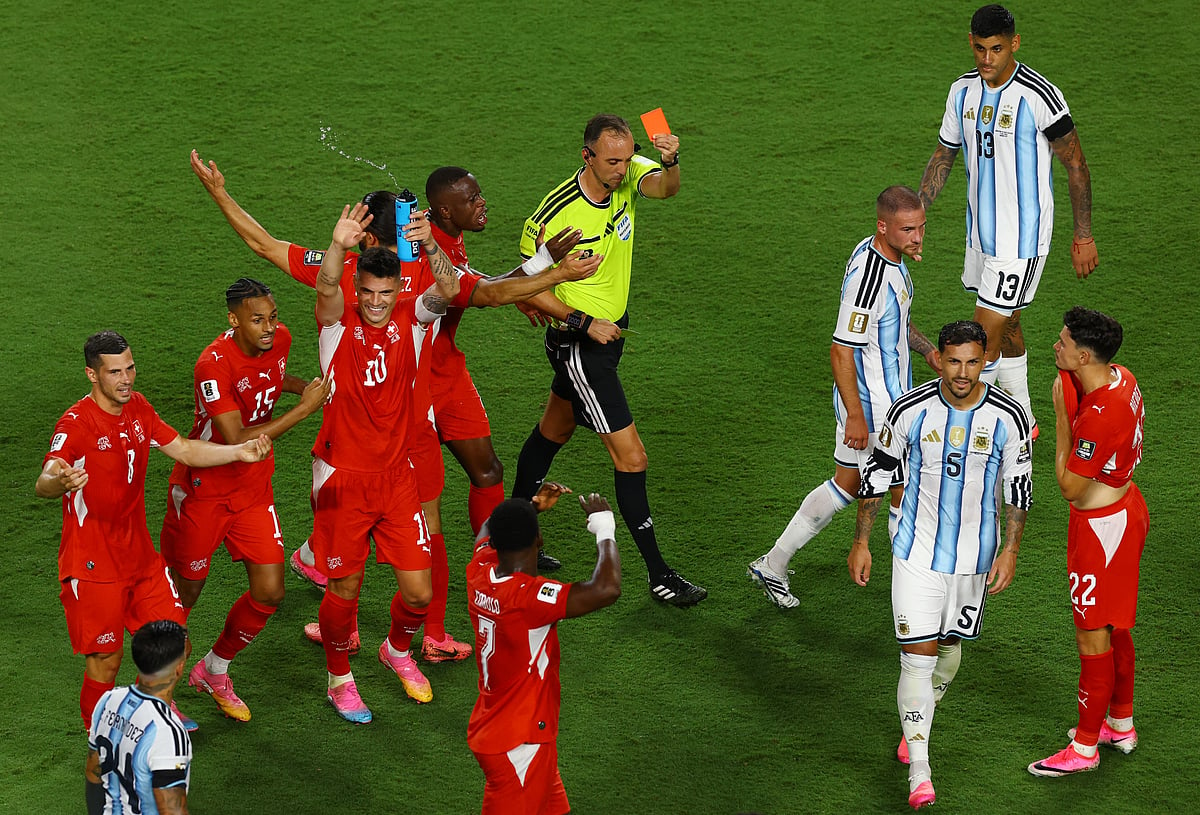
A controversy has arisen regarding a red card shown during the World Cup quarter-final match between Argentina and Switzerland. The incident involves player Breel Embolo and the circumstances leading to his dismissal from the game. The match, a high-stakes quarter-final, saw tensions high as both teams vied for a spot in the next round. The specific details of the foul or infraction that resulted in the red card are the subject of discussion and analysis. This event has sparked debate among fans and pundits alike regarding the referee's decision. The implications of Embolo's red card on the match's outcome and Switzerland's performance are significant. The context of the World Cup adds further weight to the scrutiny of such disciplinary actions. Further clarification or review of the incident may be sought by the involved parties or football authorities. The debate centers on whether the red card was a justified call given the nature of the play.
The red card incident during the Argentina-Switzerland World Cup quarter-final highlights the intense scrutiny on refereeing decisions in high-stakes international competitions. Such events often trigger debates about the interpretation of rules, player conduct, and the impact of single decisions on tournament outcomes. From a systems perspective, the pressure on referees to make split-second judgments under global observation can lead to both correct and contentious calls. The analysis of such incidents informs future training and rule clarifications, aiming to enhance consistency and fairness in officiating. The long-term implications involve how these moments shape fan perception of the sport's integrity and the evolution of playing styles in response to officiating trends.
AI-generated to prompt reflection — not editorial opinion, not advice, not a statement of fact. How this works.