Exploring Tangier: A Journey Through Ibn Battuta's City
The author describes a visit to Tangier, Morocco, a city rich in history and cultural fusion, situated at the confluence of the Mediterranean Sea and the Atlantic Ocean. Tangier, known as the "White City" for its gleaming white buildings, features a labyrinthine medina, the old walled part of the city common in Moroccan towns. This ancient quarter, shaped by centuries of Phoenician, Roman, Arab, and European influences, offers a unique blend of European and Moroccan cultures. The visit was particularly inspired by the city's most famous son, the renowned 14th-century traveler Ibn Battuta, whose name also graces Tangier's airport.
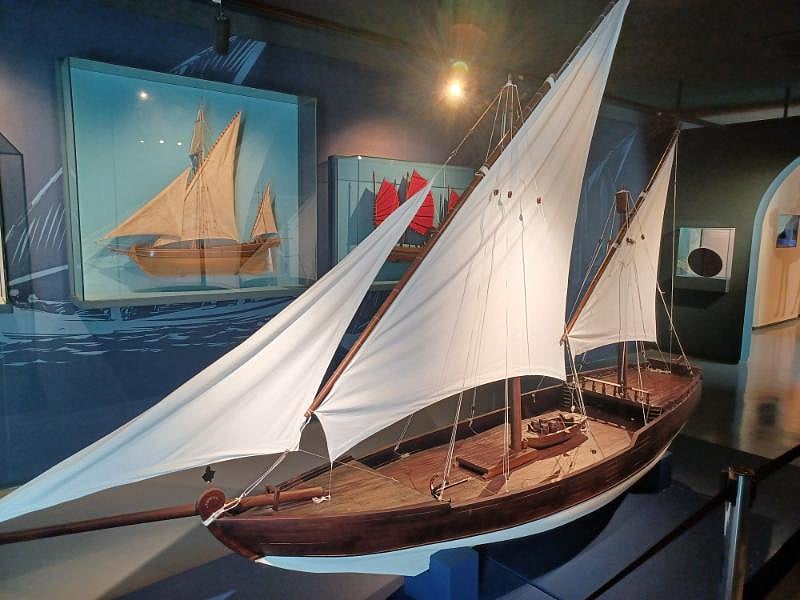
The author visited the Ibn Battuta Museum located in the medina near the 'Bab al-Bahr' gate. The museum showcases artifacts from Ibn Battuta's extensive 30-year journey, covering approximately 117,000 kilometers across Asia, Africa, and the Middle East. Exhibits include models of traditional ships like 'dhows' and 'junks,' maps, and replicas of his personal belongings. Ibn Battuta, born Abu Abdullah Muhammad Ibn Battuta in Tangier, embarked on his travels at age 21 in 1325, initially to perform the Hajj in Mecca, which evolved into an insatiable passion for exploration. His detailed accounts of his journeys, compiled in his travelogue 'Rihla,' offer invaluable historical insights into the regions he visited, including India, where he spent eight years at the court of Sultan Muhammad bin Tughluq in Delhi, and China, which he reportedly reached before Marco Polo. He documented the subcontinent's natural beauty, customs, culture, and cuisine, even fleeing to the Maldives to escape the Sultan's displeasure before continuing his travels through Sri Lanka, Bengal, and onward to China. The city of Tangier itself is described as both modern and aesthetically pleasing, with a serene yet vibrant atmosphere, noted for its safety and relaxed pace of life, making it a place worth revisiting.
This narrative offers a personal reflection on Tangier, highlighting its historical significance as the birthplace of Ibn Battuta and its unique cultural blend. The author's journey through the medina and visit to the museum serve as a lens to appreciate the scale of Ibn Battuta's 14th-century explorations. The piece contrasts the enduring allure of historical travel with contemporary experiences, noting the city's safety and relaxed lifestyle. From a systemic perspective, Tangier's strategic location and historical depth continue to position it as a nexus of cultural exchange, potentially driving tourism and economic development. The enduring legacy of figures like Ibn Battuta underscores the power of individual exploration to shape global understanding and inspire future generations, demonstrating how historical narratives can be leveraged for cultural heritage preservation and modern economic benefit.
AI-generated to prompt reflection — not editorial opinion, not advice, not a statement of fact. How this works.