Exploring the Feasibility of Sending a Probe to a Black Hole
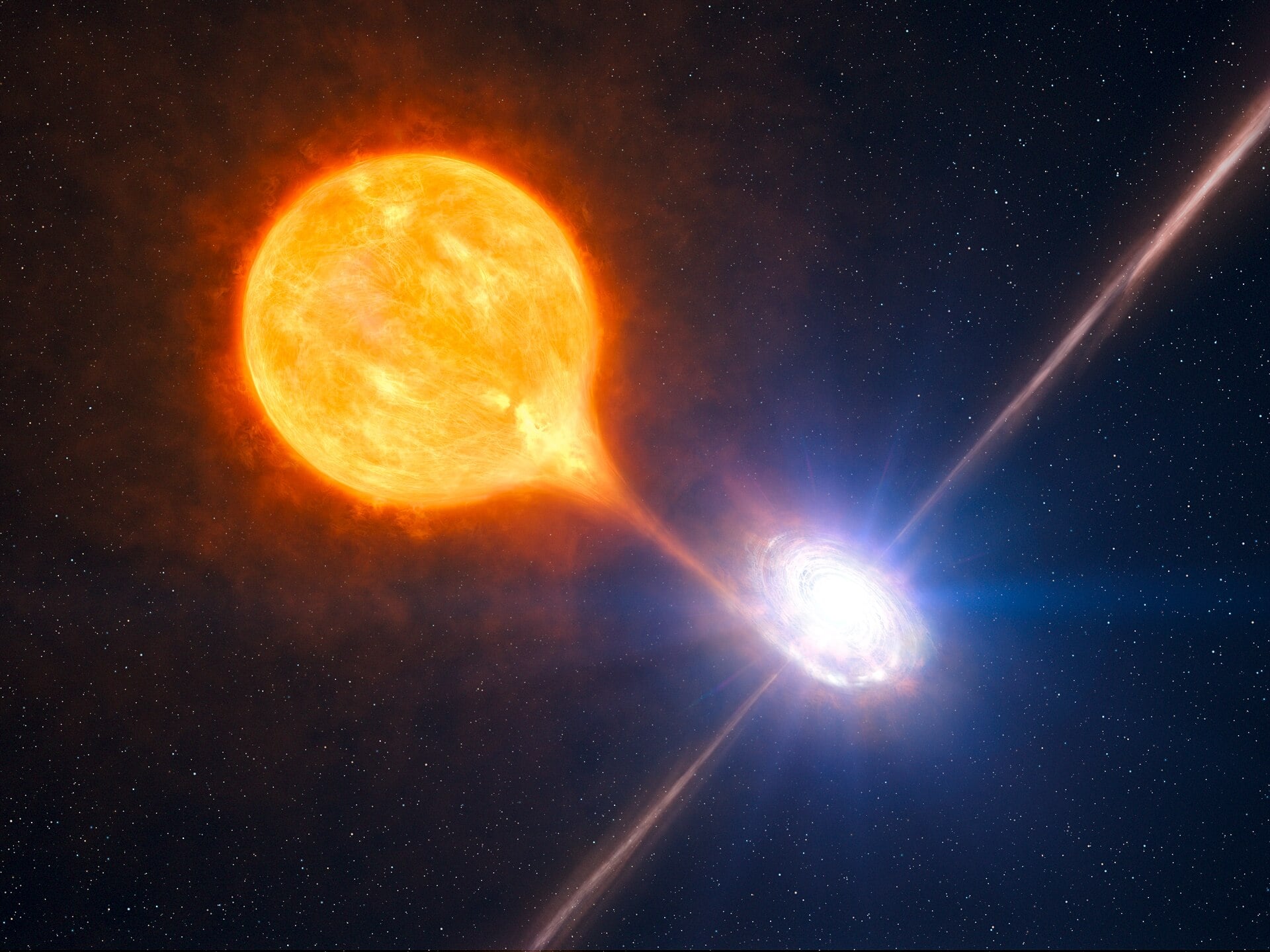
Black holes present extreme cosmic environments, offering unparalleled opportunities to test Einstein's Theory of General Relativity due to their intense gravitational fields. However, current remote observation methods are approaching their limitations. To overcome this, researchers are exploring concepts for sending probes directly to black holes for close-up study. Cosimo Bambi, a researcher at Fudan University in Shanghai, is a prominent advocate for such missions. He recently published a pre-print paper on arXiv detailing the requirements for sending a gram-sized probe to a nearby black hole. This research aims to advance our understanding of these enigmatic celestial objects by proposing a pathway for direct, in-situ observation.
The proposition of sending a probe to a black hole highlights humanity's drive to explore the universe's most extreme phenomena. While current remote sensing has yielded significant insights into black holes and validated aspects of General Relativity, direct observation promises a leap in our understanding. The technical challenges, particularly concerning the probe's size and the immense gravitational forces, underscore the advanced engineering and theoretical physics required. Future missions will likely depend on breakthroughs in propulsion, materials science, and communication systems capable of withstanding such environments. This endeavor pushes the boundaries of scientific inquiry, potentially revealing new physics beyond our current models and offering a tangible way to test fundamental theories in the coming decades.
AI-generated to prompt reflection — not editorial opinion, not advice, not a statement of fact. How this works.