Explosives Residue Detection Proves Suspect Involvement in Attacks, Dutch Institute Finds
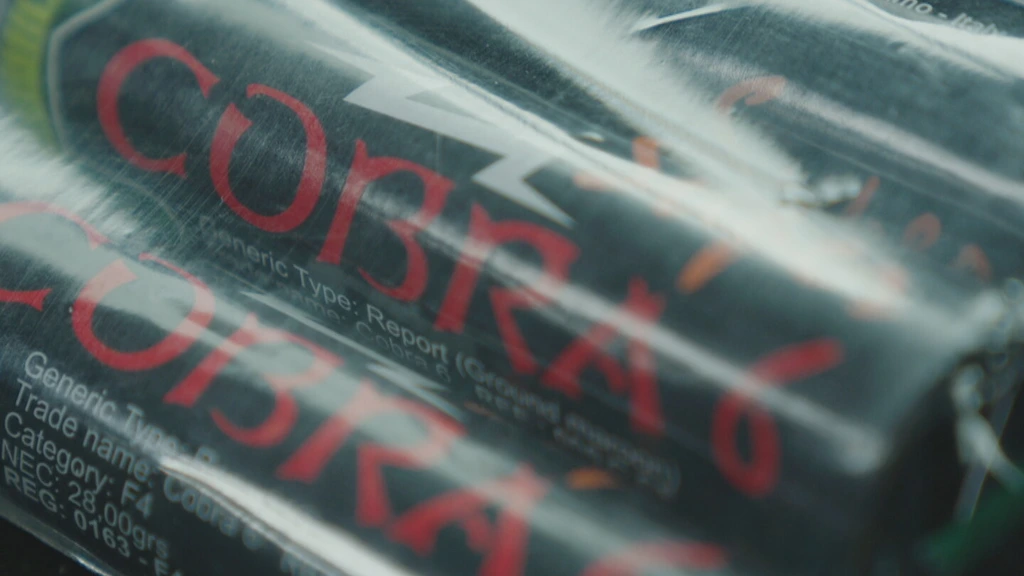
A new study by the Netherlands Forensic Institute (NFI) has established that the presence of flash powder residue on a suspect can serve as definitive proof of their involvement in an attack. The research highlights that perchlorate, a key component of flash powder, is not encountered incidentally. Its detection on a person's skin or clothing strongly indicates their participation in the creation, transport, or detonation of explosives. In the Netherlands, an average of 29 explosions or attempted explosions occur weekly, with flash powder frequently used in illegal fireworks like the Cobra 6. Previously, the evidentiary value of finding this residue on suspects was not well-established.
Forensic researcher Irene van Damme led a team that simulated an "explosives factory" in a bunker to study perchlorate transfer. They measured how the substance dispersed in a room during the assembly of fireworks and how much remained on individuals entering and exiting. The study also investigated indirect transfer, such as shaking hands or picking up discarded materials, to counter potential defense claims. Experiments involving handshakes and touching various surfaces like glass, cotton, and plastic revealed the extent of perchlorate transfer and material adherence. Field samples collected around New Year's Eve confirmed that perchlorate is not randomly distributed in the Netherlands, and its presence on hands typically links to professional use, according to Van Damme. While these findings have been used in some court cases, the NFI notes that further research is needed, particularly regarding the duration of perchlorate detectability.
This NFI research introduces a scientifically grounded method for linking individuals to explosive incidents, moving beyond circumstantial evidence. By establishing a clear forensic pathway for perchlorate detection, the findings could significantly impact criminal investigations and judicial proceedings related to explosives use. The study's systematic approach, including simulated environments and controlled transfer experiments, strengthens its reliability. However, the NFI's acknowledgment of the need for further research, especially on the persistence of the residue, indicates that this is an evolving forensic capability. Future developments might focus on refining detection limits and understanding environmental factors affecting residue longevity, further solidifying its role in establishing guilt beyond a reasonable doubt in the context of increasing incidents involving illicit explosives.
AI-generated to prompt reflection — not editorial opinion, not advice, not a statement of fact. How this works.