Extreme Heat Threatens Parmigiano Reggiano Production in Italy
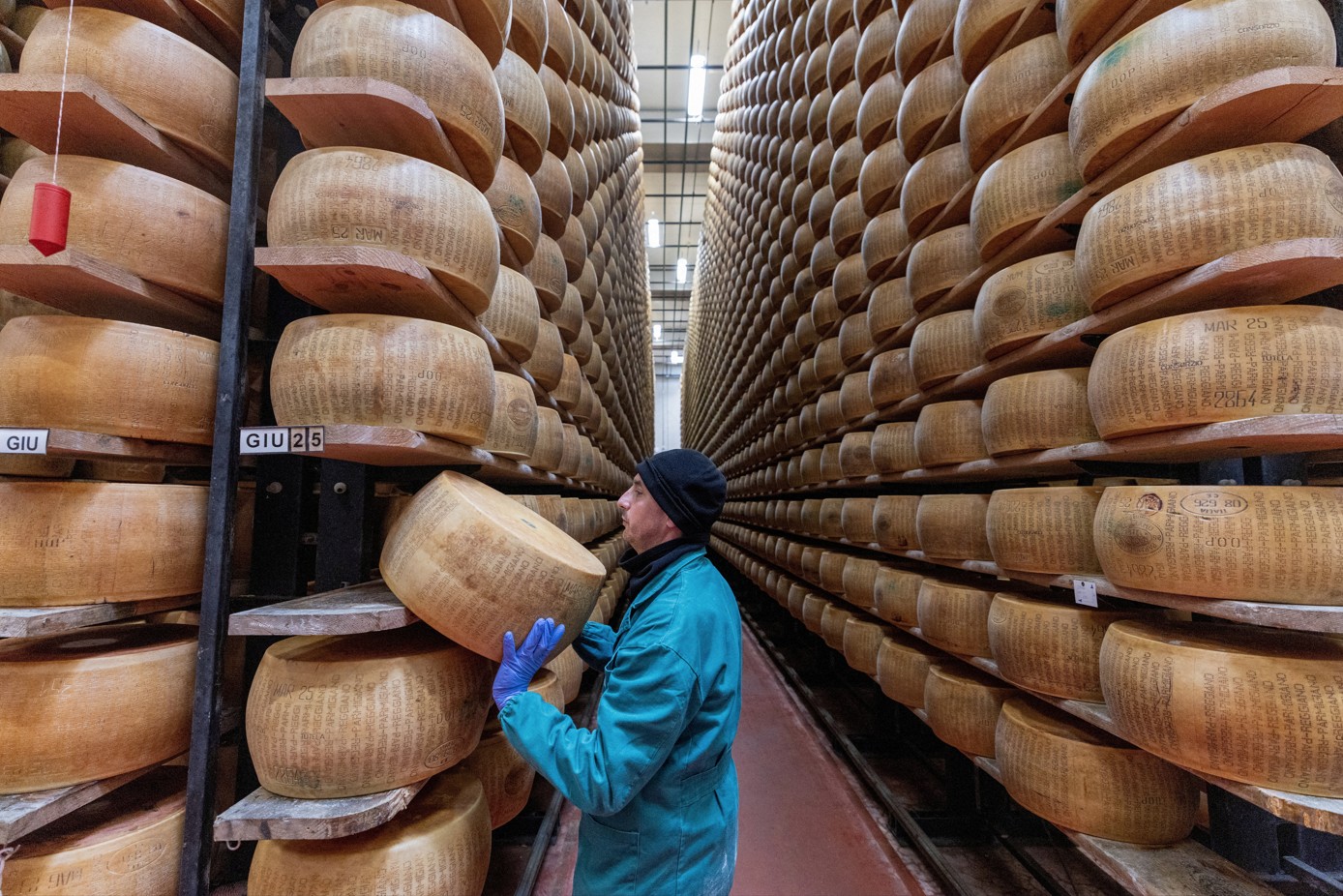
Record-breaking heatwaves are significantly impacting the production of Parmigiano Reggiano cheese in Italy's Emilia-Romagna region, a centuries-old industry. Farmers are struggling to cope as temperatures soar above 40°C, forcing dairy cows to remain indoors with windows open 24 hours a day for cooling. Nicola Bertinelli, president of the Parmigiano Reggiano Consortium and owner of a dairy farm founded in 1895, stated that extreme heat affects both the quality and quantity of milk. Cows eat less and produce up to 10% less milk, one of the three essential ingredients for the cheese. The region's strict production rules mandate that cows must be fed exclusively with locally grown grass and hay, which are scarce due to drought conditions exacerbated by the heat. "If it doesn't rain, the grass doesn't grow, the hay cannot be produced, and it is impossible to obtain the necessary milk to make the cheese," Bertinelli explained. To mitigate the effects, producers have installed fans and misting systems, but these measures have drastically increased energy costs. The rising expenses also affect the warehouses where wheels of Parmigiano Reggiano mature for at least 12 months. Over 500,000 wheels, valued at over 300 million euros, are stored in facilities operated by Magazzini Generali delle Tagliate (MGT), a unit of Credito Emiliano bank. MGT reported a 30% increase in daily energy consumption during heat peaks this year, prompting investments in energy efficiency and renewable energy. The Parmigiano Reggiano industry generates an estimated 4.5 billion euros annually and is a significant employer. With exports accounting for over 50% of global sales, primarily to the United States, the industry faces a critical challenge to its long-term viability. Paolo Ganzerli of GranTerre expressed concern that prolonged and intense extreme weather events could jeopardize the future of this iconic cheese, stating, "Parmigiano Reggiano has existed for over 800 years. We do not want to be the last generation to eat it."
The escalating frequency and intensity of extreme heat events present a systemic challenge to traditional agricultural industries, particularly those with geographically restricted production zones and strict quality standards like Parmigiano Reggiano. The reliance on specific local feed for dairy herds, directly impacted by climate-induced drought, creates a vulnerability in the supply chain. Increased operational costs for cooling and feed acquisition, coupled with potential reductions in milk yield and quality, exert significant financial pressure on producers and storage facilities. This situation highlights the tension between preserving heritage food production methods and adapting to the environmental realities of the coming decades. Stakeholders face the dual imperative of investing in climate resilience and energy efficiency while managing the economic implications for a product with a global market value of billions of euros.
AI-generated to prompt reflection — not editorial opinion, not advice, not a statement of fact. How this works.