Extreme low tide reveals Maceió's 'Moses Path,' drawing large crowds
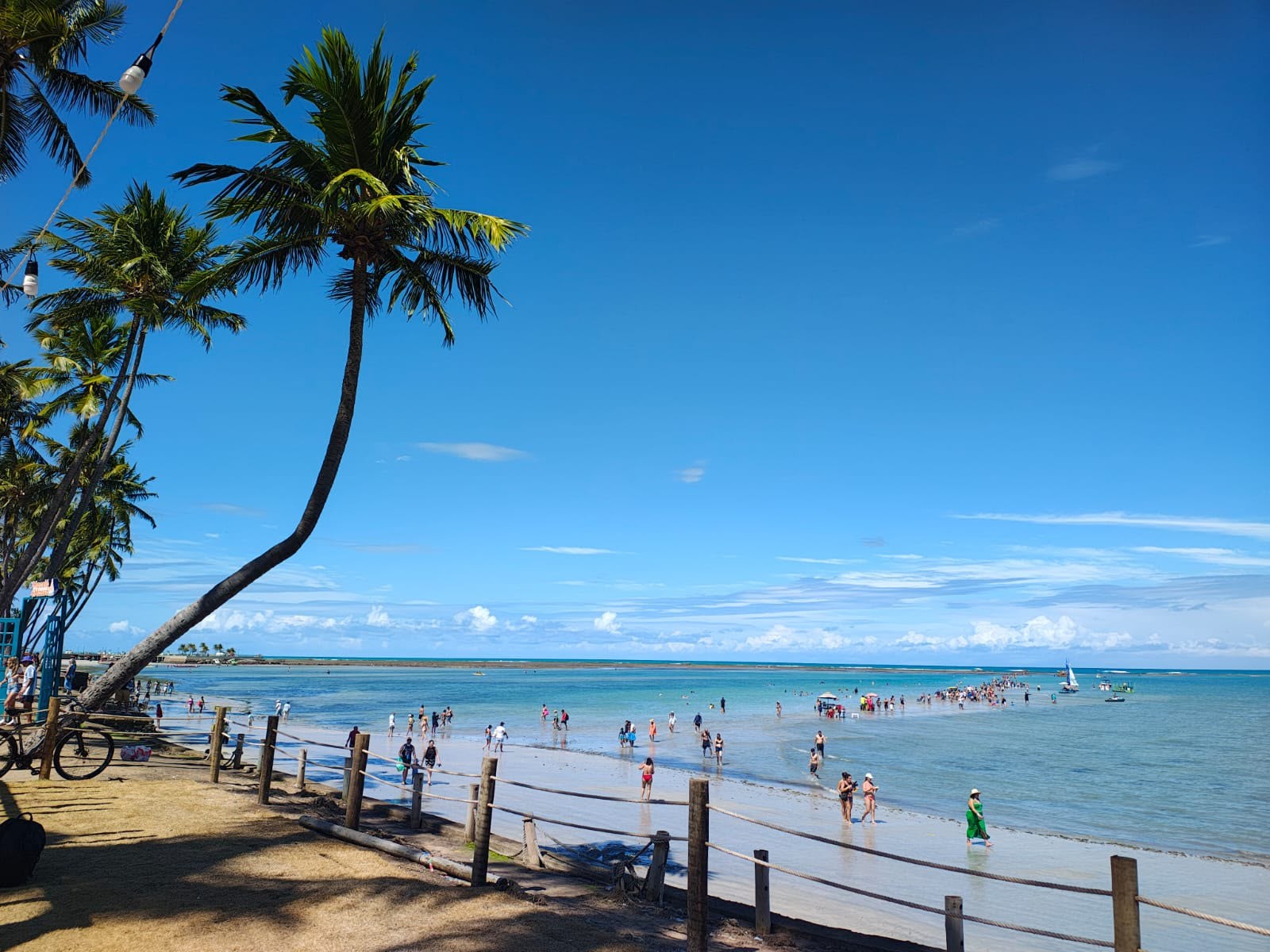
An exceptionally low tide, reaching just five centimeters, has transformed Maceió's Ponta Verde Beach into a major attraction this week. The phenomenon, known locally as the 'Moses Path,' is a sandbar that usually lies submerged but becomes visible during extreme low tide, connecting the beach to offshore reefs. Thousands of locals and tourists flocked to walk along the exposed sandbar, venturing closer to the lighthouse than normally possible. Natural pools also became more accessible, inviting visitors to swim and enjoy the scenery. Tourists like Carina Carvalho from São Paulo expressed awe at the scale of the formation, comparing it to a pilgrimage. Mohamed Rasvi, a Sri Lankan resident of Brazil, found the experience "enchanting" and plans to revisit. Environmental consultant Lays Nascimento explained that the extreme low tide is caused by astronomical factors, specifically the alignment of the Sun, Moon, and Earth, which intensifies gravitational forces. She noted that similar low tide peaks occur throughout the year, not just in July. The 'Moses Path' itself is a natural sandbank formed by wind and water dynamics between the reefs, becoming more exposed during these low tide periods. With the increased visitor numbers, the Institute of Environmental Management of Alagoas (IMA) emphasized the need for environmental preservation, urging visitors to avoid stepping on corals, disturbing marine life, and to properly dispose of their trash, highlighting that the reef environments are living ecosystems.
The event highlights the intersection of natural phenomena and human curiosity, drawing significant public attention to Maceió's coastal geography. While the 'Moses Path' offers a unique recreational and aesthetic experience, the surge in visitors underscores the delicate balance between tourism and environmental stewardship. The IMA's cautionary advice points to potential ecological pressures on the reef system, emphasizing the need for sustainable management practices. Future planning should consider how to leverage such natural occurrences for tourism without compromising the long-term health of the marine environment, potentially through guided tours or designated access points that minimize impact. This situation offers a case study in managing natural attractions that are intermittently accessible, balancing immediate visitor demand with the imperative of ecological preservation for future generations.
AI-generated to prompt reflection — not editorial opinion, not advice, not a statement of fact. How this works.