Extreme Weather Events Linked to Developing Record El Niño, Meteorologists Warn
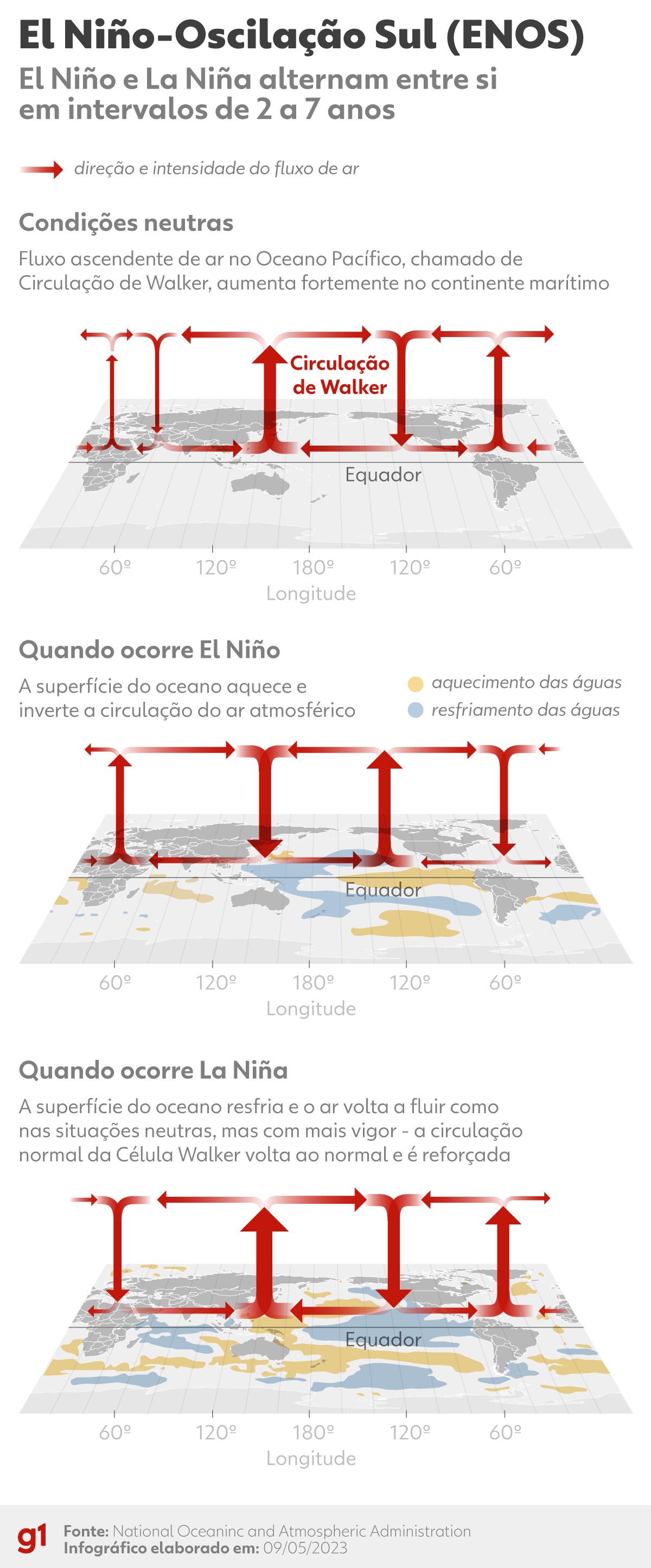
Recent extreme weather events, including record winds in Rio de Janeiro and São Paulo, and a tornado in Rio Grande do Sul, are occurring as a strong El Niño is expected to develop. Meteorologists anticipate these extreme events will become more frequent due to rising atmospheric temperatures. The World Meteorological Organization (WMO), a UN agency, issued an alert on Friday, June 3rd, confirming El Niño has formed in the Pacific Ocean and is projected to strengthen significantly between July and September. Projections from major meteorological centers indicate a substantial warming of equatorial Pacific waters, with sea surface temperatures potentially exceeding the average by over 2°C in monitoring areas. The WMO's models show consistent results, increasing confidence that this El Niño episode will be classified as strong. It is expected to intensify throughout the second half of the year, peaking between November and February. WMO Secretary-General Celeste Saulo stated that the phenomenon increases the likelihood of droughts, intense rainfall, and heatwaves globally. While El Niño is a natural climate cycle, its impacts are amplified by global warming. Even moderate El Niño events can now cause more severe consequences due to the already warmer global climate. In Brazil, El Niño typically brings increased rainfall to the South, while the North and Northeast may experience drier periods, with increased heatwaves also anticipated.
The confluence of recent extreme weather events and the projected strengthening of El Niño highlights a critical feedback loop between natural climate cycles and anthropogenic global warming. The WMO's warning underscores that even natural phenomena like El Niño, when occurring in a pre-warmed global system, can trigger unprecedented extremes. This situation necessitates a re-evaluation of infrastructure resilience and disaster preparedness, particularly in regions like Brazil, which face predictable regional impacts. The increasing frequency and intensity of such events suggest that climate adaptation strategies must move beyond short-term weather forecasting to long-term systemic adjustments, considering the escalating influence of human-induced warming on natural climate drivers over the next decade.
AI-generated to prompt reflection — not editorial opinion, not advice, not a statement of fact. How this works.