Extremoz Lagoon Overflows Again, Flooding Main Access Road Near Natal
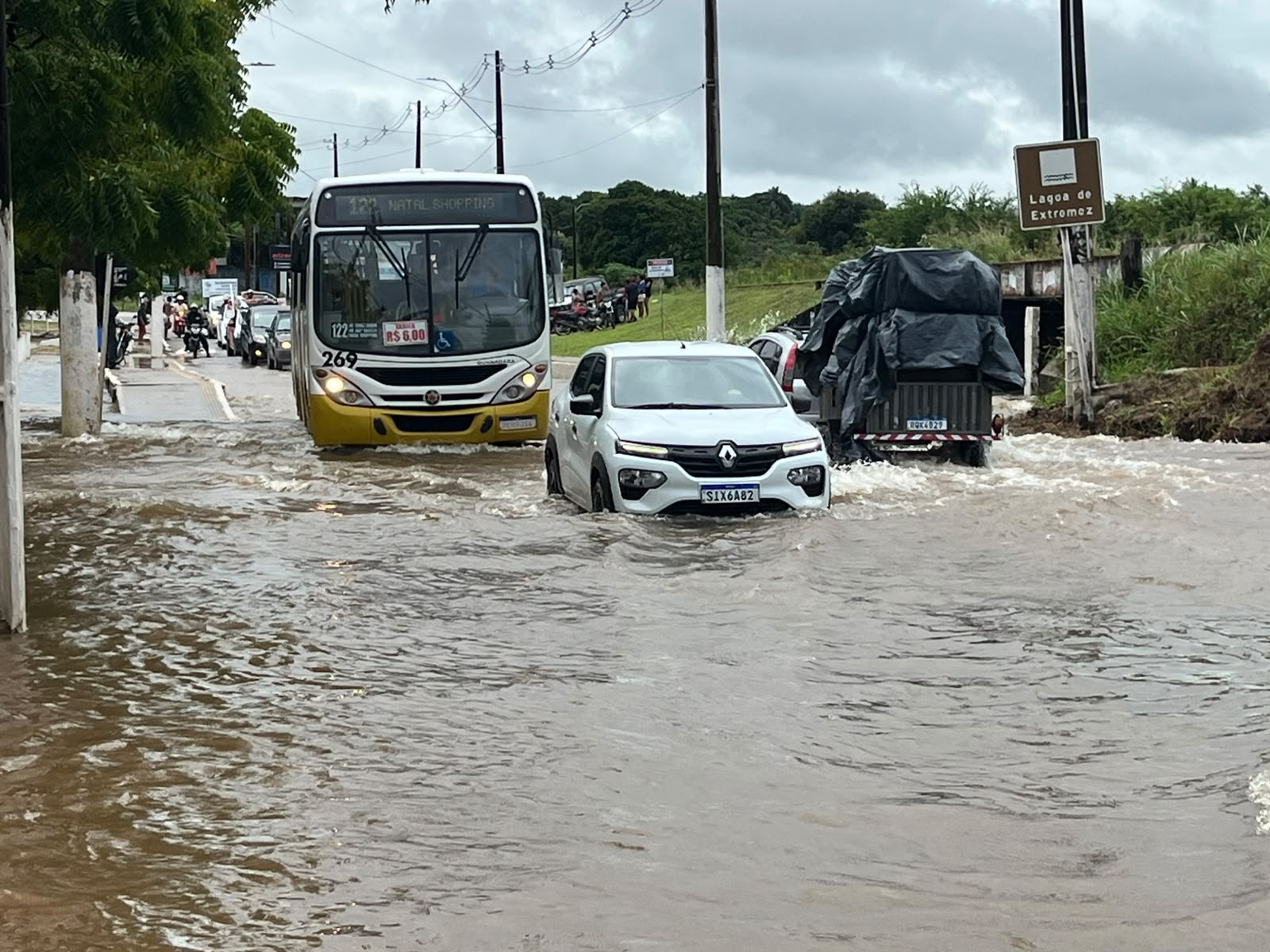
The Extremoz Lagoon in the Metropolitan Region of Natal, Brazil, has overflowed for the second time, inundating the Avenida dos Coqueiros, the primary route to the municipality. This latest flooding event occurred on Friday, March 25th, following heavy rains that had previously caused the lagoon to breach its banks on Tuesday, March 21st. The Extremoz City Hall announced a partnership with the Department of Roadways (DER) to close the affected stretch of the state highway, though the closure had not yet been implemented as of the latest update. Residents are advised to use an alternative entrance via Moinho dos Ventos. Recent rainfall in Extremoz reached 17 millimeters in the 24 hours preceding the Friday overflow, according to the Rio Grande do Norte Agricultural Research Company (Emparn). While the water level had receded slightly after Tuesday's deluge, it rose again by Friday, making passage difficult for cyclists and motorcyclists, with some cars experiencing significant water ingress. The National Institute of Meteorology (Inmet) has issued a heavy rain alert for 100 municipalities in Rio Grande do Norte, forecasting 20 to 30 millimeters per hour for Friday and Saturday. The Tuesday rains also caused damage to homes in neighborhoods like Redinha Nova and Esporte Clube Natureza, leaving some residents isolated. City Hall stated that civil defense and social assistance teams are providing support to affected residents and monitoring other flooded areas.
The recurring overflow of the Extremoz Lagoon highlights a critical infrastructure challenge exacerbated by changing weather patterns. Repeated inundation of key access routes points to potential deficiencies in urban planning, drainage systems, and possibly land-use management around natural water bodies. As meteorological events intensify, the region faces a growing need for adaptive infrastructure capable of withstanding increased precipitation. Future resilience will likely depend on integrating advanced hydrological modeling into urban development, potentially involving nature-based solutions for water retention and flood mitigation, alongside traditional engineering approaches. Proactive investment in these areas could reduce economic disruption and enhance public safety in the face of predictable environmental shifts.
AI-generated to prompt reflection — not editorial opinion, not advice, not a statement of fact. How this works.