Fact-Checking Trump's Claims on Iran War Costs and Arms Stockpiles
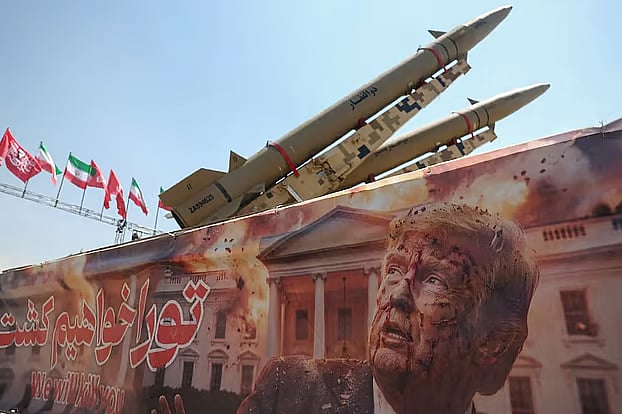
U.S. President Donald Trump has recently made several claims regarding the ongoing conflict with Iran, notably expressing concerns about dwindling military supplies. He attributed this to the previous Biden administration's decision to supply arms to Ukraine, a statement fact-checked as misleading. The Iran war, now in its sixth month, is reportedly increasing concerns about depleting military equipment, rising troop casualties, and economic losses, though Trump appears to dismiss these worries while pursuing diplomatic solutions. Public opinion polls indicate growing American disillusionment with the war, contrasting with Trump's portrayal of the Ukraine conflict as a greater waste of U.S. military resources. He attempts to normalize current casualties by comparing them to past wars and celebrates a recent one-day drop in oil prices.
Trump asserted that the U.S. possesses abundant ammunition and military equipment, stating that while Biden sent significant arms to Ukraine, the U.S. is rebuilding its stockpiles and still has more than enough. However, reports from The New York Times and other outlets suggest the Iran war is depleting U.S. weapons reserves, a concern Trump rejects by blaming Biden's Ukraine aid. While Biden's administration did send substantial military aid to Ukraine, its impact on current U.S. arms shortages is minimal, as the Iran conflict utilizes different types of weaponry. A Pentagon document from January 2025 indicates that since the Ukraine invasion in February 2022, the Biden administration provided over 100 types of military equipment to Ukraine, primarily for ground warfare, which have little relevance in the Iran conflict. Experts note that while some specific munitions, like Patriot and Tomahawk missiles, have seen significant usage in the Iran war, the quantities sent to Ukraine were comparatively small, such as only 600 Patriot missiles and over 3,000 Stinger missiles for air defense.
Regarding oil prices, Trump celebrated a significant one-day drop, which did occur as fighting between the U.S. and Iran temporarily paused. However, oil prices remain considerably higher than before the war began, fluctuating significantly. While Brent crude fell by about 9% to $88 per barrel and West Texas Intermediate dropped over 7% to around $83, prices had previously exceeded $100 per barrel and later rose again. The price on Monday, though lower recently, was still about 20% higher than pre-war levels in February. A White House spokesperson acknowledged Trump's point about the price drop but noted that reopening the Strait of Hormuz could revert prices to pre-war levels. Trump's comparison of Iran war casualties to those in Vietnam, Iraq, and Korean wars also requires context; while his casualty figures are largely accurate, he omits data from his own administration's operations and compares limited engagements to decades-long conflicts. The U.S. has reported 18 U.S. military deaths in the Iran conflict, with over 600 injured, and acknowledges fewer deaths in other recent operations, including a January incident in Venezuela and two in Syria in December 2025.
The analysis of President Trump's statements reveals a pattern of selectively highlighting data points to support a narrative that downplays the costs and consequences of the Iran conflict. By attributing current military supply concerns primarily to aid provided to Ukraine, Trump deflects attention from the significant expenditure of advanced weaponry in the current war. This framing overlooks the distinct nature of the conflicts and the specific types of munitions being depleted, suggesting a strategic communication effort rather than a comprehensive assessment of military readiness. The celebration of a temporary oil price drop, while factually accurate for a single day, omits the broader context of sustained higher prices compared to pre-war levels. Similarly, comparing current casualty figures to historical, protracted wars without acknowledging the different scales and durations of U.S. military engagements under various administrations serves to minimize the perceived human and economic toll of the present conflict. This approach raises questions about transparency in military resource management and the public's understanding of the true costs associated with prolonged geopolitical engagements in the current era of evolving global threats and resource constraints.
AI-generated to prompt reflection — not editorial opinion, not advice, not a statement of fact. How this works.
