Fake news claims STF Minister Mendonça will open electronic voting machine source code
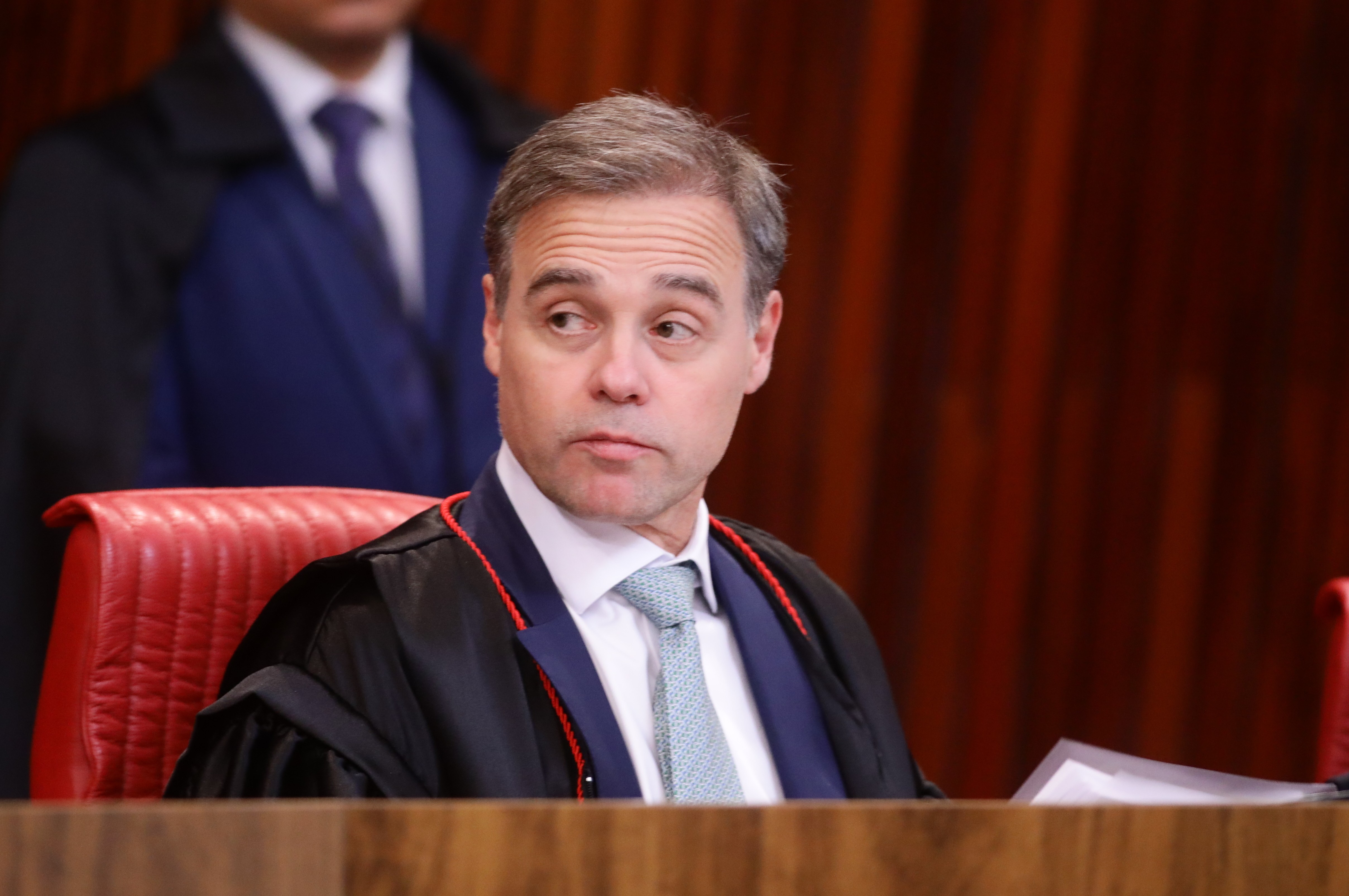
A social media post falsely claims that Minister André Mendonça of the Supreme Federal Court (STF) and Superior Electoral Court (TSE) will open the source code of electronic voting machines for auditing. The news outlet g1 has clarified that this report is fake and that the image circulating is a fraudulent montage. While the TSE did hold a ceremony on October 2, 2025, to open the source code for the 2026 elections, this process was led by then-President Cármen Lúcia, not Minister Mendonça. The TSE confirmed that the opening of source codes for inspection is a standard procedure mandated by law since 2002, aimed at increasing transparency in the electoral process. Minister Mendonça currently serves as the Vice-President of the TSE and an auxiliary judge for electoral propaganda, having assumed the vice-presidency on May 12. The current TSE President is Minister Nunes Marques. The source code inspection is available to various entities, including political parties, the Public Prosecutor's Office, the Brazilian Bar Association (OAB), and universities, and is conducted under strict security protocols at the TSE in Brasília. The TSE has outlined a detailed calendar for electoral system audits, including source code opening in October 2025 and public security testing in November 2025, leading up to the September 2026 system sealing and media generation.
This incident highlights the persistent challenge of disinformation campaigns targeting electoral processes, often leveraging the authority of judicial figures to lend false credibility. The fabricated narrative aims to sow distrust by misrepresenting established transparency mechanisms like source code audits as a novel, politically motivated action by a specific minister. Such tactics exploit public interest in electoral integrity while obscuring the routine, legally mandated procedures designed to ensure it. Understanding the systemic nature of these audits, their legal basis, and the broad range of stakeholders involved is crucial for citizens to discern factual reporting from manipulation. Future electoral integrity efforts must incorporate proactive public education on these processes to inoculate the electorate against such disinformative narratives.
AI-generated to prompt reflection — not editorial opinion, not advice, not a statement of fact. How this works.