Fake videos and images of violence spread online amid political clashes in Habiganj
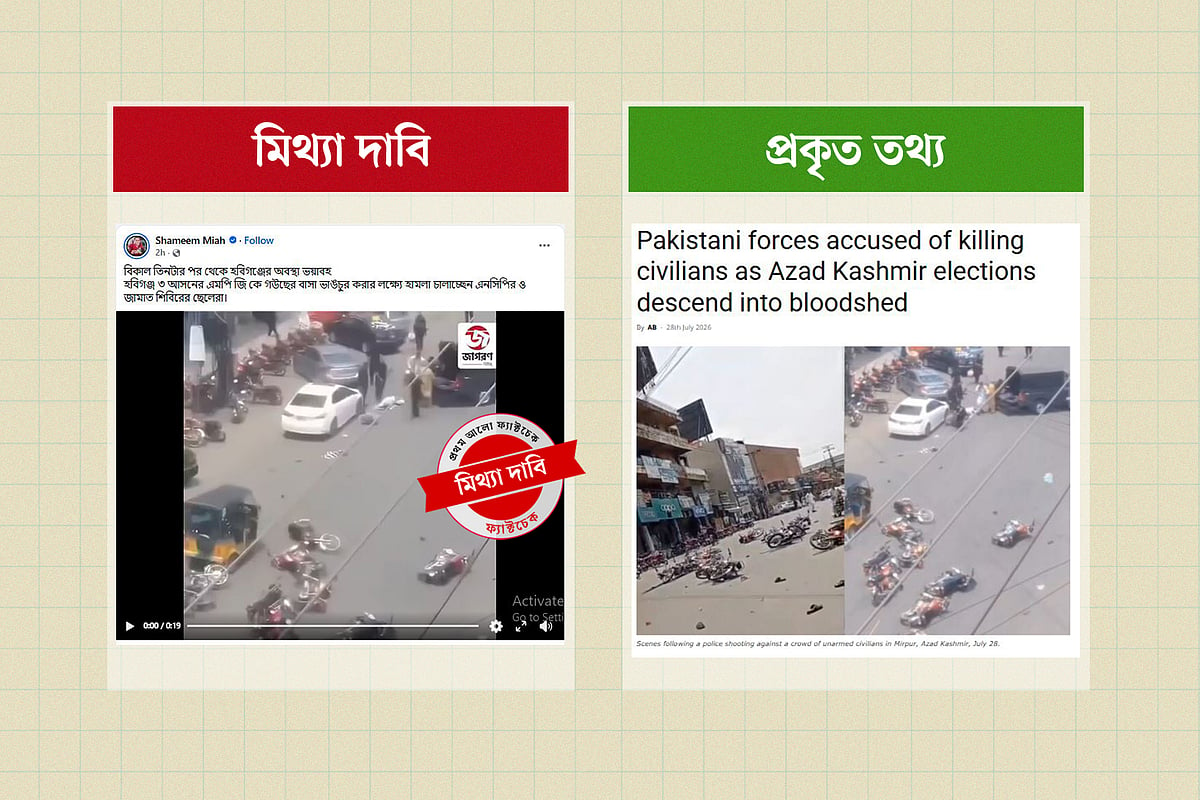
Social media is being flooded with fabricated videos and images related to an attack on the convoy of National Citizen Party (NCP) leaders during their 'July March' in Habiganj, Bangladesh. Investigations reveal that videos of events in Pakistan-administered Kashmir are being falsely presented as occurring in Habiganj. Additionally, images generated by artificial intelligence (AI) are also being circulated to mislead the public. The NCP leaders were attacked after their march in Habiganj on Tuesday. The party has blamed the ruling BNP for the assault and announced nationwide protests in response. In an attempt to quell rising tensions between the NCP and the BNP, local authorities banned all public gatherings in Habiganj city. Amidst this atmosphere, a 19-second video falsely claimed that NCP and Jamaat-Shibir activists attacked the residence of Habiganj-3 MP G K Gouch. Reverse image searches of this video linked it to events in Pakistan-administered Kashmir, where security forces reportedly fired on protesters, resulting in multiple fatalities. A separate viral image, purportedly showing an injured NCP organizer Sarjis Alam, was found to be digitally manipulated. While the background and attire matched genuine photos, the viral image had added bandages and a sling, which were absent in original media footage. AI analysis tools indicated a high probability of image editing. Furthermore, a video claiming a death during the NCP's march in Habiganj was also found to be old footage from June, depicting the aftermath of a student's death in Lakshmipur under suspicious circumstances, not related to the Habiganj incident.
The proliferation of manipulated media during political events in Habiganj highlights a growing challenge in discerning truth from falsehood in the digital age. The use of old footage from different regions and AI-generated images to inflame public sentiment demonstrates a sophisticated disinformation campaign. This tactic aims to shape public perception and potentially justify actions by creating a false narrative of violence and victimhood. Such practices undermine democratic processes by eroding trust in information sources and manipulating public discourse. The ease with which these fabricated materials spread suggests a need for enhanced digital literacy initiatives and more robust mechanisms for verifying and flagging unauthentic content to safeguard public understanding and prevent escalation of conflict based on misinformation.
AI-generated to prompt reflection — not editorial opinion, not advice, not a statement of fact. How this works.