Falklands War Trauma Lingers in Argentinian Football Rivalry
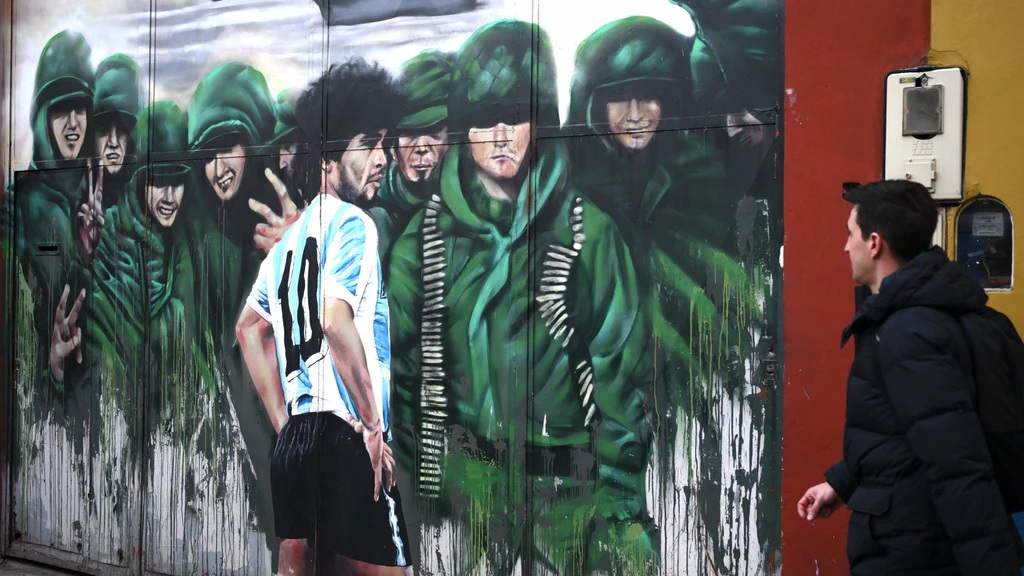
The lingering trauma of the Falklands War continues to influence Argentinian national sentiment, even manifesting in football. Despite coach Scaloni's call to separate sport and politics before a match against England, his players later displayed a banner proclaiming "Las Malvinas son Argentinas" (The Falkland Islands are Argentinian). This highlights the unresolved national trauma stemming from the 1982 conflict.
The dispute over the Falkland Islands, or Malvinas, has deep historical roots, dating back to the British seizure of the islands in 1833, shortly after Argentina's independence from Spain. This act, seen by Argentinians as colonial subjugation, laid the groundwork for ongoing tensions. Historians note that the struggle for sovereignty over the Malvinas became a foundational element of Argentinian national identity and remains a key pillar of its foreign policy. Argentinian presidents consistently condemn British "colonial authority" at the UN and reaffirm their sovereignty claim.
The conflict simmered for decades until 1982, when Argentina's military junta, facing economic crisis and public discontent, reignited nationalist fervor by invading the islands. This move temporarily unified the nation, with even political prisoners volunteering to fight. However, the invasion led to a swift and decisive defeat by British forces, resulting in over 600 Argentinian deaths, including 323 when the General Belgrano was sunk. This outcome became a profound national trauma, marking the end of the dictatorship but leaving deep-seated resentment towards Britain as perceived colonial occupiers.
This unresolved trauma significantly impacted the football rivalry. The 1986 World Cup quarter-final match against England, won by Argentina with two Maradona goals, was seen by many Argentinians as a form of retribution. Today, references to the Falklands War are ubiquitous in Argentina, from roadside signs to public transport stickers, underscoring its continued relevance. Football, in Argentina, serves as a vital platform where societal issues are expressed, and the players' actions reflect this widespread national sentiment.
The Argentinian national team's display referencing the Falkland Islands, or Malvinas, underscores the enduring power of historical grievances and national identity in shaping contemporary public sentiment, particularly within the context of sport. This event illustrates how geopolitical disputes, even those decades old, can remain potent emotional and political touchstones, influencing national narratives and collective memory. The integration of historical claims into sporting events suggests that football in Argentina functions not merely as entertainment but as a significant arena for expressing national pride, historical grievances, and political statements. This phenomenon highlights the complex interplay between national identity, historical trauma, and the symbolic power of international sporting competitions, particularly in the context of perceived historical injustices and ongoing sovereignty disputes. Understanding these dynamics offers insight into how national narratives are constructed and maintained, and how they can be mobilized through cultural touchstones like football.
AI-generated to prompt reflection — not editorial opinion, not advice, not a statement of fact. How this works.