Family Arrested in Governador Valadares for Drug Trafficking Using Home and Meal Business
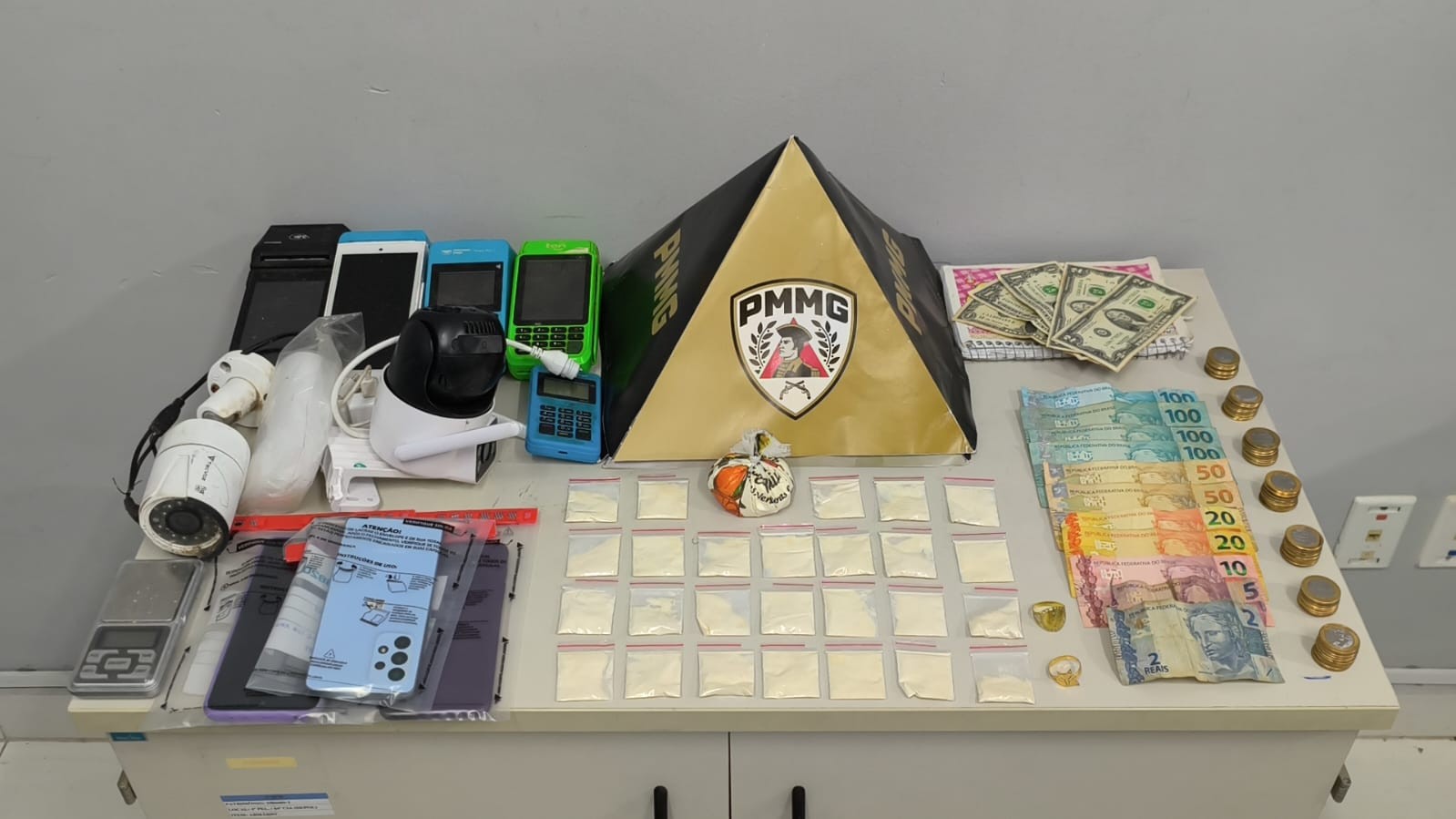
Police in Governador Valadares, Brazil, have arrested a woman, her daughter, and her son-in-law for alleged drug trafficking. Authorities received information that the family was using their home and a meal delivery business as a front for their illegal activities. An operation was launched to investigate these claims, during which officers observed a high volume of people visiting the residence, exchanging money for items. During their surveillance, police intercepted a motorcyclist who had just left the property and was found with two packets of cocaine. The individual confirmed purchasing the drugs from the family and was released after signing a minor offense report. Subsequently, officers approached the family's home, where a 24-year-old man attempted to flee, discarding a fanny pack containing cocaine and R$ 622 into a neighboring property. His 20-year-old partner reportedly flushed drugs down the toilet. The 44-year-old mother was found at the residence, where police seized a large quantity of cocaine, a scale, and five card machines. The husband, also implicated in drug trafficking, was not apprehended. The mother, daughter, and son-in-law were taken to the civil police station along with the confiscated items.
This incident highlights the exploitation of legitimate small businesses and residential properties as fronts for illicit activities, a common tactic to obscure criminal operations. The police operation demonstrates a response to community intelligence, leading to the apprehension of individuals and the seizure of contraband. The case underscores the challenges law enforcement faces in identifying and dismantling drug networks that integrate into everyday community life. Future considerations might involve enhanced community-police partnerships to proactively identify such anomalies and exploring regulatory frameworks for small businesses that could mitigate their vulnerability to criminal infiltration, without stifling legitimate commerce.
AI-generated to prompt reflection — not editorial opinion, not advice, not a statement of fact. How this works.