Family Denies Engineer Involved in Fight Before Fatal Shooting at São João Party
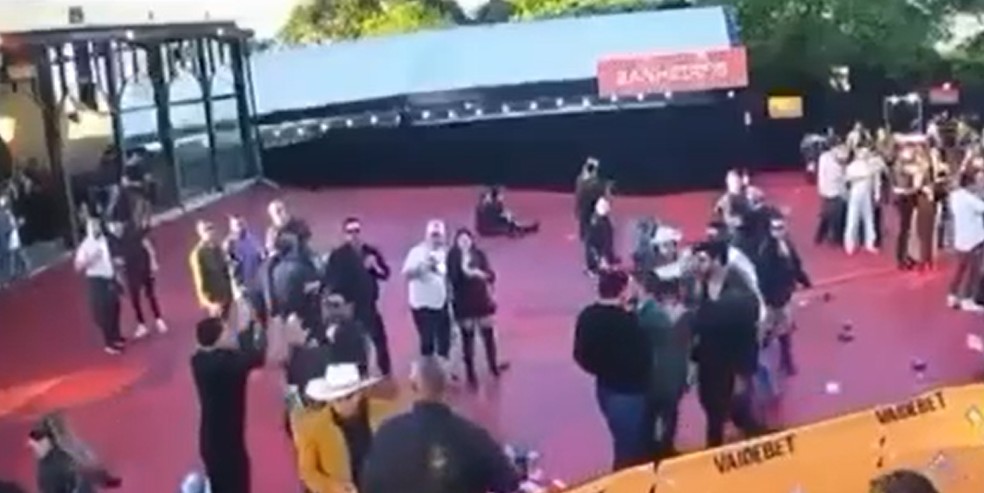
The family of civil engineer Rubens Fernando has stated that he was not involved in a fight captured on video prior to his fatal shooting outside a private São João party in Lagoa Seca. His sister, Rayssa Fernandes, explained that the altercation shown in the video involved suspect Cristian Dantas and two other men with the sister of Rubens' girlfriend. Rayssa clarified that her brother approached the scene only to retrieve his girlfriend and then leave, appearing confused by the unfolding events. She emphasized that Rubens, wearing a black shirt and cap, was not the individual seen throwing a punch and was not participating in the brawl. The incident occurred on the morning of June 21st, as Rubens was leaving the event with friends. Approximately 20 minutes later, in the parking lot, the suspect, Cristian Dantas, allegedly retrieved a firearm from his vehicle and shot the engineer. Police reported that Dantas was arrested shortly after the shooting, having also sustained injuries during the earlier fight. He was treated at a hospital before being taken into custody, where he reportedly remained silent during questioning. The family expressed deep trauma and grief over the loss, with Rubens' father and mother describing their close relationship with their son and the profound void his death has left. They firmly deny any involvement of Rubens in aggression, stating he had no prior contact with the suspect and was incapable of initiating conflict. The victim's body was buried on June 22nd, following a wake in Guarabira, his birthplace. The event organizers expressed solidarity and stated they are cooperating with the investigation, noting the incident occurred in the parking lot, not within the party premises.
The narrative surrounding Rubens Fernando's death highlights a critical disconnect between the family's account and the alleged actions of the suspect, Cristian Dantas. The family's insistence on Rubens' non-involvement in the initial altercation, supported by their review of video evidence, suggests a potential misinterpretation or misrepresentation of events by law enforcement or witnesses. The subsequent fatal shooting, described as an ambush, raises questions about the escalation of conflict and the suspect's motivations beyond the immediate dispute. This case underscores the importance of thorough, unbiased investigation in distinguishing between accidental presence at a scene and active participation in violence, particularly when emotions run high during public gatherings. Future analyses should consider the role of security protocols at such events and the psychological factors that can lead to disproportionate responses, especially when firearms are accessible.
AI-generated to prompt reflection — not editorial opinion, not advice, not a statement of fact. How this works.