Family of Six Perishes in Peshawar House Fire
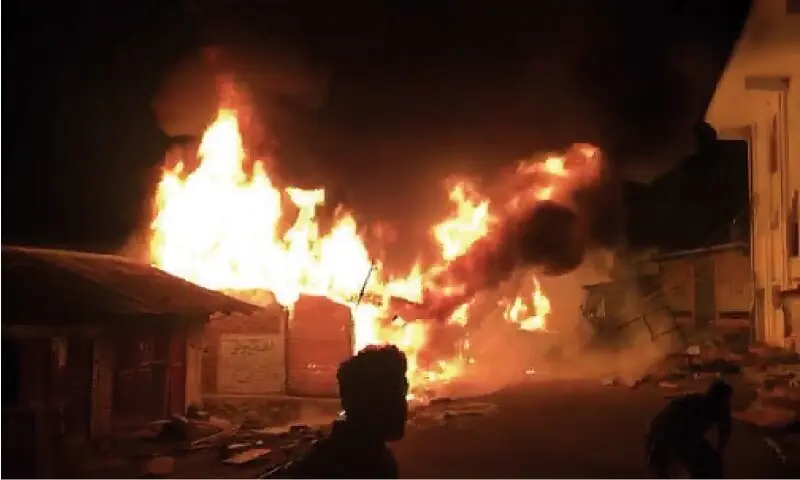
A devastating house fire in the Tehkal Payan area of Peshawar, Pakistan, resulted in the deaths of a couple and their four young children early Thursday morning. Rescue 1122 received the emergency call at approximately 2:30 AM and arrived to find the blaze had already intensified. It took the rescue team 45 minutes to bring the fire under control. During their search, six bodies were recovered from a single room, identified as the parents and their children: three daughters aged 11, nine, and three, and a four-year-old son. The father was reportedly a local worker for the Jamiat Ulema-i-Fazl (JUI-F) party. Initial assessments suggest the fire originated in a storage area containing furniture and mattresses, subsequently spreading throughout the residence. The intensity of the blaze likely prevented the family from escaping the room where they were sleeping. Authorities noted that the children's bodies showed no burns, indicating death by smoke inhalation and intense heat rather than direct flames. The exact cause of the fire remains undetermined. This incident echoes similar tragedies across Pakistan, where fires in residential buildings are often attributed to deteriorating infrastructure, lax safety enforcement, and general negligence.
This tragic event highlights systemic vulnerabilities in residential fire safety across Pakistan. The apparent cause, originating in a storage area and rapidly engulfing the home, suggests potential issues with building materials, internal fire spread dynamics, and emergency egress. The fact that the family was confined to a single room, coupled with the lack of burn injuries on the children, points to the critical danger posed by smoke and heat accumulation in enclosed spaces, underscoring the need for improved ventilation and fire-resistant construction standards. This incident, occurring within a broader pattern of similar fatal fires, necessitates a review of building codes, regular safety inspections, and public awareness campaigns regarding fire prevention and escape strategies, particularly in densely populated areas. Addressing these infrastructural and regulatory gaps is crucial for mitigating future loss of life.
AI-generated to prompt reflection — not editorial opinion, not advice, not a statement of fact. How this works.