Farage Resigns to Contest By-election, Framing it as People vs. Establishment
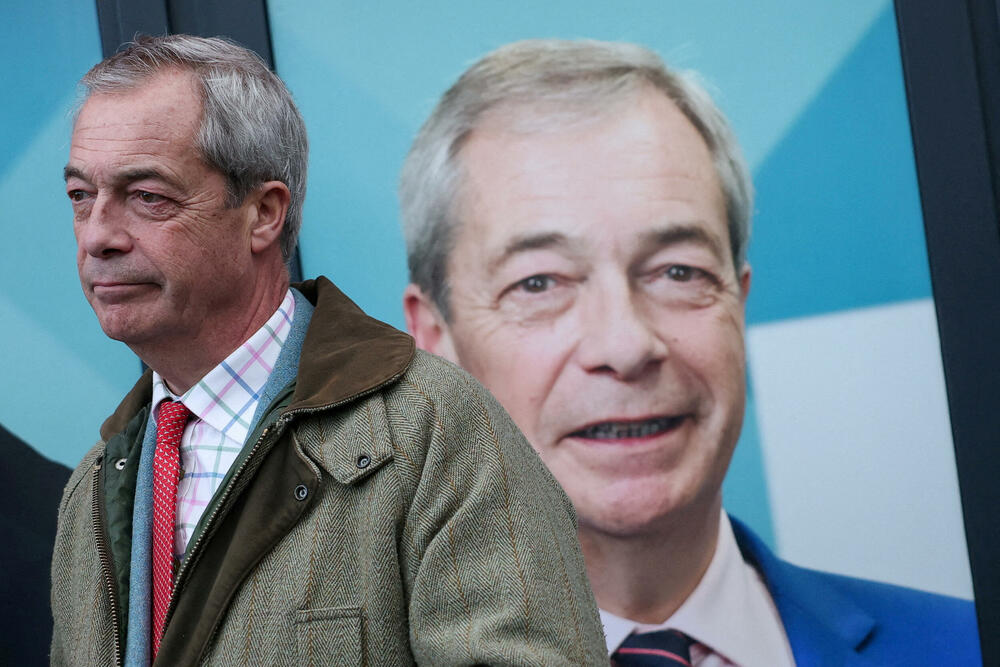
Nigel Farage, leader of Reform UK, has resigned from his position to contest the Clacton by-election. He is presenting this electoral contest as a significant battle between the general public and the political establishment. Farage has characterized the circumstances leading to his resignation and the by-election as a "witch hunt" against him. This move signals his intention to re-enter Parliament and potentially galvanize support for his party by framing the election as a populist uprising. The by-election in Clacton is now seen as a pivotal moment for Reform UK and its leader, who aims to challenge the status quo. Farage's decision to step down and run for a seat underscores his commitment to direct political engagement. The campaign is expected to be highly charged, with Farage leveraging his rhetoric against established political forces. His participation is likely to draw significant media attention and voter interest.
Nigel Farage's strategic resignation to contest the Clacton by-election, framed as a populist challenge to the establishment, highlights a recurring tactic in contemporary politics. This approach leverages public sentiment against perceived elites, seeking to mobilize voters through anti-establishment rhetoric. Such strategies often test the resilience of traditional political structures and can influence broader political discourse by shifting focus to issues of representation and perceived insider control. The long-term implications may involve further polarization or a re-evaluation of governance models in response to sustained public dissatisfaction with established institutions. This move also raises questions about leadership transitions and party strategy within the evolving political landscape.
AI-generated to prompt reflection — not editorial opinion, not advice, not a statement of fact. How this works.