Farmer Earns Over $8,000 from Exotic Mangoes in Bangladesh
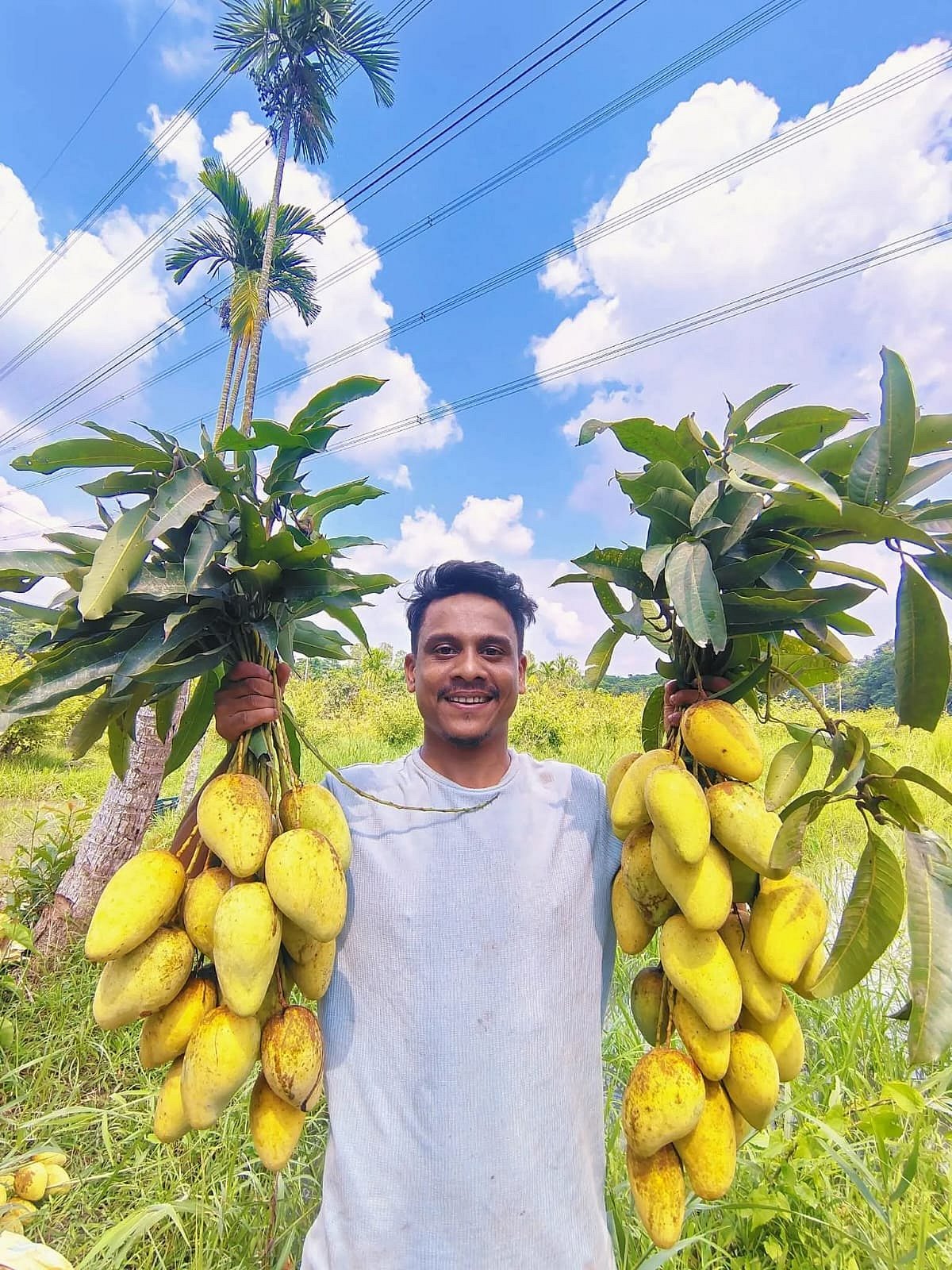
Minarul Haque, a 60-year-old farmer from Chittagong, Bangladesh, has achieved significant financial success by cultivating a diverse range of exotic mango varieties. His farm, "Messrs. Haque Agro Farm," located in Boalkhali Upazila, features 13 different types of mangoes, including Thai Chiang Mai, Brunei King, Red Palmer, and Honey Dew, alongside local varieties like Amrapali and Bari-4. These unique mangoes, distinguished by their shapes, colors, and tastes, attracted buyers from across Chittagong. Haque sold over 10,000 kg of mangoes this season, generating more than 800,000 Bangladeshi Taka (approximately $8,000 USD). The farm also cultivates other fruits like jujube, guava, malta, banana, and coconut, and includes fish ponds and livestock, operating as an integrated agricultural system. The family's journey began six years ago with 70 jujube trees on previously unusable land, and has since expanded to 10 acres. This venture has not only boosted the family's income, now exceeding 100,000 Taka monthly, but also created employment for four regular workers and inspired other local farmers to adopt similar integrated farming practices. Agricultural officials have noted the success of these exotic varieties, with research institutions like Bangladesh Agricultural Research Institute (BARI) exploring their potential for wider cultivation, though further studies on yield and adaptability are recommended.
This case study highlights the economic potential of agricultural diversification and niche market cultivation. By introducing and successfully marketing exotic mango varieties, farmer Minarul Haque has demonstrated a viable strategy for increasing farm profitability beyond traditional crops. The success hinges on identifying and catering to consumer interest in unique produce, leveraging direct sales channels facilitated by social media and word-of-mouth, and integrating farming practices for resource efficiency. From a systemic perspective, this success suggests opportunities for agricultural extension services to support similar initiatives, potentially enhancing rural incomes and food diversity. Future considerations for scaling such operations would involve assessing market saturation, managing disease resistance in non-native species, and ensuring sustainable resource management as operations expand. The model also presents a compelling case for rural entrepreneurship, shifting from job-seeking to value creation on underutilized land.
AI-generated to prompt reflection — not editorial opinion, not advice, not a statement of fact. How this works.