Farmers Block Dutch Highway, Avoid Fines Due to Covered License Plates
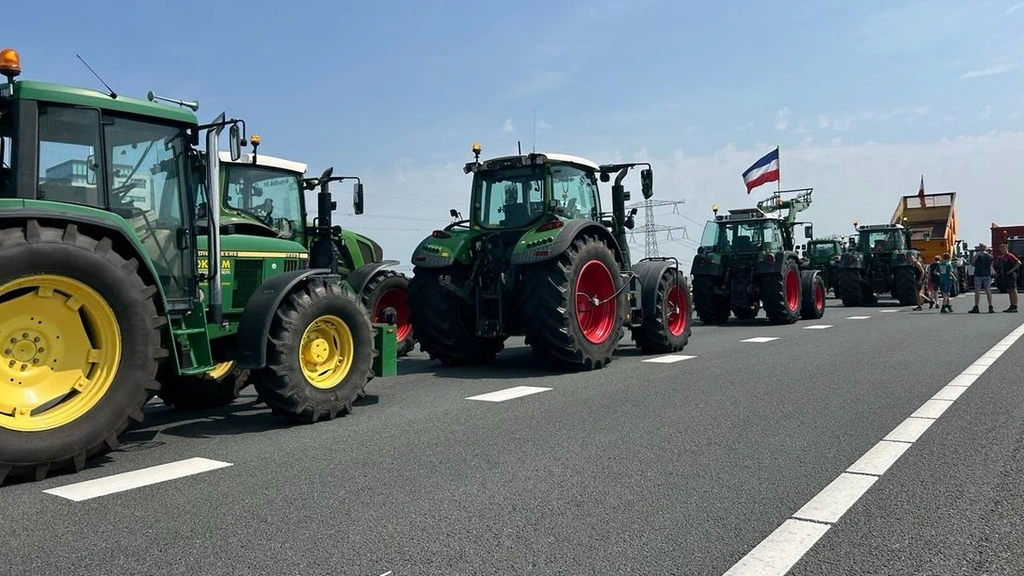
Dozens of farmers who temporarily blocked the A35 highway near Almelo last Thursday will not receive fines for their actions. The police are unable to issue penalties because the license plates on the tractors were covered. Approximately eighty farmers participated in the protest, parking their tractors on the highway between Wierden and Almelo. Their demonstration was in opposition to the Dutch government's nitrogen reduction plans. Although the blockade lasted less than an hour, it resulted in a four-kilometer traffic jam near Almelo. Police eventually arrived to clear the tractors from the road. A police spokesperson confirmed that while footage was captured, insufficient information is available to pursue any follow-up actions. Covering license plates is illegal, but the police acknowledged the difficulty in enforcing this during the protest. The activists considered the demonstration successful, describing it as a spontaneous action.
This event highlights a recurring tension between environmental policy implementation and public protest in the Netherlands. The farmers' tactic of obscuring license plates, while illegal, effectively circumvented immediate enforcement, underscoring challenges in applying regulations during large-scale civil disobedience. The government's nitrogen reduction plans, a complex issue involving agricultural practices and environmental targets, continue to be a significant point of contention. Future policy discussions may need to consider more integrated approaches that address both environmental goals and the socio-economic concerns of the agricultural sector to mitigate such direct actions and foster more constructive dialogue. The effectiveness of such protests, even if temporary, suggests a need for ongoing engagement with stakeholders to build consensus around long-term sustainability strategies.
AI-generated to prompt reflection — not editorial opinion, not advice, not a statement of fact. How this works.
