Farmers in Bangladesh's Rangpur Region Shift to Betel Leaf Cultivation for Increased Income
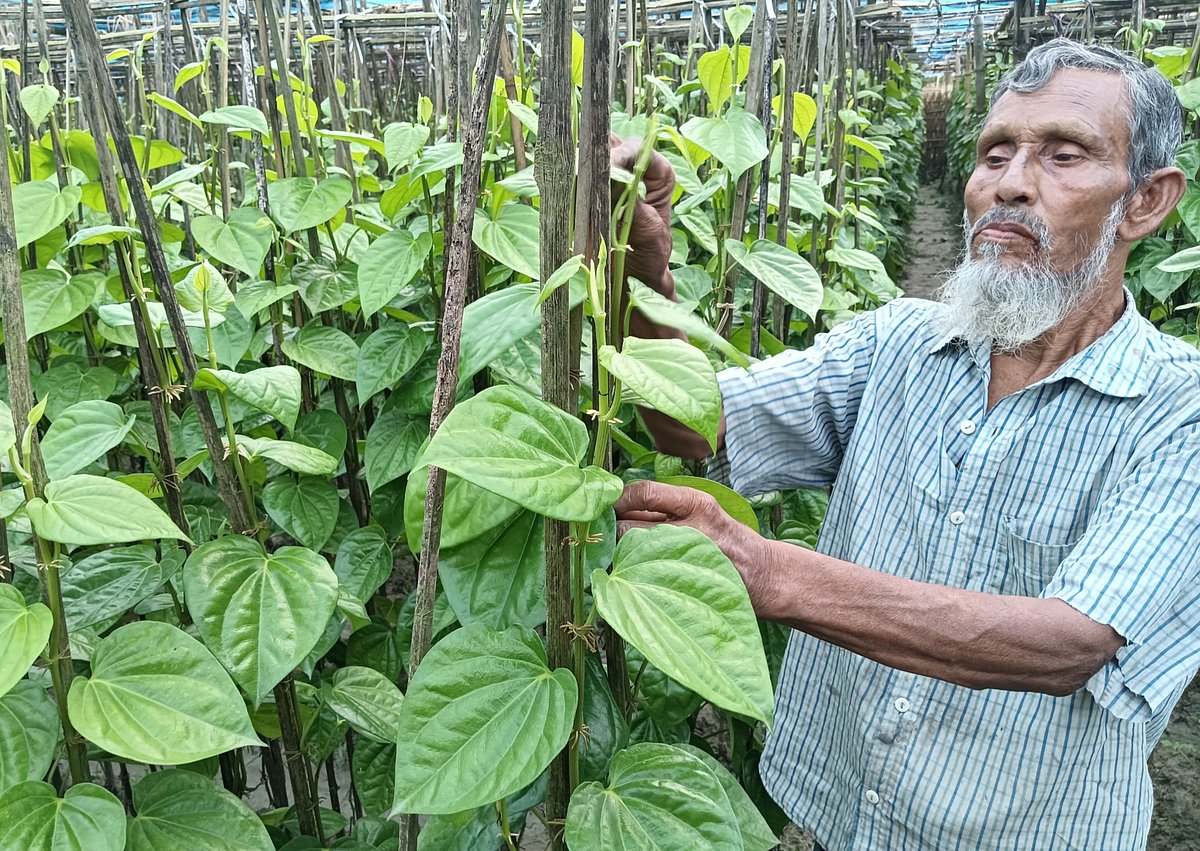
In the village of Balarampur, located in the Mominpur Union of Rangpur Sadar Upazila, Bangladesh, farmers are increasingly abandoning traditional rice cultivation in favor of betel leaf farming. This shift, driven by the higher profitability of betel leaves, has transformed the local economy and improved the livelihoods of many residents. Previously, the area primarily cultivated rice and vegetables, but the success of early adopters like farmers Robinas Ray and Emdadul Haq demonstrated the financial benefits of betel leaf cultivation.
Betel leaf farming offers a long-term income stream, with plants producing leaves for 10-12 years after an initial investment. This contrasts with rice cultivation, which requires annual replanting and preparation, yielding lower profits. Farmers report that while a 40-decimal plot of land used for rice might generate 16,000-18,000 Taka annually after expenses, the same plot dedicated to betel leaves can yield 120,000-130,000 Taka after covering the initial investment of 100,000 Taka and subsequent maintenance costs. Even individuals without agricultural land are cultivating betel leaves on small plots around their homes.
The local agricultural department recognizes betel leaf as a cash crop and is providing support and advice to farmers. Businessmen regularly visit the villages to purchase betel leaves directly from cultivators, who then sell them in various markets. This growing industry has led to increased prosperity, with farmers like Motiar Rahman and Aminul Haque expressing satisfaction with their improved financial situations, enabling them to invest in livestock, purchase land, and provide better education for their children. The trend indicates a significant economic transformation in the region, with betel leaf cultivation becoming a primary source of livelihood for many.
The economic shift in Balarampur village from rice to betel leaf cultivation highlights a rational response by farmers to market incentives and crop profitability. This transition demonstrates the potential for diversified agricultural practices to enhance rural incomes, particularly in regions where traditional crops may offer diminishing returns. The long-term yield and reduced replanting frequency of betel leaf present a compelling case for its adoption, illustrating a system where initial investment is offset by sustained revenue. From a future-oriented perspective, such agricultural diversification could build greater resilience against climate variability and market fluctuations, provided sustainable cultivation practices are maintained and supply chains remain robust. This case underscores the importance of agricultural extension services in identifying and promoting high-value crops that can uplift rural economies.
AI-generated to prompt reflection — not editorial opinion, not advice, not a statement of fact. How this works.