Fatal Head-On Collision on BR-116 in Pelotas Leaves One Dead
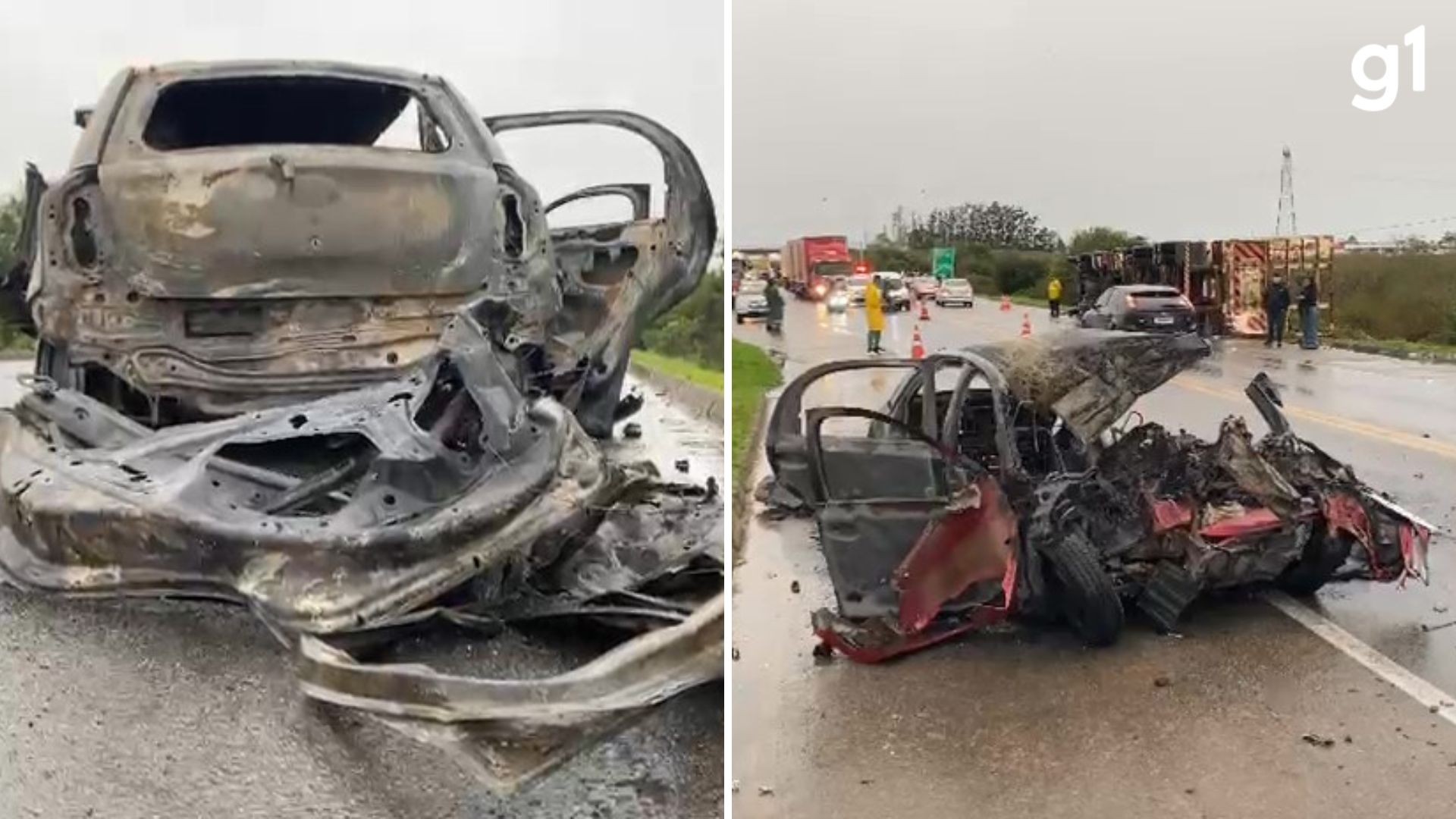
A man died in a severe head-on collision on Sunday, May 19th, on BR-116 in Pelotas, southern Rio Grande do Sul. The accident occurred around 2:30 PM near kilometer 527. The collision involved a truck registered in São Bernardo do Campo, São Paulo, and a Toyota Etios registered in Pelotas. Preliminary reports from the Federal Highway Police (PRF) suggest the Etios attempted an illegal overtaking maneuver, entering the opposing lane. The truck driver, carrying reforestation wood from Arroio Grande to the Port of Rio Grande, attempted to swerve but could not avoid the impact. Following the collision, the truck overturned onto the shoulder, scattering its load, and the car caught fire. Despite efforts by the truck driver and local residents to extinguish the flames using an extinguisher, the driver of the Etios, who was alone and remains unidentified, was found carbonized at the scene. The 33-year-old truck driver, a native of Pelotas, sustained no injuries. Firefighters were called to combat the blaze, and the victim's body was removed by the General Institute of Perícias (IGP) for identification. The Civil Police are investigating the incident, initially classifying it as negligent homicide by vehicle operation. The highway experienced partial lane closures for forensic examination and vehicle removal, with traffic managed under a stop-and-go system throughout the afternoon.
This tragic incident highlights the persistent dangers of high-speed highway travel, particularly concerning the risks associated with improper overtaking maneuvers. The investigation will likely focus on the sequence of events leading to the Etios driver's decision to overtake, exploring factors such as driver impairment, fatigue, or misjudgment of traffic conditions. From a systemic perspective, the event underscores the ongoing need for robust road safety enforcement and public awareness campaigns, especially on major transit routes like the BR-116. Future considerations for reducing such fatalities may involve enhanced monitoring technologies, improved road design to mitigate risks in high-traffic areas, and continued public education on the severe consequences of violating traffic laws, particularly in the context of increasing freight and passenger volumes on Brazil's key arteries.
AI-generated to prompt reflection — not editorial opinion, not advice, not a statement of fact. How this works.