Father Harvests Over-Meter-Long Cassava in Brazil, Surprising Daughter
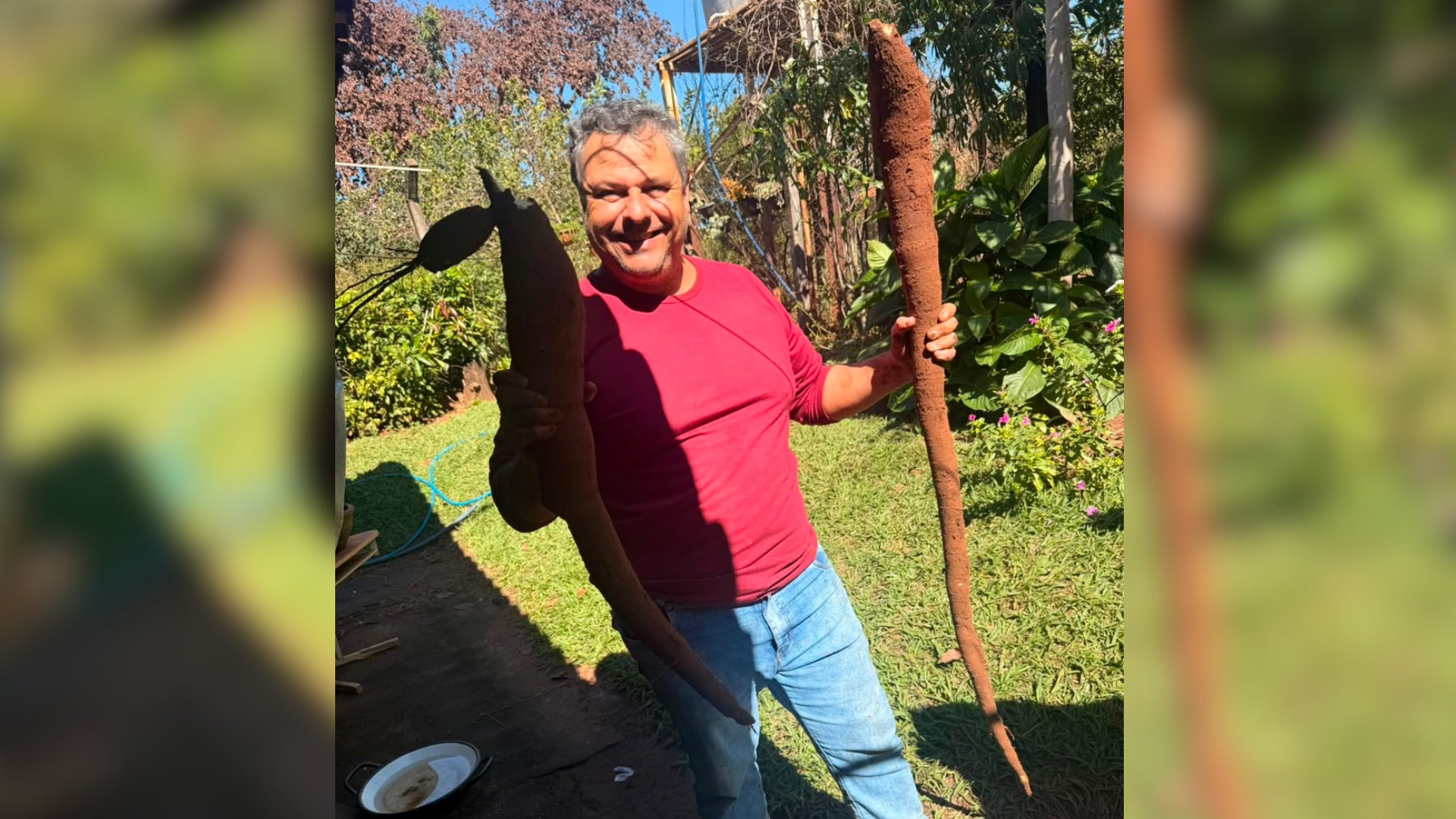
A father in São José do Rio Preto, Brazil, harvested an unusually large cassava root, measuring over one meter in length. Israel José Alves de Lima, who cultivates cassava, cucumbers, and other produce on his 400-square-meter farm solely for family consumption, was unaware of the cassava's extraordinary size until he unearthed it. He had intended to gift the cassava to a colleague of his daughter, influencer Letícia Borsari. Ms. Borsari, who was visiting her parents from Sinop, Mato Grosso, with her husband and six-month-old son, was surprised by the size of the root. She recorded her father's discovery and shared the video on social media, where it garnered significant attention from her followers. Although her father has previously harvested large vegetables, including unusually sized cucumbers and other cassava roots, he stated this was the longest cassava he had ever found. Following the surprise, the cassava was prepared as intended; Mr. Lima cut the root into pieces and sent it to his colleague, who used it in cooked dishes and broth. The event provided a moment of amusement and shared surprise for the family.
This event highlights the unpredictable nature of agricultural yields, even on a small, family-run scale. While the discovery of an exceptionally large cassava root is a novel occurrence, it underscores the potential for natural variations in plant growth influenced by factors such as soil conditions, genetics, and microclimate. The subsequent social media sharing of this event demonstrates the modern amplification of personal experiences, turning a local curiosity into a widely viewed online moment. From a systems perspective, this serves as a reminder of the biological diversity within staple crops and the potential for unexpected outcomes in food production, regardless of scale. It prompts reflection on how such natural anomalies are perceived and shared in an increasingly connected world.
AI-generated to prompt reflection — not editorial opinion, not advice, not a statement of fact. How this works.