Father Recounts Son's Death in July Uprising at Public Hearing
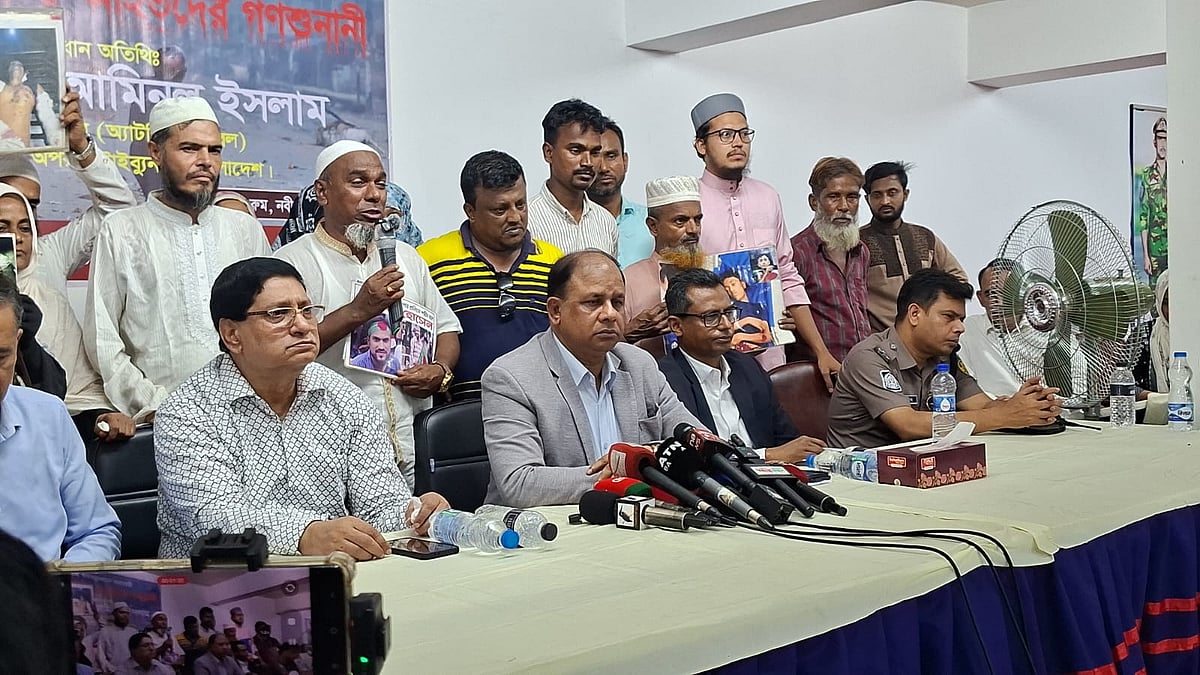
The father of Miraj Hossain, a young man who died during the July mass uprising, tearfully recounted his son's final moments at a public hearing in Jatrabari, Dhaka. Abdur Rob stated that his 29-year-old son was among eleven friends who participated in the movement, and while others returned to their families, Miraj did not. He described his son as someone who died for his love of the country while protesting. Miraj was shot and fell in an alley near Jatrabari police station and never returned alive. The hearing, organized by the Chief Prosecutor's office of the International Crimes Tribunal, aimed to gather testimonies from families of martyrs and the injured from the Jatrabari area during the uprising. Chief Prosecutor Md. Aminul Islam was the chief guest and collected information about the cases, appealing for cooperation. He informed journalists that an initial list of approximately 85 individuals killed in Jatrabari during the July uprising has been compiled, with the number potentially increasing after the investigation concludes. To expedite justice, the prosecution plans to consolidate investigations of killings from July 16, 19, and 20, along with other incidents, into a single, coordinated report for the court. This approach aims to include multiple incidents and defendants in a single trial, preventing lengthy separate legal proceedings.
This event highlights the profound personal cost of political unrest, as evidenced by the father's grief and the collective testimony of affected families. The Chief Prosecutor's initiative to consolidate investigations into a single report reflects a procedural strategy to streamline justice for complex, multi-incident events, potentially mitigating the risk of protracted trials. This approach, while aiming for efficiency, underscores the challenges in attributing responsibility and achieving closure in the aftermath of widespread civil disturbances. The focus on a coordinated investigation suggests an effort to build a comprehensive case, acknowledging the interconnectedness of events during the uprising and seeking to provide a more holistic judicial outcome for victims and society.
AI-generated to prompt reflection — not editorial opinion, not advice, not a statement of fact. How this works.