FCC Ruling on Warehouse Robots Highlights US Policy Needs, AI's Role
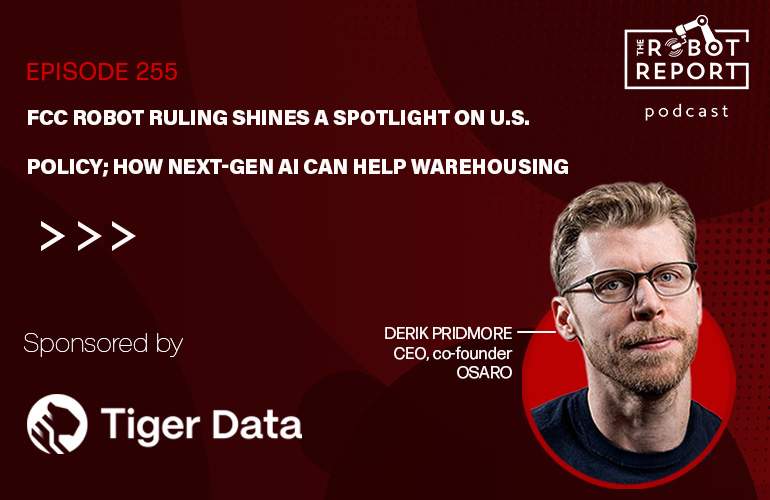
The U.S. Federal Communications Commission (FCC) has issued a ruling concerning robots, drawing attention to the nation's policy landscape regarding automation. Derek Pridmore of Osaro, a company involved in robotics, stated that while warehouse robots are rapidly evolving, their practical safety and dependability in real-world applications are contingent upon sophisticated, multi-tiered artificial intelligence systems. This FCC decision underscores the growing importance of regulatory frameworks as advanced AI technologies, particularly those designed for complex environments like warehouses, become more prevalent. The development and deployment of these next-generation AI systems are crucial for enhancing efficiency and ensuring operational integrity within the logistics sector. The ruling serves as a catalyst for discussions on how U.S. policy can better accommodate and guide the integration of such advanced robotic solutions. Pridmore's comments suggest that current AI capabilities, while impressive, require further specialization to meet the rigorous demands of industrial settings. The intersection of regulatory policy and technological advancement in AI-powered robotics is a key area to watch.
The FCC's ruling on warehouse robots signals a critical juncture where technological advancement in automation intersects with evolving regulatory oversight. As companies like Osaro develop specialized AI for complex environments, the FCC's attention highlights the need for policy to adapt proactively rather than reactively. The challenge lies in creating frameworks that foster innovation while ensuring safety and reliability, particularly as AI systems become more autonomous. Future policy must consider the long-term implications of integrating advanced AI into critical infrastructure like warehousing, balancing economic benefits with potential societal impacts and the need for robust cybersecurity measures. This situation presents an opportunity to shape a regulatory environment that supports responsible AI deployment, anticipating the next decade's technological trajectory.
AI-generated to prompt reflection — not editorial opinion, not advice, not a statement of fact. How this works.