Federal Agencies Sue Hydroelectric Plants for $330 Million Over Fishing Impacts in Rondônia
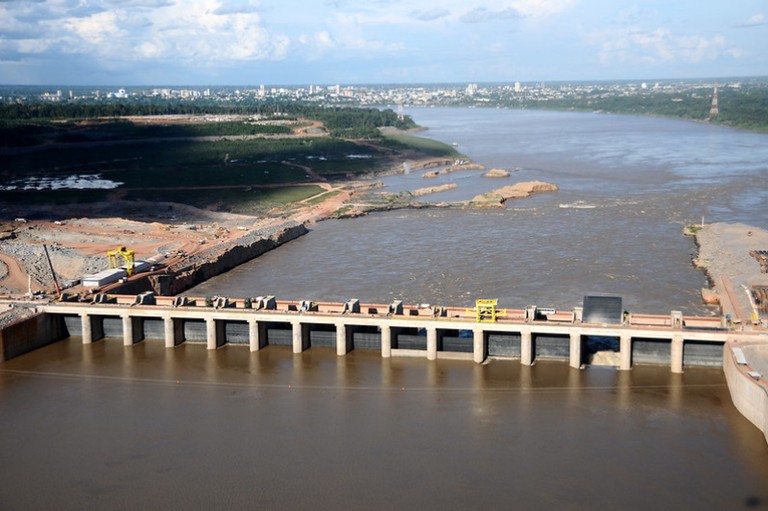
Brazil's Federal Public Prosecutor's Office (MPF), the Labor Public Prosecutor's Office (MPT), and the Public Defender's Office of the Union (DPU) have filed two lawsuits demanding over R$330 million in compensation and protective measures for the Madeira River Basin in Rondônia. The lawsuits target the Santo Antônio and Jirau hydroelectric plants, which the MPF alleges have severely reduced fish stocks and harmed the fishing activities of riverside communities. According to the MPF, the plants' construction and operation have blocked fish migration routes, leading to a drastic decline of up to 95% in commercially valuable species like the dourada and filhote in some areas, directly impacting the income and livelihoods of local fishermen.
In addition to financial compensation, the agencies are calling for the federal government to establish a committee for greater public participation in decisions regarding the river's water use. The MPF notes that these participatory structures have been absent for over 15 years, preventing fishermen, indigenous peoples, and riverside dwellers from having a say in water resource management. The lawsuits also seek an urgent suspension of new environmental licenses for large projects in the Madeira River Basin until cumulative impacts are independently assessed. The MPT highlighted that the decline in fishing has compromised the primary economic activity for thousands of families, pushing some towards illegal mining.
The MPF, MPT, and DPU are requesting a minimum of R$250 million for environmental remediation of the Madeira River, with the Union and Ibama potentially liable subsidiarily. Furthermore, they seek R$50 million in collective moral damages from Santo Antônio Energia and R$30 million from Jirau Energia. These funds are intended for environmental recovery projects and support for affected riverside communities. The plaintiffs also demand that the companies implement measures to restore fish populations, mitigate environmental damage, and bolster artisanal fishing and other traditional activities, with the active involvement of fishermen and community representatives in planning these actions.
This legal action highlights a recurring tension between large-scale infrastructure development, specifically hydroelectric power generation, and the ecological and socio-economic impacts on local communities and natural resources. The core of the dispute centers on the alleged failure of the Santo Antônio and Jirau hydroelectric plants to adequately mitigate their environmental footprint, leading to significant declines in fish populations crucial for local livelihoods. The demand for substantial financial compensation and the establishment of participatory governance structures underscores a call for greater accountability and environmental stewardship from major industrial actors. Looking ahead, the case prompts consideration of how future energy projects can be planned and executed with more robust, independent environmental impact assessments and inclusive stakeholder engagement, particularly in ecologically sensitive regions. This approach could foster more sustainable development pathways that balance economic progress with ecological preservation and community well-being, mitigating the risk of such conflicts in the long term.
AI-generated to prompt reflection — not editorial opinion, not advice, not a statement of fact. How this works.