Federal Court Halts Tax Changes Threatening Manaus Free Trade Zone Incentives
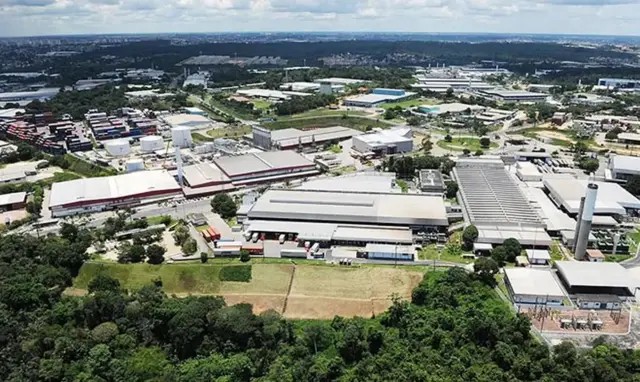
A Federal Court in Amazonas has suspended the effects of a recent understanding by the Federal Revenue Service that would have reduced tax incentives for the Manaus Free Trade Zone (ZFM). The decision, issued on Friday, March 3rd, follows a request from the Federation of Industries of the State of Amazonas (Fieam) and prevents the new interpretation from being applied until the case is fully judged. The Federal Revenue Service's understanding, outlined in Note Cosit/Sutri/RFB nº 141/2026, proposed partial collection of PIS and Cofins taxes on operations destined for the Manaus Industrial Pole (PIM). This would have meant suppliers outside the ZFM would pay approximately 10% of the standard PIS and Cofins rates on sales to Manaus-based industries. The productive sector warned that this would increase production costs for companies in the Industrial Pole by passing on higher prices for inputs and raw materials. Judge Ricardo Augusto Campolina de Sales of the 3rd Federal Civil Court of Amazonas ordered the Union and the Federal Revenue Service to refrain from using this interpretation to demand tax payments, penalize companies, or deny tax regularity certificates. The judge found a high probability that Fieam's claims are valid and that companies would suffer irreparable harm if the Revenue Service's interpretation took effect before a final judgment. He noted that the Revenue Service's stance contradicts a Superior Court of Justice (STJ) ruling (Tema Repetitivo 1.239), which considers sales to the ZFM equivalent to exports, thus exempt from PIS and Cofins. The judge also emphasized the constitutional protection of the ZFM's legal regime and stated that Law Complementary nº 224/2025 did not alter this tax treatment or permit partial taxation on these operations. The Federal Revenue Service's interpretation arose from a query by the National Confederation of Industry (CNI) regarding the effects of Law Complementary nº 224/2025, which reduced federal tax benefits. Although the law preserved incentives for companies within the ZFM, the Revenue Service concluded that the zero-rate benefit for PIS and Cofins on sales from other regions should be subject to reduction. Fieam argued this interpretation would diminish the ZFM's competitiveness, increase the "Amazon Cost," and potentially lead to higher input prices, reduced investment, and job losses. Fieam had initially sought administrative resolution before resorting to the judiciary. The preliminary injunction is temporary, and the Union will present its defense before the Federal Court makes a final decision on the merits of the case.
This judicial intervention highlights the ongoing tension between centralized tax policy and regional development initiatives like the Manaus Free Trade Zone. The Federal Revenue Service's interpretation, if implemented, would have increased operational costs for industries within the ZFM, potentially undermining decades of policy aimed at fostering economic activity in the Amazon. The court's decision, by referencing established STJ precedent and constitutional protections, suggests a judicial inclination to safeguard established regional economic frameworks against potentially disruptive, albeit legally derived, tax interpretations. This case underscores a systemic challenge: balancing the need for fiscal uniformity and revenue collection with the imperative to support geographically or economically distinct development zones. Future policy considerations might involve clearer legislative frameworks that explicitly delineate the scope of tax reforms concerning such protected economic areas, thereby reducing reliance on judicial arbitration and ensuring greater predictability for businesses operating within them. The long-term sustainability of such zones will depend on their ability to adapt to evolving economic landscapes and national fiscal policies, while also retaining the incentives that justify their existence.
AI-generated to prompt reflection — not editorial opinion, not advice, not a statement of fact. How this works.