Feni Tornado Destroys Village in 40 Seconds, Damaging Homes and Power Lines
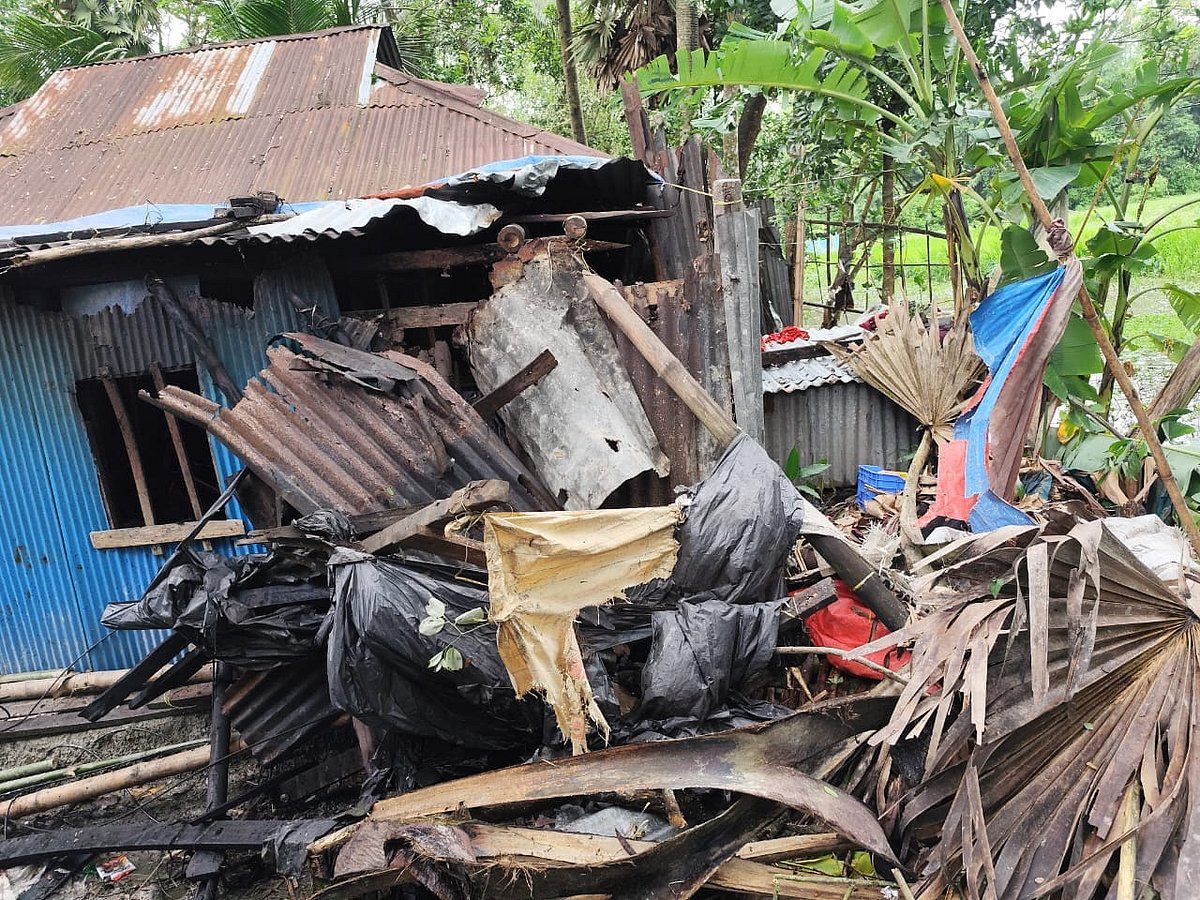
A powerful tornado struck Swarajpur village in Sonagazi, Feni, Bangladesh, on Sunday at approximately 12:00 PM, causing widespread destruction within a mere 40 seconds. The intense winds uprooted trees and electricity poles, leaving at least 35 homes severely damaged. Residents reported that the tornado began with a loud noise amidst light rain and transformed the landscape into a scene of devastation. Tin roofs, trees, poles, bamboo, and furniture were scattered by the gale-force winds. Four electrical poles and over a hundred trees in the village were toppled. Seventy-year-old Sahab Uddin described the event as unprecedented in his lifetime, likening it to "doomsday" as his house's roof was torn off and poles collapsed. Zainal Abedin, whose house was completely destroyed, expressed despair over losing his home, built with loans and borrowed money, and is now concerned about shelter for his family. An inspection revealed debris spread across hundreds of meters in Swarajpur village, with scattered roofing, trees, and downed power lines with wires. Local authorities, including the former chairman of Mati Ganj Union Parishad, Amin Uddin Dolon, have visited the site and informed the Upazila Nirbahi Officer (UNO) about the damage to seek government assistance. The Deputy General Manager of the Sonagazi Upazila Rural Electrification Association, Md. Mostofa Kamal, confirmed damage to several electricity poles and lines, with repair crews already working on restoration. UNO Riggan Chakma acknowledged the reports of damaged homes and stated that the affected individuals are being assessed for necessary future actions.
The severe weather event in Sonagazi, Feni, highlights the vulnerability of rural infrastructure to extreme meteorological phenomena. The rapid onset and concentrated destruction caused by the tornado underscore the importance of robust building codes and early warning systems tailored to localized, high-impact weather. While immediate relief efforts are crucial for affected residents, a long-term strategy should consider climate resilience in community planning and infrastructure development. Future investments in power grids and housing in such regions may need to incorporate designs that can better withstand sudden, intense wind events, mitigating both economic losses and social disruption. Understanding the patterns and increasing frequency of such extreme weather events is critical for proactive adaptation and safeguarding vulnerable populations.
AI-generated to prompt reflection — not editorial opinion, not advice, not a statement of fact. How this works.