Fields Medal 2026 Awarded to Leading Mathematicians
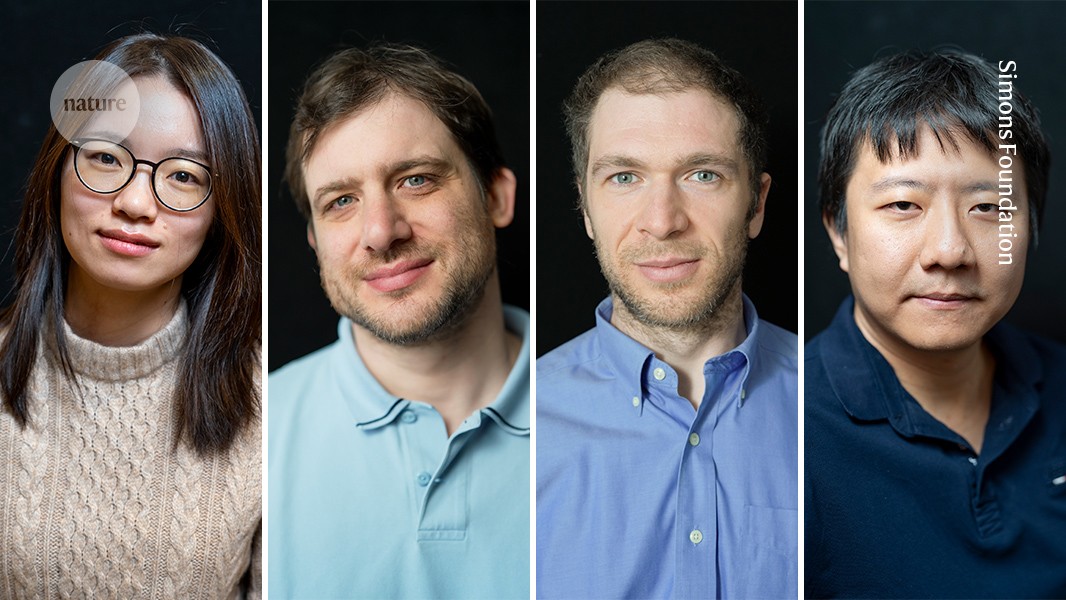
The prestigious Fields Medal for 2026 has been awarded to several prominent mathematicians, recognizing their outstanding contributions to the field. This award, often considered the highest honor in mathematics, celebrates individuals who have made significant advancements and demonstrated exceptional talent. The recipients represent a diverse range of mathematical disciplines, highlighting the breadth of innovation within the subject. The ceremony, which typically takes place every four years, acknowledges mathematicians under the age of 40. This year's awardees are expected to continue pushing the boundaries of mathematical knowledge and inspire future generations of researchers. The selection process is rigorous, involving nominations and evaluations by a committee of esteemed mathematicians from around the world. The Fields Medal aims to encourage new generations of mathematicians and to recognize the work of those who have already made a significant impact. The announcement has generated considerable excitement within the global mathematical community, with many anticipating the groundbreaking research that will emerge from these laureates.
The awarding of the Fields Medal underscores the ongoing importance of fundamental research in mathematics and its potential to drive future innovation. As AI systems become increasingly sophisticated, the foundational mathematical principles underpinning them will likely see even greater scrutiny and development. This award highlights individuals whose work may, over the next decade, contribute to advancements in areas such as artificial intelligence, complex systems modeling, and theoretical computer science. The selection criteria, focusing on mathematicians under 40, suggests a strategic investment in emerging talent, aiming to foster breakthroughs that will shape technological and scientific landscapes for years to come. The challenge for recipients will be to translate their theoretical insights into practical applications that address societal needs, navigating the evolving interplay between pure mathematics and applied technology.
AI-generated to prompt reflection — not editorial opinion, not advice, not a statement of fact. How this works.