Fiery object spotted in Dutch skies
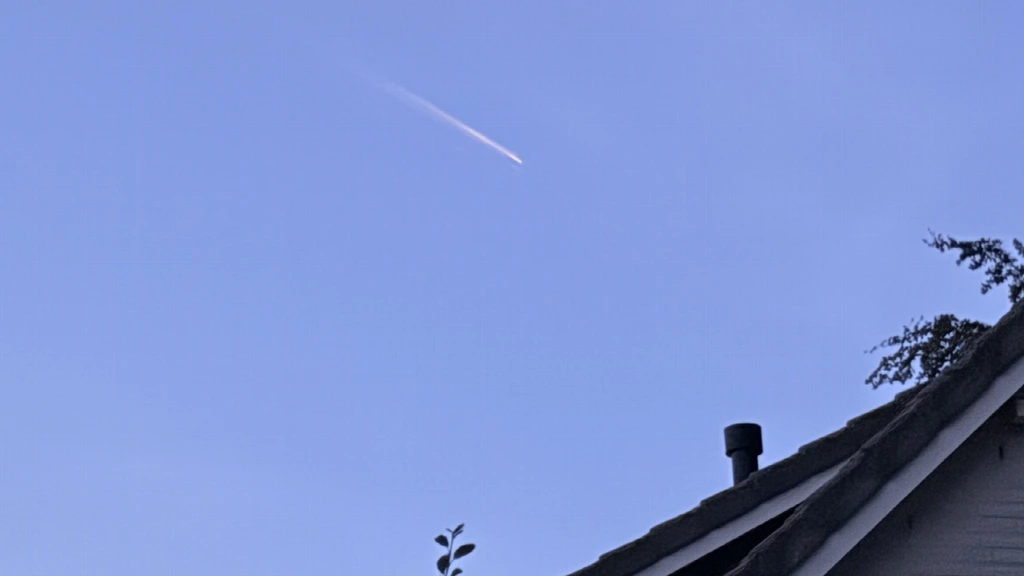
A bright, fiery object was visible in the sky over various parts of the Netherlands around 10:30 PM. Reports of the unusual phenomenon came from cities including Amsterdam, Utrecht, Almere, Dronten, and Arnhem. Astronomer Lucas Ellerbroek, who observed the event himself near Amsterdam, stated that the exact nature of the object remains unknown. It could be a meteor burning up in the atmosphere, with larger objects producing more intense fire. Alternatively, it might be a piece of space debris, such as fragments from an old satellite, which can create a spectacular light show, similar to a fragment from the ISS observed a few months prior.
Ellerbroek anticipates that more clarity will emerge by the following morning. If any remnants exist, they would likely be found on the ground. By analyzing reports, the object's trajectory can be determined, potentially indicating a landing site. While such light trails are not uncommon, their visibility is enhanced when occurring over populated urban areas compared to rural locations. Meteorites are estimated to land in the Netherlands once every three to four years, though recoveries are rare.
A meter-sized rock would create a large fireball, but the resulting terrestrial fragment might only be a few centimeters, breaking into pebble-sized pieces. Consequently, only six meteorites have been recovered in the Netherlands throughout history. The first documented meteorite fall was near Uden in 1840, and the most recent was found in Broek in Waterland in 2017, a half-kilogram stone that damaged a roof.
The sighting of a bright aerial phenomenon over the Netherlands, whether a meteor or space debris, highlights the dynamic interaction between Earth and its orbital environment. Such events underscore the ongoing influx of extraterrestrial material and human-made objects into our atmosphere. The rarity of recovered meteorites, despite frequent atmospheric entry, points to the challenges of detection and retrieval, influenced by factors like object size, atmospheric burn-up, and terrestrial conditions. Understanding these phenomena is crucial for planetary defense and for appreciating the continuous cosmic processes that affect our planet, especially as human activity in space increases the volume of potential debris.
AI-generated to prompt reflection — not editorial opinion, not advice, not a statement of fact. How this works.