FIFA Overturns Balogun Red Card After Trump's Appeal, Sparking Corruption Claims
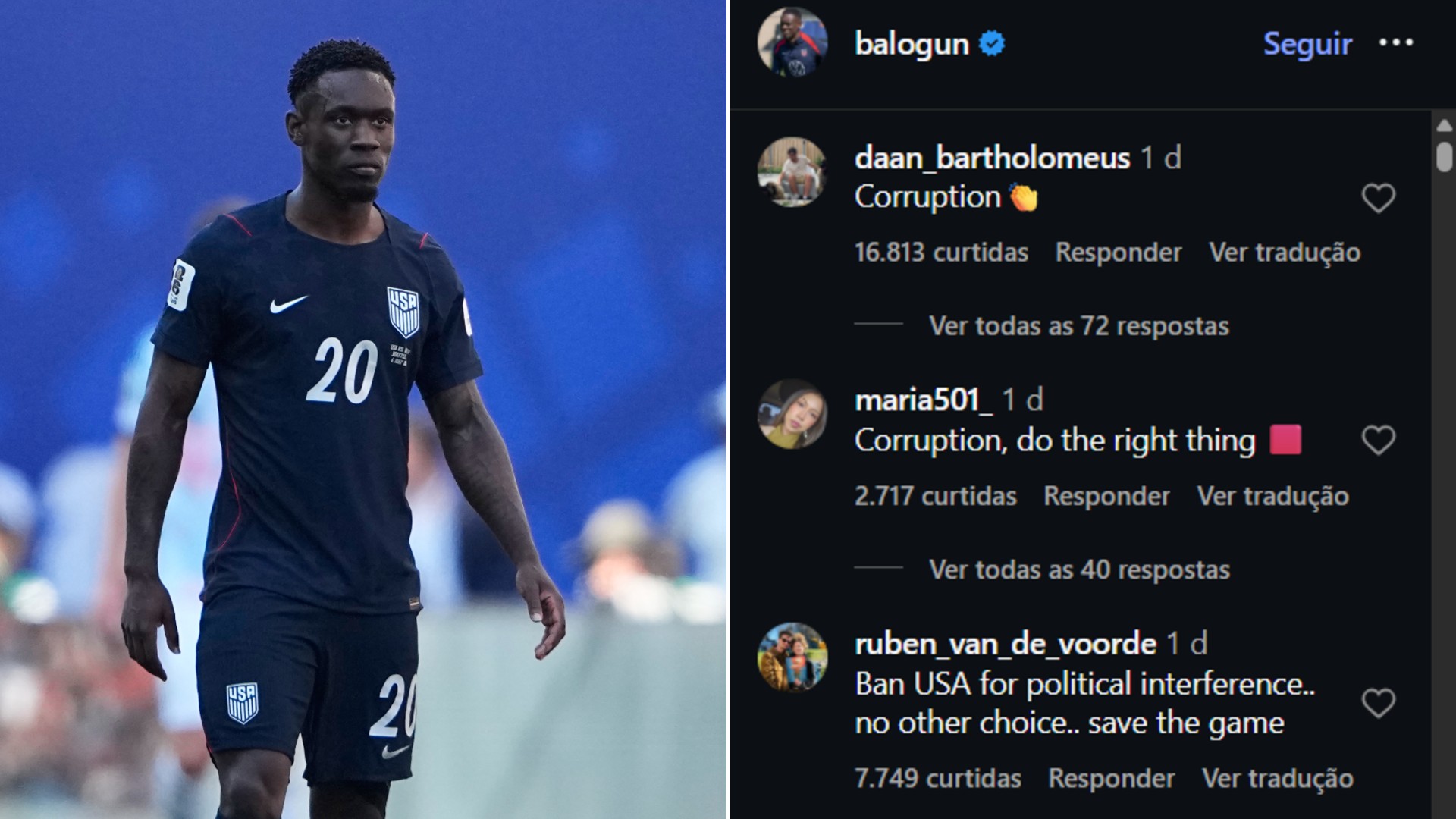
Following FIFA's decision to overturn a red card issued to American player Folarin Balogun, his Instagram post was flooded with criticism from rival fans. Commenters labeled the move a "scandal" and "manipulation," accusing FIFA of favoring the United States, a co-host of the 2026 World Cup. Some users directly called the decision "corruption" and suggested banning the U.S. for political interference.
U.S. President Donald Trump confirmed he had asked FIFA to review Balogun's red card from a previous match against Bosnia and Herzegovina on Wednesday, November 1st. Trump stated he believed the initial foul call was incorrect and that excluding one of the U.S.'s top players would be unfair. He also described the referee, Raphael Claus, as "a little suspicious."
FIFA President Gianni Infantino acknowledged receiving a call from Trump but insisted that FIFA's Disciplinary Committee acted independently. Infantino stated that while he sometimes agrees or disagrees with the committee's decisions, he respects their autonomy. Despite this explanation, some social media users criticized Balogun directly, with one commenter suggesting he should not play if he were an "ethical athlete."
The incident highlights the complex interplay between political influence and sporting governance. While FIFA maintains the independence of its disciplinary bodies, the perception of external pressure, particularly from a head of state, can erode public trust in the fairness of its decisions. This situation raises questions about the mechanisms for appealing disciplinary actions and the potential for such appeals to be perceived as politically motivated, especially when a nation is a host of a major sporting event. Future frameworks may need to address transparency in review processes to mitigate such concerns and maintain the integrity of the game, ensuring that on-field decisions are subject to established sporting regulations rather than perceived external influence.
AI-generated to prompt reflection — not editorial opinion, not advice, not a statement of fact. How this works.