FIFA President Infantino and UEFA President Ceferin in Cold War Over Money
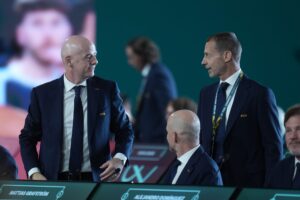
The 2026 FIFA World Cup final, won by Spain against Argentina with a 1-0 score, was overshadowed by off-field tensions. UEFA President Aleksander Čeferin notably did not attend the final, highlighting a significant disagreement between European football's governing body and FIFA. This rift is reportedly driven by financial disputes, suggesting a 'cold war' between FIFA President Gianni Infantino and Čeferin. The article implies that financial matters are the core reason for the escalating conflict. The underlying issues appear to stem from disagreements over revenue distribution and control of international football finances. This situation suggests a power struggle within global football governance, with significant financial implications for both organizations and their member associations. The lack of attendance by a key figure like Čeferin underscores the severity of the dispute.
The reported financial dispute between FIFA and UEFA, personified by their respective presidents Gianni Infantino and Aleksander Čeferin, signals a critical juncture in global football governance. Such conflicts often arise from competing interests in revenue streams, commercial rights, and the allocation of funds across different confederations. The underlying tension may reflect differing strategic visions for the sport's future development and commercialization. As football increasingly operates as a globalized, multi-billion dollar industry, the distribution of wealth and decision-making power becomes a central point of contention. This dynamic highlights the inherent challenges in managing a sport with diverse regional needs and economic capacities, demanding robust and transparent financial frameworks to ensure equitable growth and prevent undue influence by any single entity. The next decade will likely see intensified negotiations over financial models and governance structures, influenced by evolving media landscapes and fan engagement trends.
AI-generated to prompt reflection — not editorial opinion, not advice, not a statement of fact. How this works.