FIFA President Infantino Faces Scrutiny Over Trump's Intervention in Player's Red Card
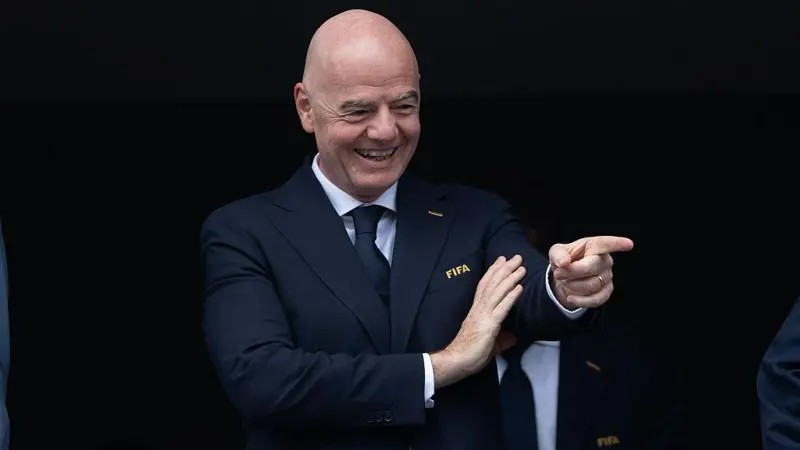
FIFA President Gianni Infantino, currently serving his tenth year in office and seeking re-election next year, is facing mounting controversy. Recent issues include the awarding of FIFA's Peace Prize to U.S. President Donald Trump and exorbitant World Cup ticket prices. A significant point of contention is the unprecedented decision to overturn a red card issued to American forward Folarin Balogun during a World Cup match against Bosnia and Herzegovina. Balogun, who had scored three goals in the tournament, was initially suspended for the subsequent game against Belgium on July 6th but had his red card overturned by FIFA, allowing him to play. Despite the red card, Balogun participated in the match, which the U.S. lost 4-1 to Belgium, leading to their elimination. FIFA's explanation for the decision, released over 24 hours later, was an 871-word statement that offered little clarity. President Trump confirmed he had contacted Infantino, requesting a review of the red card, though he stated he did not instruct Infantino to suspend the ban. This intervention has raised concerns across the football world, with some arguing that Balogun's punishment for the initial red card was sufficient. Infantino has denied any political interference, asserting the independence of FIFA's disciplinary committee, but public perception remains a significant factor. The decision, which benefited the host nation's team, has been linked to Trump's support for Infantino and their perceived friendship, with the suspension being likened to a presidential pardon. Former Liverpool coach Jurgen Klopp called the situation "crazy" if Trump and Infantino resolved it privately, casting doubt on the integrity of the game. FIFA statutes strictly prohibit political interference, with member countries facing suspension for government involvement in national football federations. The relationship between Infantino and Trump has been cultivated over several years, highlighted by the Peace Prize award during the World Cup draw. A human rights group, FairSquare, filed a complaint with FIFA's ethics committee regarding the Peace Prize, alleging a violation of political neutrality rules, a complaint that has reportedly gone unanswered. Additionally, 50 Members of the European Parliament sent a letter to the ethics committee demanding action. Trump's public acknowledgment of his role in the Balogun situation underscores how political dynamics can influence football. This follows other incidents, such as the denial of entry for referee Omar Artan to the U.S. and FIFA's lack of transparency in scheduling changes, like the alteration and reversal of the England vs. Mexico match start time. The Balogun case mirrors these events, characterized by decisions communicated without clear justification. FairSquare believes only a small group was involved in creating the FIFA Peace Prize, not the FIFA Council. The article also points to other controversial decisions under Infantino's leadership, including the awarding of the 2030 and 2034 World Cup hosting rights, which effectively guaranteed Saudi Arabia hosting the 2034 tournament despite human rights concerns. The Norwegian Football Federation abstained from the vote, citing concerns about FIFA's governance and trust. The creation of the Club World Cup has also been criticized by FIFPro president Sergio Marchi for lacking dialogue and respect. Former FIFA President Sepp Blatter commented on the Balogun situation, stating that football should not be a platform for political power. UEFA, representing European football, has strongly opposed the decision regarding Balogun, calling it "unprecedented, incomprehensible, and unjustifiable." This stance reflects previous conflicts between UEFA and FIFA, including a walkout by European delegates during a FIFA Congress in May 2025, and UEFA's invitation to referee Omar Artan to officiate the Super Cup match after his U.S. entry was denied.
The intervention by U.S. President Donald Trump in a FIFA disciplinary matter, specifically concerning a red card for player Folarin Balogun, raises significant questions about the separation of political influence and sports governance. While FIFA President Gianni Infantino asserts the independence of its disciplinary committee, the optics of a head of state directly engaging with the FIFA president on a player's suspension, especially given their prior relationship and the timing relative to Balogun's team (the host nation), create a perception of undue influence. This event, coupled with past controversies surrounding FIFA's decision-making processes, such as host nation selections and the creation of new tournaments, highlights a recurring tension between FIFA's stated commitment to neutrality and the political and economic pressures it faces. The European football governing body UEFA's strong reaction underscores the potential for such incidents to fracture trust within the global football community and challenge the established order. Looking ahead, the increasing intersection of global politics and major sporting events necessitates robust governance frameworks that can withstand external pressures and maintain the integrity of competition, ensuring that on-field decisions are based solely on sporting merit and established rules, rather than political expediency or personal relationships.
AI-generated to prompt reflection — not editorial opinion, not advice, not a statement of fact. How this works.