FIFA's Rule Changes Create Refereeing Chaos, Compared to Fictional Calvinball
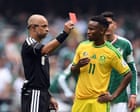
Recent amendments to the laws of the game in football, implemented by FIFA, are proving to be poorly tested and are leading to significant confusion among match officials and spectators. The changes have resulted in increased on-field drama, instances of mistaken identity, and widespread bewilderment regarding the application of the rules. This chaotic scenario has drawn comparisons to the fictional game of Calvinball from the comic strip Calvin and Hobbes, known for its constantly shifting and arbitrary rules. The comparison highlights the perceived lack of clarity and consistency in FIFA's recent officiating directives. The fictional game's nonsensical scoring system, such as "Q to 12," further emphasizes the perceived absurdity of the current situation in football officiating. This fictional game's notoriety, even reaching the US Supreme Court through Justice Ketanji Brown Jackson's dissent, underscores the cultural resonance of such concepts of rule-based anarchy. The current state of refereeing under these new, untested regulations is creating a spectacle that mirrors this fictional, farcical sport.
FIFA's rapid implementation of untested rule modifications in football has introduced a high degree of unpredictability in officiating, drawing parallels to a fictional game with fluid rules. This approach risks undermining the integrity and spectator understanding of the sport by prioritizing perceived innovation over established clarity. The systemic challenge lies in balancing the evolution of football with the necessity of consistent, comprehensible regulations. Future governance should prioritize rigorous testing and stakeholder consultation to ensure that rule changes enhance, rather than detract from, the global appeal and fairness of the game, especially as AI-driven analytics become more prevalent in performance evaluation and potentially rule enforcement.
AI-generated to prompt reflection — not editorial opinion, not advice, not a statement of fact. How this works.