First Crested Eagle Nest Discovered in Brazilian Conservation Reserve
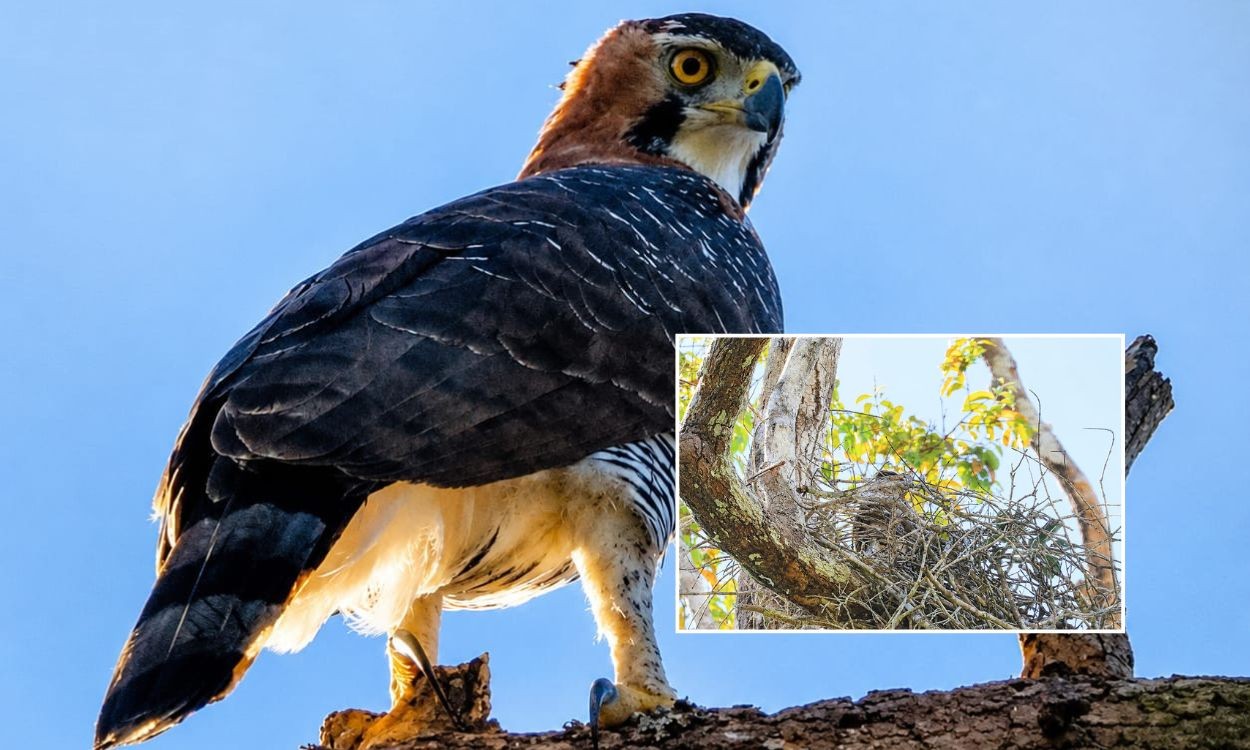
A significant ornithological discovery has been made in the Cunhataí-Porã Reserve in São José do Rio Claro, Mato Grosso, Brazil, with the first documented nest of the ornate hawk-eagle (Spizaetus ornatus) found within the area. Lucas Souza, a biology student and guide conducting research on the property, made the unprecedented find while checking camera traps. He observed one eagle and then followed another carrying a branch, eventually locating the nest with the female perched on it. Souza described the moment as unforgettable and a highlight of his monitoring work. The reserve, owned by businessman Iraceldo Luiz de Cézaro, has frequently hosted sightings of the ornate hawk-eagle, but this marks the first confirmation of its breeding cycle there. Souza and his team are now conducting daily monitoring of the pair to gather extensive data on the species' reproductive behavior. During his observations, Souza also captured a rare image of the pair mating, an event he initially mistook for a dispute. He has established a discreet observation point approximately 40 meters from the nest to minimize disturbance. The ornate hawk-eagle, also known as the crested eagle, is a large bird of prey measuring 58-65 centimeters, with females being larger than males. It is found from southern Mexico to Paraguay and northern Argentina and is considered threatened outside the Amazon region. The species builds its nest on tall trees, and incubation can last up to 50 days, with chicks remaining dependent on parental care for an extended period.
The discovery of the ornate hawk-eagle's nest underscores the critical role of private conservation reserves in supporting biodiversity, particularly for species facing threats. This finding highlights the value of dedicated ecological monitoring and research by individuals like Lucas Souza, whose efforts contribute vital data for conservation strategies. The ongoing monitoring, conducted with sensitivity to avoid disturbing the breeding pair, exemplifies best practices in wildlife research. Future studies and educational outreach based on this data could significantly enhance public awareness and support for avian conservation in Brazil, potentially influencing land-use policies and reinforcing the importance of habitat preservation for threatened raptors.
AI-generated to prompt reflection — not editorial opinion, not advice, not a statement of fact. How this works.