First Human X-rays Successfully Taken Aboard International Space Station
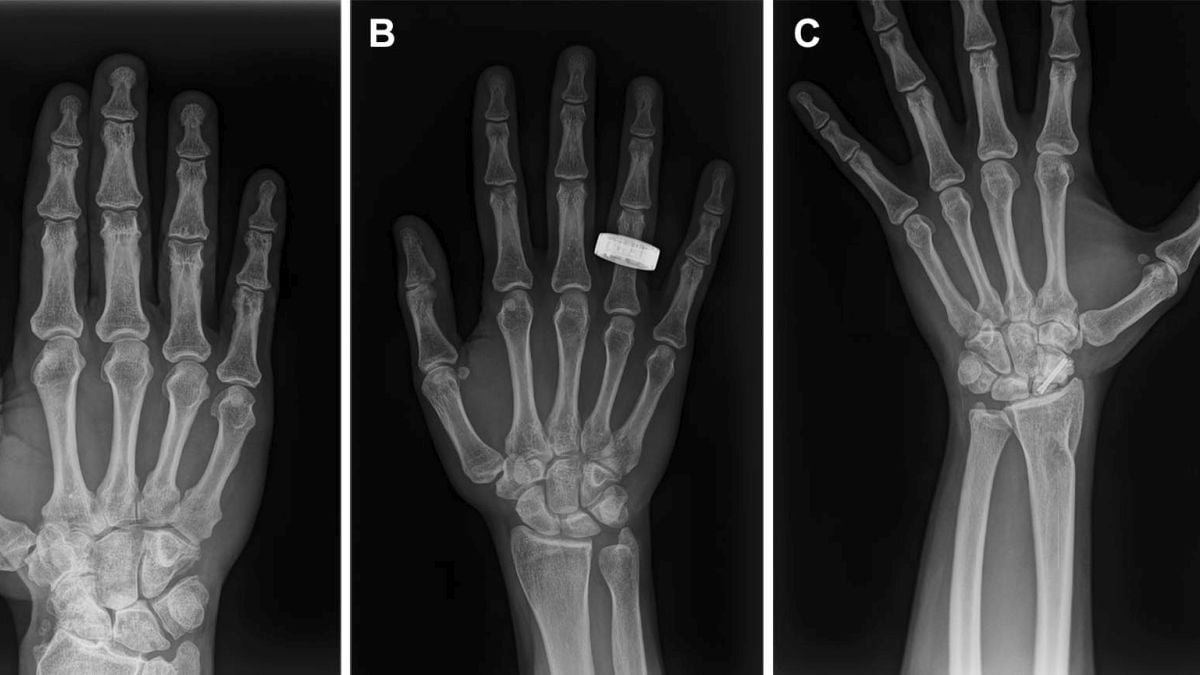
Astronauts have successfully conducted the first human X-ray imaging in space aboard the International Space Station (ISS). This marks a significant milestone, as humans have previously completed 65 years of space exploration without the capability for such medical imaging. The successful execution of this procedure demonstrates the feasibility of advanced medical diagnostics in a microgravity environment. This development opens up new possibilities for astronaut health monitoring and medical interventions during long-duration space missions. The ability to perform X-rays in space could be crucial for diagnosing injuries or illnesses that might arise far from Earth. It also paves the way for more complex medical procedures to be undertaken in orbit. The successful test was conducted by astronauts on the ISS, though specific details about the technology used or the exact nature of the X-rays taken were not provided in the initial report. This achievement is a testament to the ongoing advancements in space medicine and technology.
The successful deployment of human X-ray capabilities in space represents a critical step in enabling sustained human presence beyond Earth. This advancement addresses a fundamental gap in medical autonomy for astronauts, reducing reliance on Earth-based diagnostics and potentially shortening response times for medical emergencies. As space missions extend in duration and distance, such in-situ medical technologies will become increasingly vital for crew safety and mission success. The development also highlights the broader trend of miniaturization and ruggedization of medical equipment for extreme environments, a capability that could find applications in remote or disaster-stricken areas on Earth. Future considerations will likely involve integrating these imaging capabilities with AI-driven diagnostic tools to further enhance autonomous medical support in space.
AI-generated to prompt reflection — not editorial opinion, not advice, not a statement of fact. How this works.