First of 10,000 Predicted Black Holes Discovered in Omega Centauri Cluster
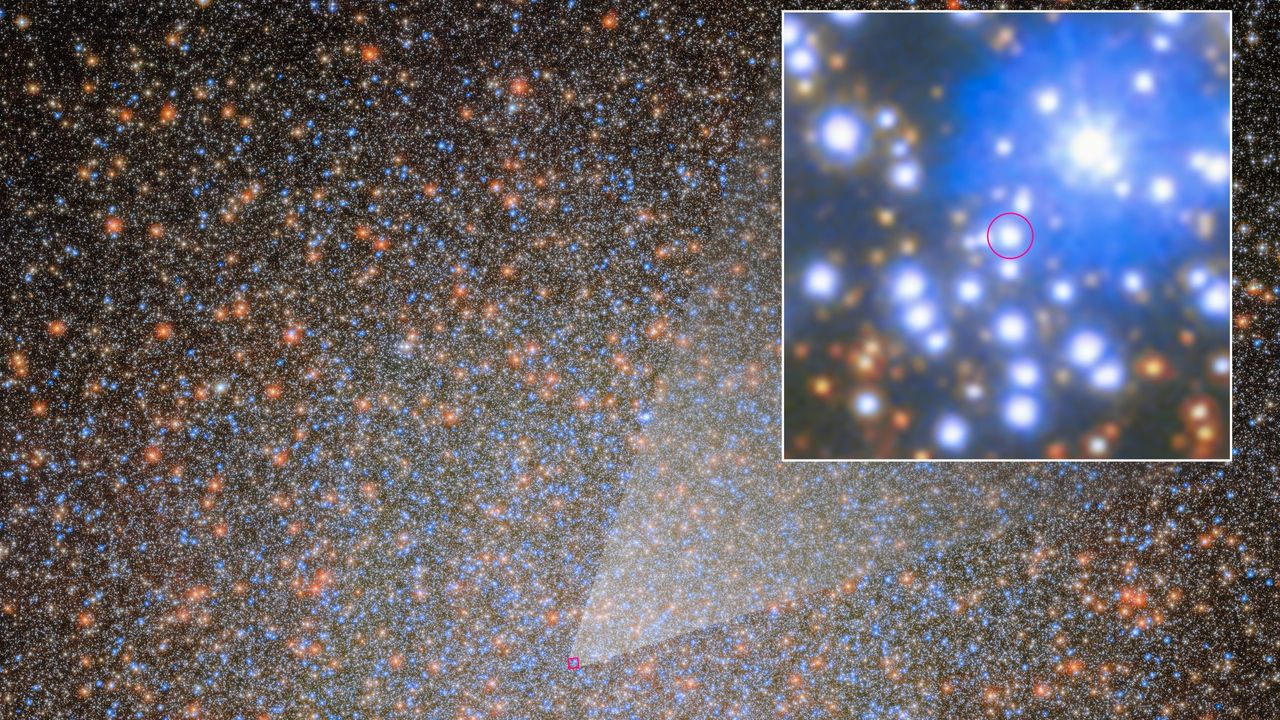
Astronomers have identified the first of an estimated 10,000 intermediate-mass black holes expected to reside within the Omega Centauri globular cluster. This significant discovery was made possible through the combined observational power of the Hubble Space Telescope and the James Webb Space Telescope. Omega Centauri is the largest known globular cluster in the Milky Way galaxy, located approximately 17,000 light-years away. Scientists theorized the presence of a substantial population of black holes within this dense stellar environment. The identification of this first black hole provides crucial evidence supporting these theories. This finding is a major step forward in understanding the formation and evolution of black holes, particularly those of intermediate mass, which have been historically difficult to detect. Further observations with these advanced telescopes are expected to uncover more of the predicted black holes, offering deeper insights into the dynamics of globular clusters and the universe's black hole population.
The detection of an intermediate-mass black hole in Omega Centauri, predicted to be one of 10,000, marks a significant advancement in astrophysical observation. This discovery, enabled by the synergistic capabilities of the Hubble and James Webb Space Telescopes, validates theoretical models regarding the prevalence of such objects in dense stellar environments. The finding underscores the ongoing evolution of astronomical instrumentation and analytical techniques, allowing for the probing of previously inaccessible cosmic phenomena. Future research will likely focus on characterizing the properties of this black hole and systematically searching for others within the cluster, potentially reshaping our understanding of galactic evolution and the life cycle of stars.
AI-generated to prompt reflection — not editorial opinion, not advice, not a statement of fact. How this works.