First Southern Right Whales of 2026 Arrive in Florianópolis After Antarctic Migration
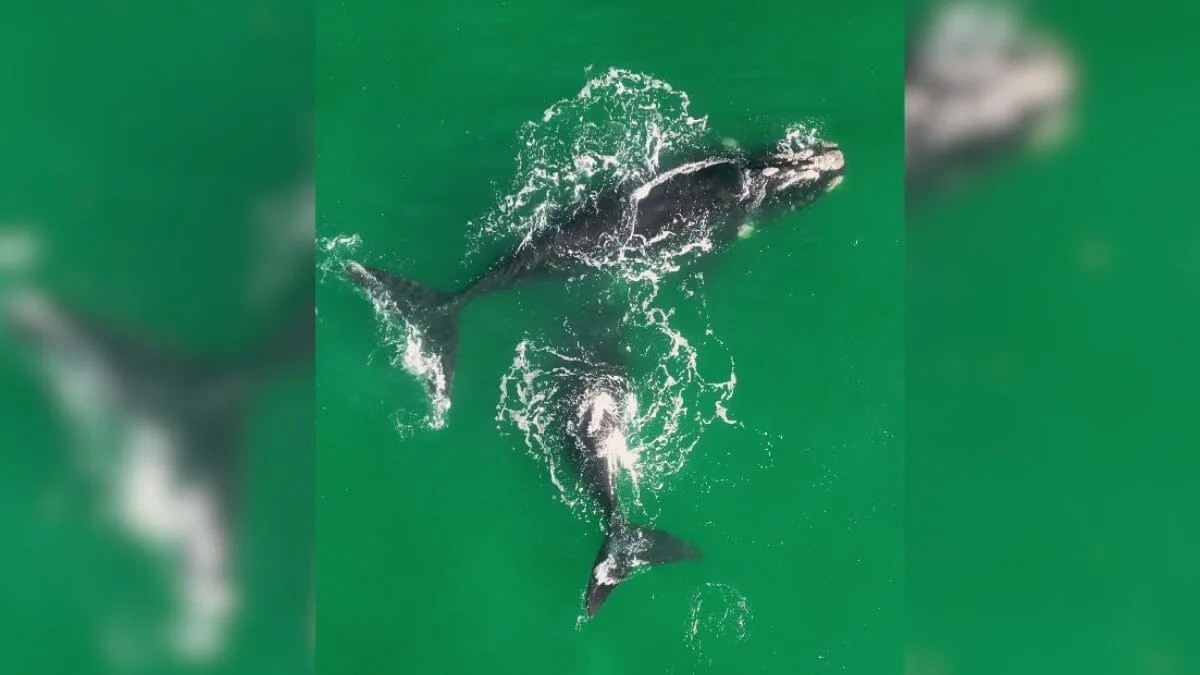
Florianópolis, Brazil, welcomed the first southern right whales of the 2026 season on Saturday, April 4th. These whales migrate from the cold waters of Antarctica to the Brazilian coast, specifically the island of Santa Catarina, for reproduction and calf care. The migration period extends until September. Aerial images captured by photographer Rafael Paz documented two whales near Novo Campeche beach in the southern part of the island, and beachgoers also witnessed their arrival. Karina Groch, a biologist and research director at Instituto Australis, identified one whale as an adult and the other as younger, possibly a mother returning with her calf from the previous year. Groch noted this scenario, while rare, could represent a form of cultural transmission, with the mother guiding her offspring on the migration route. While this is the first sighting in Florianópolis for 2026, southern right whales are frequent visitors to the Santa Catarina coast. The season's earliest sighting occurred in May in the far south of the state, marking the earliest arrival in 40 years. The southern coast of Santa Catarina is a critical area for the conservation of this endangered species, serving as a primary nursery where whales seek shallow, sheltered waters for mating, birthing, and nursing their young before their return journey to Antarctica.
The arrival of southern right whales in Florianópolis highlights the critical role of coastal ecosystems as vital habitats for migratory species. The observed behavior, potentially involving a mother and yearling calf, suggests complex social learning and navigation strategies within whale populations. This event underscores the ongoing importance of conservation efforts in Santa Catarina, a key nursery ground for this endangered species. Future challenges will involve balancing human coastal development with the preservation of these essential breeding and nursing areas, particularly as climate change may alter migration patterns and resource availability in both Antarctic feeding grounds and Brazilian calving sites. Understanding and protecting these migratory corridors is paramount for the species' long-term survival and the ecological health of the South Atlantic.
AI-generated to prompt reflection — not editorial opinion, not advice, not a statement of fact. How this works.