Fisherman Captures Rare Sighting of Puma Crossing River in Goiás, Brazil
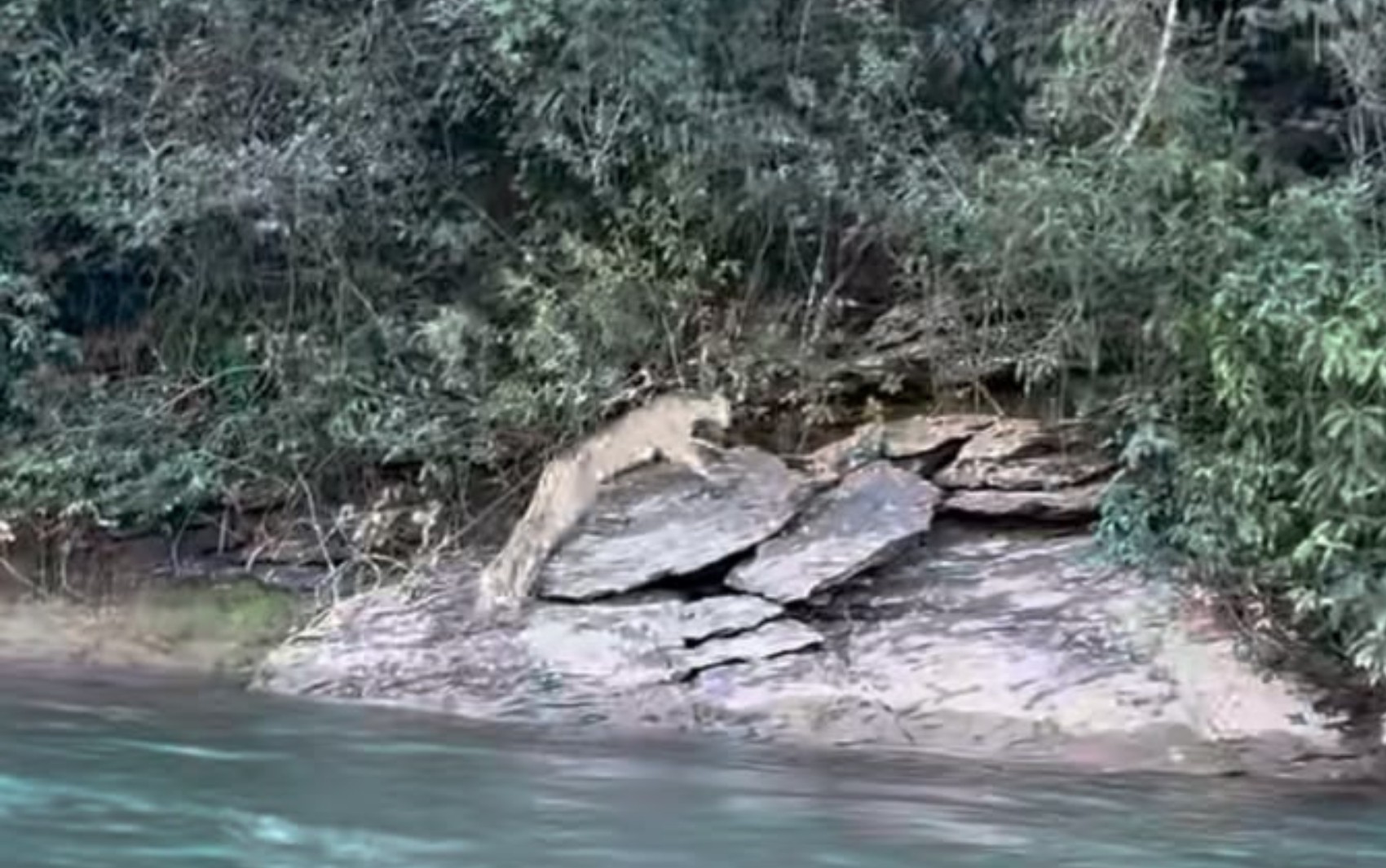
Fisherman Davi Gonçalves documented a rare encounter with a puma, also known as a cougar or mountain lion, as it swam across the Corumbá River in the southern region of Goiás, Brazil. The sighting occurred between the towns of Orizona and Ipameri. Gonçalves recounted that the large cat emerged from the dense vegetation and leaped directly in front of his canoe, startling him and his companions. He described the experience as highly emotional, fulfilling a long-held desire to witness such a rare natural event. The video footage shows the puma at the river's edge before it enters the water and swims across, surprising the fishing group. Gonçalves used the opportunity to warn others about the potential dangers of the area, advising caution for those who frequent the riverbanks alone. Biologist Edson Abrão confirmed the animal was a puma, a species common throughout the Americas. Abrão explained that river crossings are a natural behavior for pumas, serving purposes such as foraging for food, escaping threats, expanding territory, and during mating season. He noted that pumas learn to swim as cubs and that this skill is vital for their physical development and survival. Abrão advised anyone encountering a puma to maintain a safe distance and avoid provoking the animal, emphasizing that it is their natural habitat and they may defend themselves if they feel threatened. While pumas are generally considered less aggressive than jaguars, they remain wild animals and can attack if they perceive a risk.
This event highlights the intersection of human recreational activities and wildlife habitats, particularly in areas where natural corridors, such as rivers, facilitate animal movement. The fisherman's documentation serves as a valuable, albeit anecdotal, record of puma behavior and habitat use. From a conservation perspective, such sightings underscore the importance of maintaining ecological connectivity and managing human encroachment to minimize conflict. The biologist's explanation of the puma's natural behaviors, including river crossings for survival and reproduction, provides a scientific counterpoint to potential human-induced fear or misinterpretation. As human populations expand and interact more frequently with wild ecosystems, understanding and respecting animal behavioral patterns becomes crucial for coexistence, necessitating adaptive management strategies that balance conservation goals with public safety and access to natural resources. The incident also implicitly raises questions about the adequacy of current land-use planning and wildlife corridor protection in regions experiencing development pressures.
AI-generated to prompt reflection — not editorial opinion, not advice, not a statement of fact. How this works.