Fisherman Films Jaguar Crossing Corumbá River in Goiás, Brazil
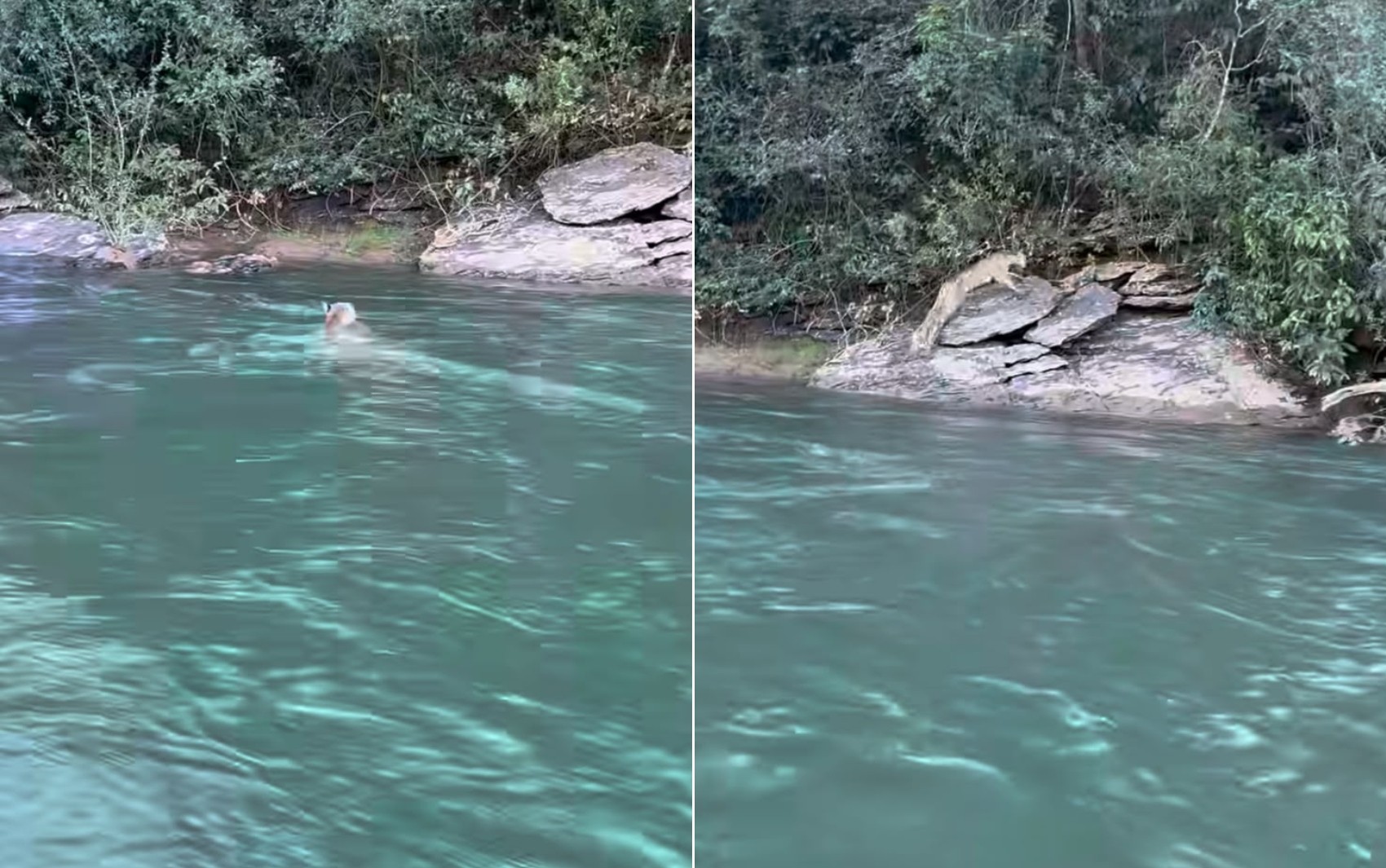
A fisherman named Davi Gonçalves captured a remarkable video of a puma, also known as a cougar or mountain lion, swimming across the Corumbá River in the state of Goiás, Brazil. The sighting occurred between the towns of Caldas Novas and Ipameri in southern Goiás. Gonçalves, who has frequented the area for two decades, expressed his excitement, having always wished to see a jaguar in its natural habitat. The video shows the feline emerging from the vegetation, entering the water, and returning to the opposite bank, with Gonçalves audibly reacting to the unexpected encounter. Biologist Edson Abrão confirmed the animal was a puma, a species common throughout the Americas, and explained that such river crossings are typical behavior. Abrão elaborated that pumas swim to find food, escape threats, explore new territories, and during mating season. He also noted that cubs learn to swim from their mothers, a skill crucial for their development and survival. The biologist advised that if one encounters a puma, the best course of action is to maintain a safe distance and avoid provoking the animal, as it is a wild creature that may defend itself if it feels threatened. While pumas are generally considered less aggressive than jaguars, they can still pose a risk if cornered or endangered.
This event highlights the persistent presence of large predators within human-adjacent ecosystems, underscoring the dynamic interplay between wildlife and human activity. The puma's natural behavior, including its ability to swim and traverse waterways, demonstrates the adaptability of apex predators to varied landscapes. From a conservation perspective, such sightings serve as a reminder of the importance of maintaining habitat connectivity and respecting wildlife corridors. Understanding the ecological drivers behind animal movements, such as resource availability and territorial needs, is crucial for developing effective coexistence strategies. Future management approaches will likely need to integrate advanced monitoring technologies and community engagement to mitigate potential human-wildlife conflict as both human populations and wildlife habitats continue to evolve.
AI-generated to prompt reflection — not editorial opinion, not advice, not a statement of fact. How this works.