Fisherman's 20-Minute Struggle with 40kg Fish on Madeira River
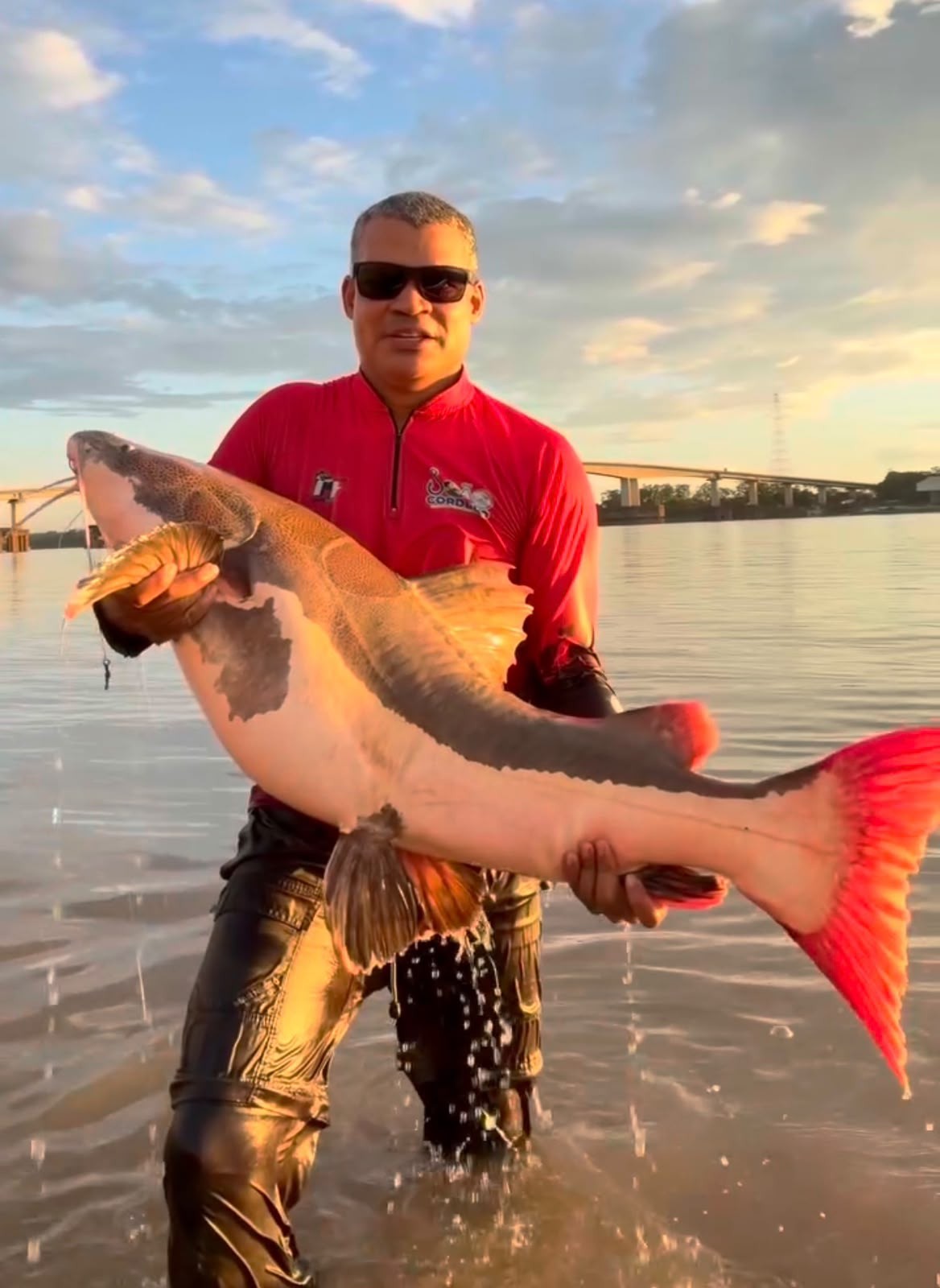
Sports fisherman João Cordeiro experienced an intense 20-minute battle with a 40-kilogram pirarara fish while fishing on the Madeira River in Porto Velho, Brazil. The pirarara, scientifically known as Phractocephalus hemioliopterus, is one of the largest catfish species in the Amazon, recognized for its orange fins and considerable strength, making it a prized catch for sport anglers. Cordeiro managed to capture the struggle on video, showcasing his efforts to control the powerful fish as he attempted to reel it in. The catch occurred in an urban stretch of the Madeira River, an area with significant boat traffic, highlighting that large fish can be found close to the city. Cordeiro noted that this experience demonstrates that substantial catches are possible even within city limits, a feat he finds both difficult and rewarding. He mentioned that this was not his first large pirarara catch in the region; he previously landed a specimen over 50 kilograms on New Year's Eve 2025. During the fight, Cordeiro was pulled by the river current and had to remain highly vigilant due to the presence of large barges, emphasizing that his life always takes precedence over a catch. He stressed the importance of safety measures, including wearing a life jacket and constant awareness of river traffic, especially during the flood season on the Madeira River.
This incident highlights the intersection of recreational activities with the realities of navigating busy waterways. The fisherman's experience underscores the inherent risks associated with sport fishing in areas with mixed-use river traffic, particularly concerning the potential for collisions with large vessels. While the catch itself is a testament to the abundance of aquatic life even near urban centers, it also implicitly raises questions about waterway management and safety protocols for recreational users operating in proximity to commercial or industrial navigation. Future considerations for such environments might involve designated fishing zones, enhanced communication systems between vessels and anglers, or revised regulations to mitigate the risks of accidental encounters, balancing ecological appreciation with human safety in dynamic riverine ecosystems.
AI-generated to prompt reflection — not editorial opinion, not advice, not a statement of fact. How this works.