Fishermen Run Over Phosphorous Grenade Near Doornenburg
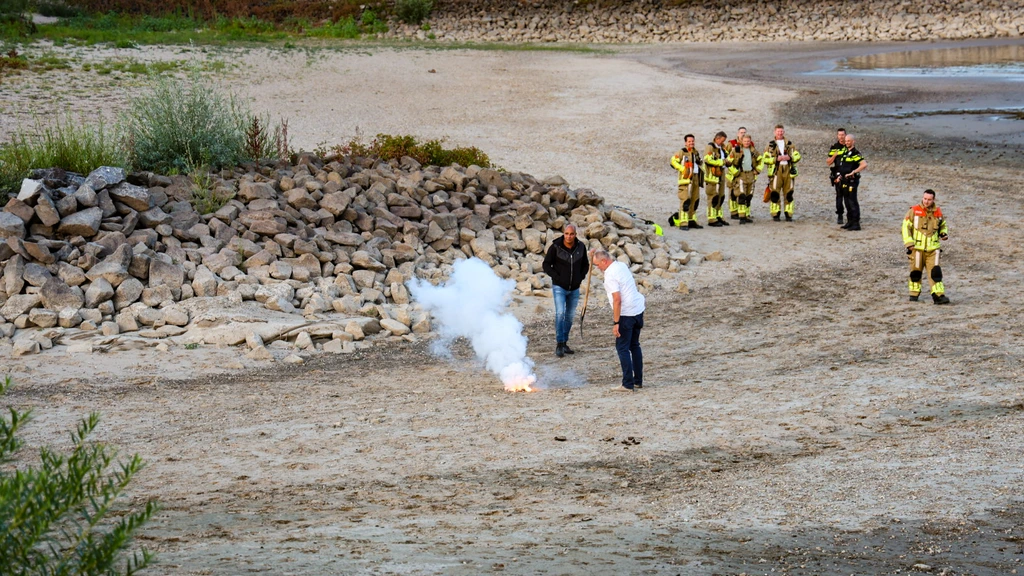
Fishermen near Doornenburg in Gelderland encountered a dangerous situation yesterday evening when they drove over a phosphorous grenade. The incident occurred around 8:45 PM as the fishermen were transporting their boat on a trailer across a small beach. Shortly after driving over the object, the grenade began to smoke and caught fire. The fishermen immediately contacted emergency services by calling 112. Responding to the scene were police, the fire department, and an explosives expert. It was discovered that another phosphorous grenade was located near the burning one. Both grenades were exposed due to unusually low water levels in the Rhine River. Phosphorous is highly flammable and can spontaneously combust when it dries out and comes into contact with air, even though it is relatively inert when wet. Specific details regarding these particular grenades in Doornenburg remain unknown, but they are presumed to be remnants from World War II.
The discovery of World War II-era phosphorous grenades due to low river levels highlights the persistent, latent risks associated with historical conflicts. These incidents underscore the importance of ongoing environmental monitoring and historical ordnance disposal protocols, especially in areas with significant wartime activity. As climate change contributes to fluctuating water levels, such discoveries may become more frequent, posing a public safety challenge. This situation prompts consideration of proactive risk assessment and mitigation strategies for submerged historical ordnance, balancing infrastructure needs with public safety and environmental preservation.
AI-generated to prompt reflection — not editorial opinion, not advice, not a statement of fact. How this works.