Five Keys to Stable Employment for Impoverished Youth
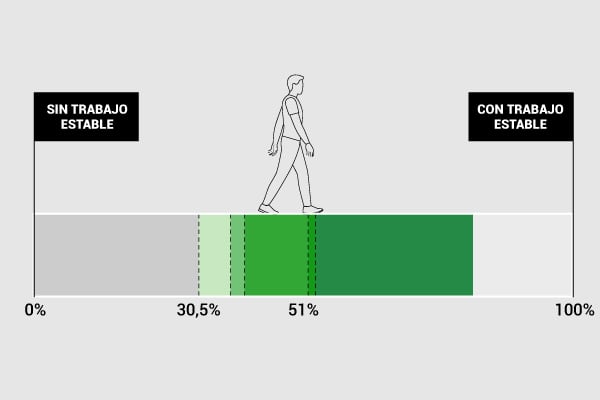
A recent article explores the critical factors that enable young people from low-income backgrounds to secure stable employment. The analysis highlights that while ambition and effort are important, they are often insufficient on their own to overcome systemic barriers. Access to education, particularly higher education and vocational training, is consistently identified as a primary determinant of future job prospects. Furthermore, the development of essential soft skills, such as communication, teamwork, and problem-solving, plays a crucial role in navigating the job market and succeeding in the workplace.
Networking and mentorship opportunities are also presented as vital components, providing young individuals with guidance, support, and access to unadvertised job openings. The article emphasizes the impact of socio-economic background, noting that those with supportive family networks or access to community resources tend to fare better. Finally, the importance of mental health and resilience is underscored, as young people facing adversity need robust coping mechanisms to persevere through challenges and maintain focus on their career goals. These five elements—education, soft skills, networking, socio-economic support, and mental fortitude—collectively shape the trajectory of impoverished youth toward stable employment.
This report examines the multifaceted challenges faced by impoverished youth in achieving stable employment, moving beyond simplistic notions of individual effort. It identifies key systemic factors including educational access, skill development, and social capital, suggesting that interventions must address these structural elements. The analysis implicitly points to a need for policy initiatives that democratize access to quality education and vocational training, foster mentorship programs, and provide robust social support networks. Considering future trends, the increasing demand for specialized skills in an AI-driven economy may further exacerbate existing disparities, making proactive, equitable development of these five identified factors crucial for social mobility and economic inclusion over the next decade.
AI-generated to prompt reflection — not editorial opinion, not advice, not a statement of fact. How this works.