Five Years After Deadly Floods, Urgency for German Flood Protection Measures Fades
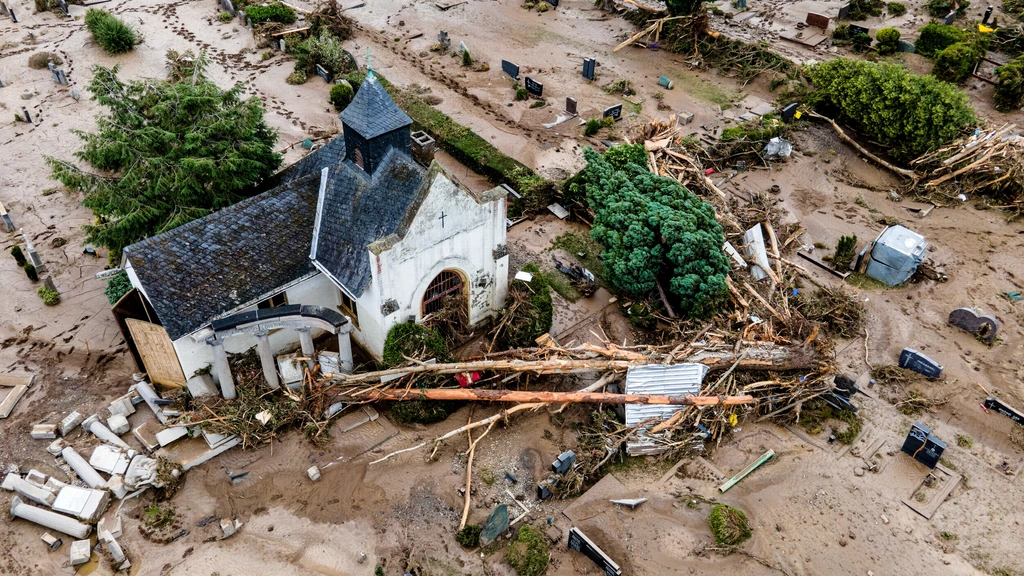
Five years ago, on the night of July 14-15, 2021, catastrophic floods swept through Germany and Belgium, claiming 188 lives in Germany and 41 in Belgium. The Ahr valley in Germany was particularly devastated, with a seemingly harmless river swelling to 400 times its normal volume. Residents like Hubertus Kunz in Mayschloss lost everything, forced to rebuild their homes entirely. Many villages, including Altenahr, saw houses built perilously close to the riverbanks, exacerbating the damage. Geographer Thomas Roggenkamp of the University of Bonn highlights that despite the devastation, most damaged homes were permitted to be rebuilt on their original sites, a decision he deems unwise for flood protection. While some homes are being elevated or rebuilt with garages on the ground floor, traditional half-timbered houses present challenges. More than 200 bridges were damaged or destroyed, with a fraction rebuilt with improved designs to prevent debris buildup. Warning systems have been enhanced with an app and better water level monitoring, which experts believe would reduce fatalities in a similar event, though material damage would likely remain high. Roggenkamp advocates for more extensive measures, such as retention basins for tributaries, a plan that has existed since 1910 but was never implemented, with funds instead diverted to projects like the Nürburgring racetrack. The urgency for funding these crucial flood protection measures is diminishing as time passes since the disaster, despite the certainty that such events will recur. Many residents questioned their ability to remain in their homes; Mayschloß, for example, saw its population drop from 1,000 to 800. While some, like Kunz, are too attached to leave, others, particularly the elderly, have relocated, leading to a demographic shift and a renewed sense of community among those who stayed, with local businesses and tourism experiencing a revival.
The diminishing urgency for flood protection measures five years after the 2021 Ahr valley disaster illustrates a common societal challenge: the fading memory of crisis in the absence of immediate threat. While improved warning systems and bridge designs offer tactical resilience, the core issue remains the systemic underinvestment in proactive, large-scale infrastructure like retention basins. The historical precedent of diverting funds from flood control to economic stimuli, such as the Nürburgring, reveals a persistent tension between short-term economic gains and long-term environmental security. This situation underscores a critical governance trade-off: prioritizing immediate economic development over potentially catastrophic, albeit less frequent, natural disaster mitigation. Looking ahead, as climate change intensifies extreme weather events, communities and governments will face increasing pressure to reconcile these competing interests, potentially necessitating new financial models and a fundamental re-evaluation of risk assessment in land-use planning.
AI-generated to prompt reflection — not editorial opinion, not advice, not a statement of fact. How this works.