Five Years After Limburg Floods, Many Damages Unrepaired Amid Compensation Woes
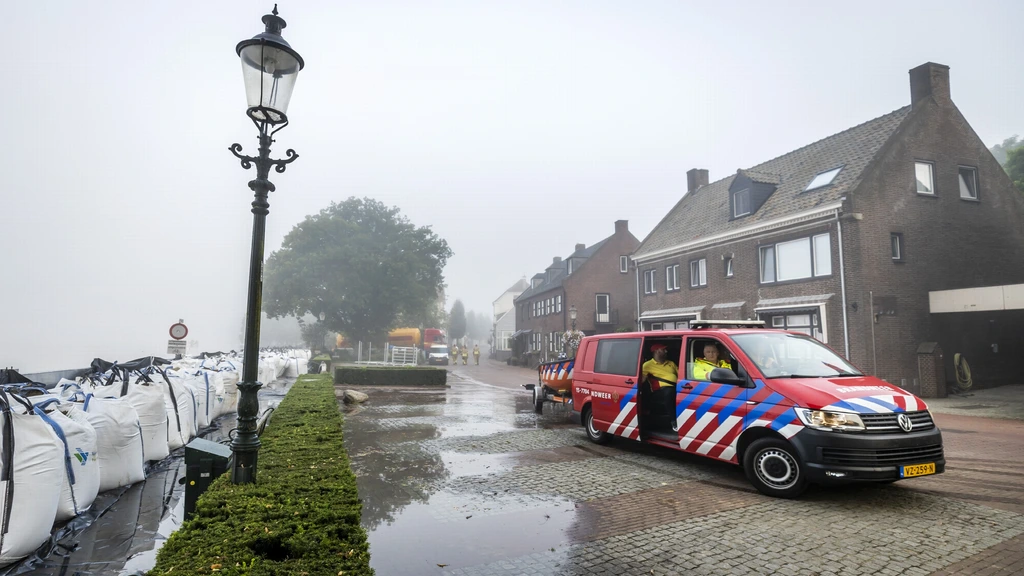
Five years after devastating floods in Limburg, the water has receded, but significant damage remains unrepaired, and residents are struggling with compensation schemes. Burgemeester Daan Prevoo of Valkenburg aan de Geul described the situation as a "disaster after the disaster," noting that initial promises of generous support have not materialized, with complex conditions hindering many claims. While Limburg experienced no fatalities, unlike neighboring Germany where over two hundred died, numerous residents were evacuated from their homes. Many affected individuals are left with substantial residual costs, with Prevoo stating that typically only up to 85 percent of damages were covered, leaving homeowners with 15 to 45 percent of the costs, and garden damage often uncompensated.
In some cases, repair work has stalled entirely. For instance, in Valkenburg's Emmalaan, residents have been looking at a dilapidated building for a year due to delays in demolishing a former garage and house. The Waterschap Limburg purchased the property for embankment repairs, but demolition and restoration were halted after the discovery of swift and bat nesting remains, leading to a cautious approach by the water board to avoid procedural errors. Further along the Geul river in Epen, Stefan and Paulien Pinckaers face challenges related to a "zero-normering" for their property, a provincial safety standard implying the water board has no obligation to prevent floods, placing the burden of self-reliance and financial risk on them. They invested nearly 300,000 euros, largely self-funded, in protective measures like a dike, wall, and mobile barriers.
Overall damage from the high water in Limburg was estimated at approximately 433 million euros by Deltares, affecting individuals, businesses, and government entities. Insurers covered nearly half of this amount, supplemented by funds from Giro 777 and other schemes. The government's Wet Tegemoetkoming Schade bij Rampen (WTS) aimed to cover uninsurable losses with a deductible and a maximum coverage of 65-90 percent. However, L1 Nieuws reported significant issues with WTS payouts for businesses; only 5 million euros of the 21 million euros allocated by the state for entrepreneurs was disbursed through the province, which held the remainder in reserve. Burgemeester Prevoo criticized these schemes, suggesting their intent was to avoid payouts, with stringent assessments and discouraging conditions for businesses, particularly when comparing revenue loss to the low-turnover first year of the COVID-19 pandemic.
Five years post-disaster, the persistent unrepaired damage and inadequate compensation in Limburg highlight systemic challenges in disaster recovery and governmental support frameworks. The discrepancy between initial promises of aid and the complex, often restrictive, application of compensation schemes like the WTS suggests a potential disconnect between policy intent and on-the-ground execution. The financial burden shifted to individuals and businesses, particularly those with properties subject to 'zero-normering' or facing stringent business damage assessments, points to an underestimation of the long-term economic and social costs of extreme weather events. Future resilience planning may need to incorporate more robust, streamlined, and less conditional financial mechanisms, alongside proactive infrastructure investments, to mitigate the cascading effects of climate-related disasters and ensure equitable recovery, rather than relying on post-event, often insufficient, remedial measures.
AI-generated to prompt reflection — not editorial opinion, not advice, not a statement of fact. How this works.