Flávio Bolsonaro Accuses Government of Using Federal Police to Persecute Opposition
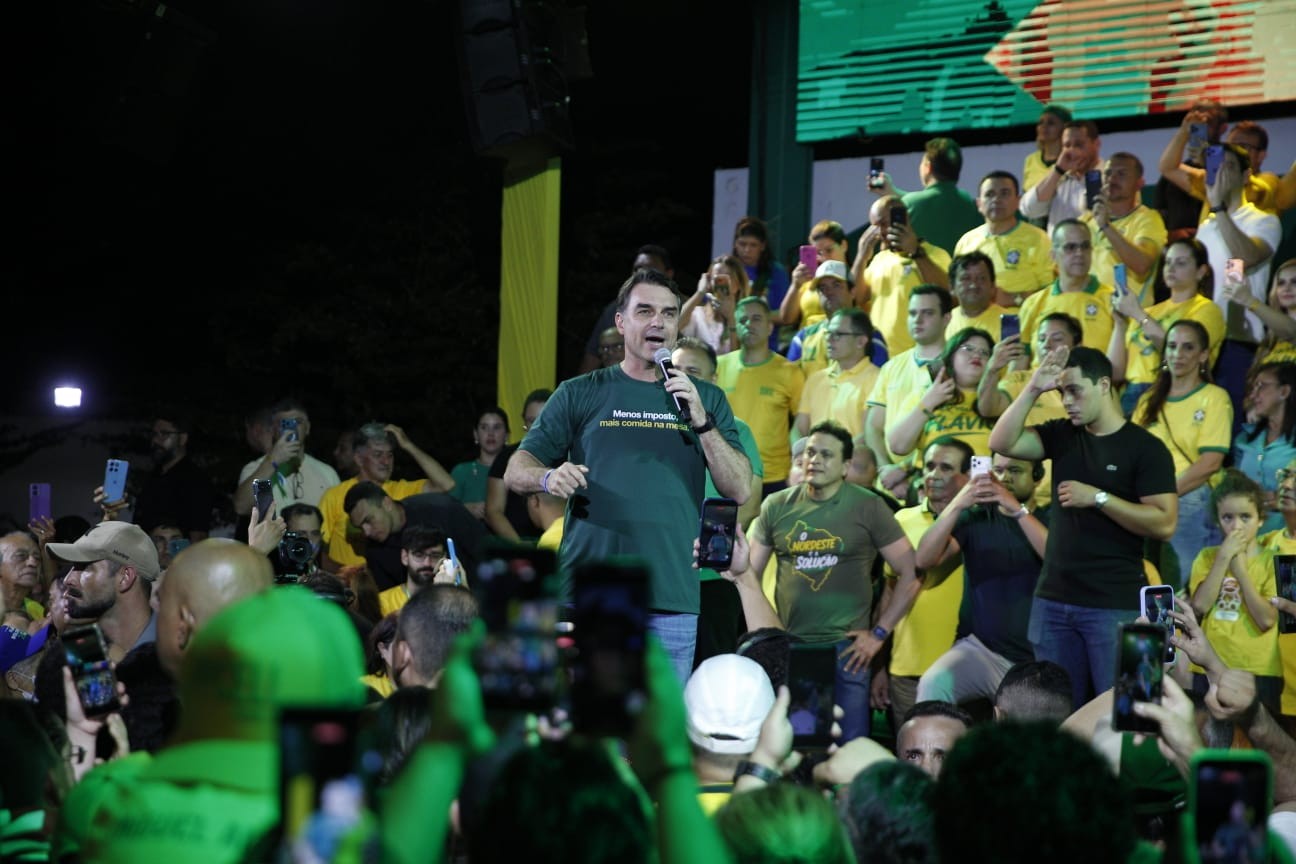
Senator Flávio Bolsonaro, a pre-candidate for Brazil's presidency, has accused the federal government of weaponizing the Federal Police (PF) to target right-wing politicians and manipulate election outcomes. Speaking in Fortaleza on Friday, May 10th, Bolsonaro alleged that the PF is selectively used to harass opposition figures while neglecting investigations into allegations against President Lula's son, known as Lulinha. He cited the recent blocking of R$119.2 million in assets belonging to Valdemar Costa Neto, the president of the Liberal Party (PL), as an example of politically motivated persecution. Bolsonaro criticized Minister Flávio Dino's decision, which he claims obstructs investigations into Lulinha while the PF actively pursues political adversaries. He also voiced concerns about the PF's alleged lack of resources for certain investigations contrasted with its mobilization against opponents. The senator further addressed public security issues in Ceará, denouncing the influence of criminal factions and advocating for stricter measures, including classifying them as terrorists. He contrasted his stance with President Lula's, suggesting Lula is lenient towards criminals. Bolsonaro also proposed harsh penalties for offenders against women and children, including chemical castration, and discussed economic initiatives for women, such as microcredit and childcare vouchers. During his visit, he toured an abandoned street in Fortaleza, a consequence of factional disputes, reiterating his call for international classification of Brazilian gangs as terrorist organizations.
Senator Flávio Bolsonaro's statements highlight a recurring theme in political discourse: the alleged politicization of state institutions. His accusations, framed around the Federal Police's actions, suggest a perception of selective enforcement that benefits the incumbent administration and disadvantages political opponents. This narrative taps into broader concerns about institutional independence and the potential for governmental overreach, particularly during election cycles. Such claims, regardless of their ultimate veracity, can erode public trust in law enforcement and judicial processes. The senator's focus on security and economic issues, including proposals for combating crime and supporting women entrepreneurs, aims to resonate with voter concerns, positioning him as a decisive leader. The contrast drawn between his approach and President Lula's on issues like crime classification and leniency serves to sharpen political distinctions and mobilize his base. The underlying dynamic is the strategic use of public platforms to shape narratives, influence public opinion, and gain political capital by framing government actions through a lens of partisan conflict.
AI-generated to prompt reflection — not editorial opinion, not advice, not a statement of fact. How this works.