Flávio Bolsonaro Criticizes Lula's China Stance, Defends US Amid Tariff Threats
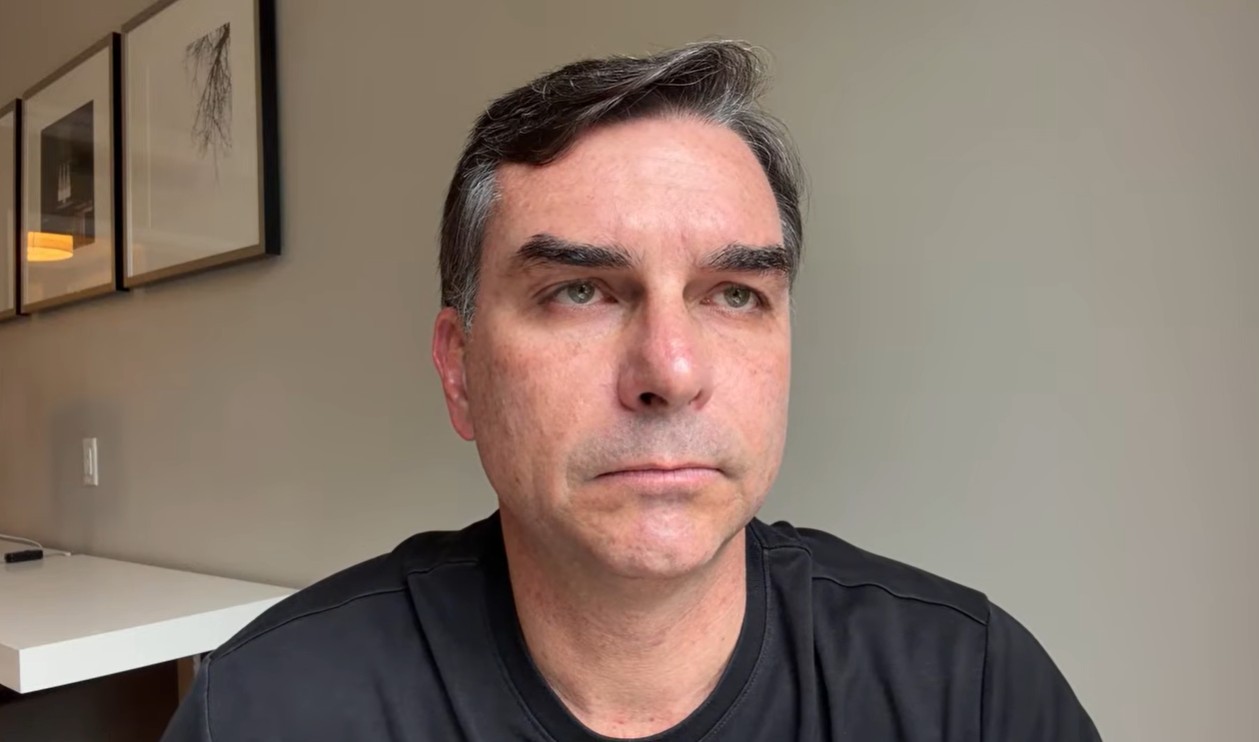
Senator Flávio Bolsonaro, a pre-candidate for the presidency, defended the United States and criticized President Luiz Inácio Lula da Silva's foreign policy during an online broadcast on Wednesday, March 8th. Bolsonaro accused Lula of "licking China's boots" while attacking the US, arguing that the Brazilian president prioritizes ideology over national interests. He stated that Lula's approach is detrimental to Brazil's international standing and trade relations. Bolsonaro's remarks come amid concerns over potential new tariffs from the Donald Trump administration on Brazilian goods. The senator participated in a public hearing at the U.S. Trade Representative's Office (USTR) on Tuesday, March 7th, to advocate against these tariffs and for their postponement. He was accompanied by his brother, Eduardo Bolsonaro, who resides in the US and had previously thanked Donald Trump for earlier trade actions. Bolsonaro asserted that the current moment is unfavorable for implementing such measures. The Brazilian government formally responded to the US investigation on Thursday, March 2nd. The US administration alleges "unreasonable" trade practices by Brazil, citing issues like PIX, illegal deforestation, piracy, and corruption law enforcement failures. In a seven-point document, Brazil's Foreign Minister Mauro Vieira argued that the USTR has not proven Brazilian policies discriminate against or hinder US trade.
This event highlights the complex geopolitical and economic interplay between Brazil, the United States, and China, particularly concerning trade policy and international relations. Senator Bolsonaro's rhetoric frames the situation as an ideological battle, positioning the US as a strategic partner and China as a problematic influence, while criticizing President Lula's administration for perceived alignment with Beijing. The US government's proposed tariffs and Brazil's formal response underscore ongoing trade disputes, where specific Brazilian policies are being scrutinized by the U.S. Trade Representative's Office. The analysis of this situation involves understanding the incentives driving each actor: the US seeking to protect its industries and potentially leverage trade for political influence, Brazil aiming to safeguard its economic interests and maintain diversified international relationships, and China operating within its own economic and strategic objectives. Future trade dynamics will likely depend on the evolving US administration's policies, Brazil's ability to negotiate and adapt its trade practices, and the broader global economic landscape.
AI-generated to prompt reflection — not editorial opinion, not advice, not a statement of fact. How this works.