Flávio Bolsonaro denies knowing militia chief pictured with him
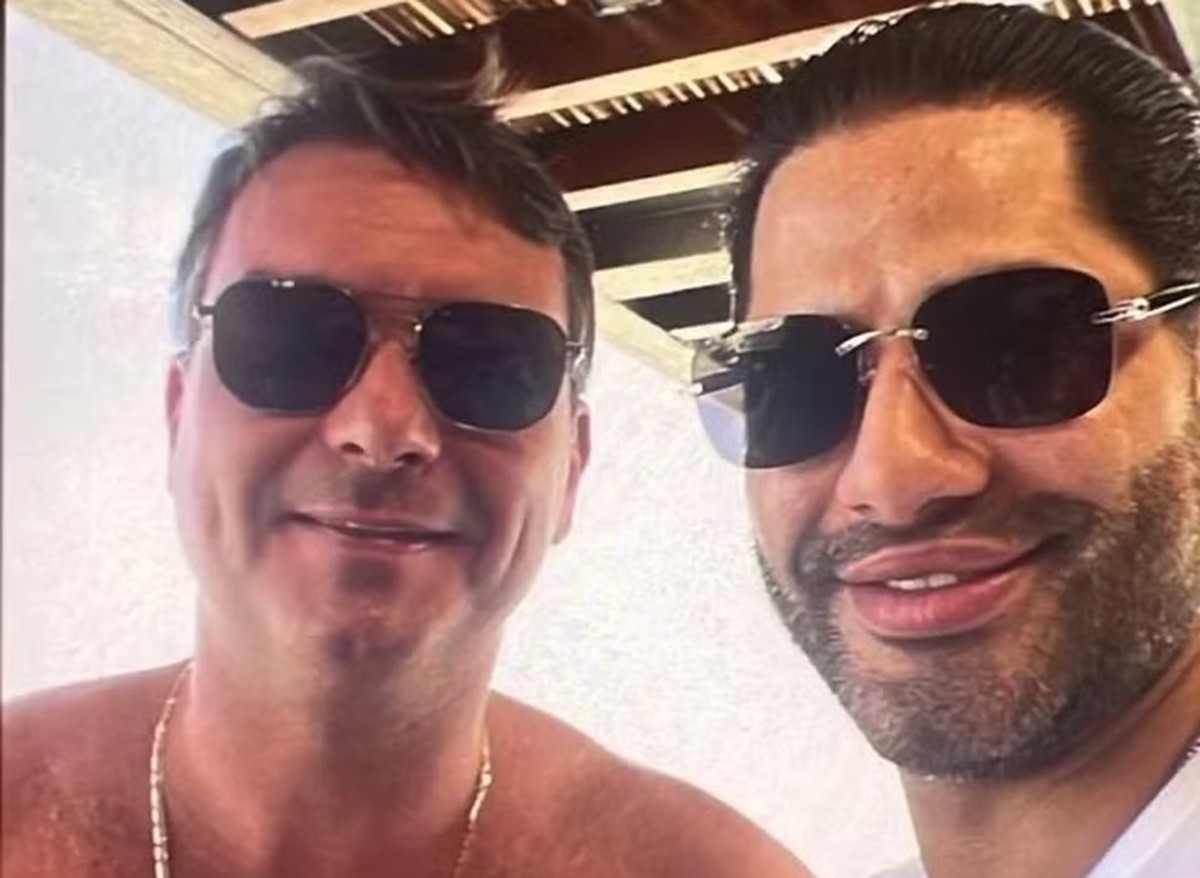
Brazilian news outlet ICL released a photograph showing Senator Flávio Bolsonaro (PL-RJ) with Luiz Phillipi Machado de Moraes Mourão, also known as "Sicário." Mourão was identified by the Federal Police as the head of a private militia organized by banker Daniel Vorcaro, owner of Banco Master. The context in which the photo was taken is unknown.
In a statement, Bolsonaro's press office asserted that the senator has never met "Sicário" and does not recognize the individual in the image. They explained that as a public figure, Bolsonaro frequently poses for photos with numerous people daily, making it impossible to know everyone who approaches him. The statement characterized any attempt to assign personal significance to the random image as irresponsible and suggested the photo might be AI-generated.
ICL reported that the image, allegedly taken in 2022 at a hotel in Rio de Janeiro's South Zone, was provided by a confidential source. The outlet stated that AI detection tools found no signs of manipulation, a finding corroborated by checks performed by g1. "Sicário" was arrested in March 2026 during Operation Compliance Zero and died days later after a suicide attempt in police custody. He was considered a central figure in Vorcaro's criminal organization, involved in surveillance, data theft, and intimidation.
Bolsonaro's connection to Vorcaro previously surfaced in May 2026, when messages revealed discussions about financing the film "Dark Horse," a production about former President Jair Bolsonaro. Flávio Bolsonaro acknowledged seeking funds from Vorcaro but denied any impropriety, stating his interactions were solely for the film's financing.
The dissemination of this photograph raises questions about the vetting processes for public figures interacting with individuals connected to organized crime. While Senator Bolsonaro's team emphasizes the impossibility of identifying every person requesting a photo, the incident highlights the potential risks of casual encounters when individuals have documented ties to illicit activities. The claim of potential AI generation, though seemingly refuted by initial checks, underscores the growing challenge of verifying digital media authenticity. Future public engagement strategies may need to incorporate more robust awareness and screening mechanisms to mitigate reputational and security risks, particularly in an era where digital manipulation is increasingly sophisticated and the lines between public interaction and association can be blurred.
AI-generated to prompt reflection — not editorial opinion, not advice, not a statement of fact. How this works.