Flávio Bolsonaro Officially Nominated for President by Liberal Party
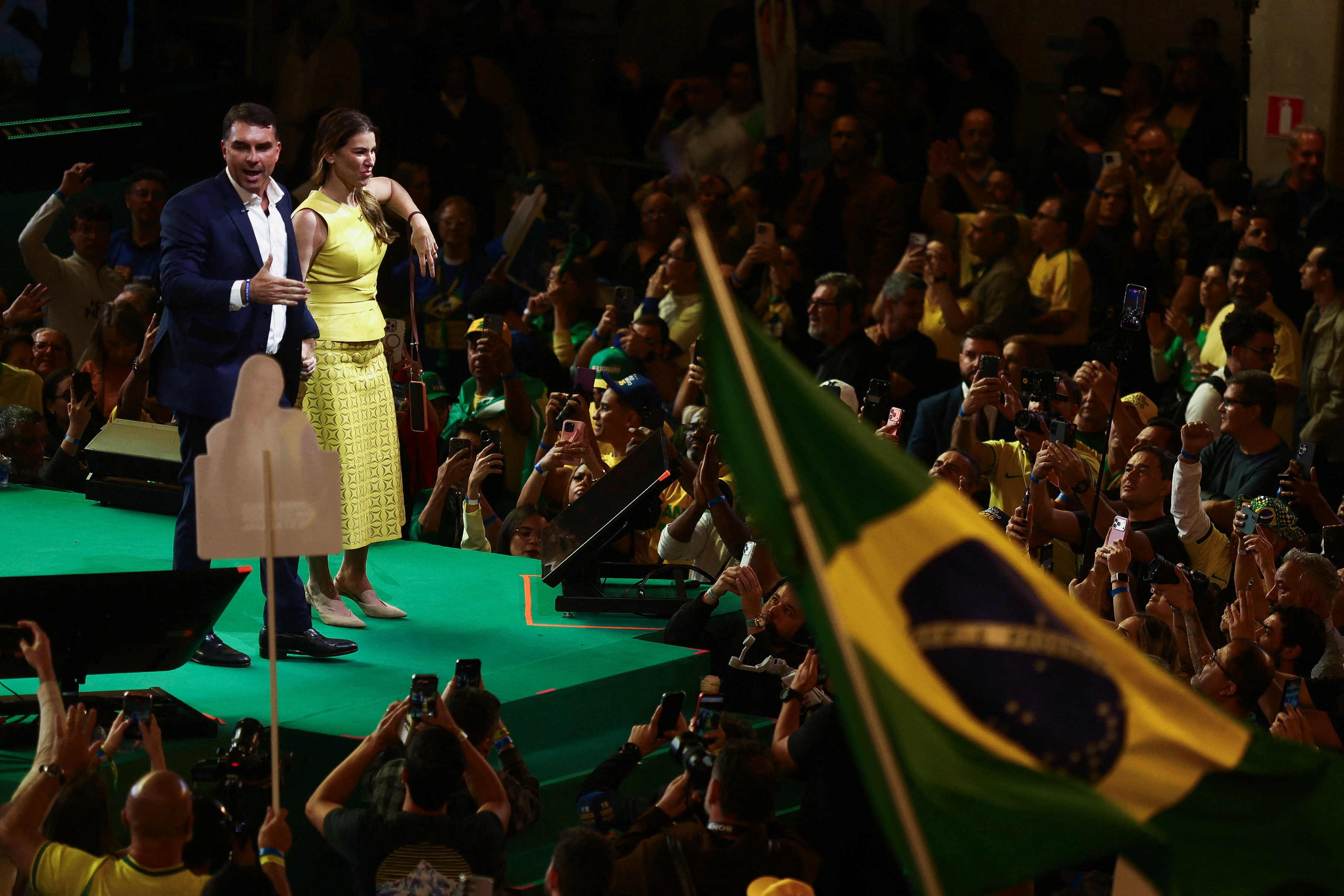
The Liberal Party (PL) has officially nominated Senator Flávio Bolsonaro as its presidential candidate for the 2026 elections during a convention held on July 25th in São Paulo. As of the report's publication, the party had not yet announced a vice-presidential running mate. In his acceptance speech, Bolsonaro invoked the legacy of his father, Jair Bolsonaro, referencing his struggles and promising a "rescue" of Brazil. He emphasized the responsibility his name carries as the "captain's eldest son" and vowed to restore hope to a nation he claims is tired of fear, corruption, high taxes, inflation, and government incompetence, particularly criticizing the Workers' Party (PT) for unfulfilled promises. Bolsonaro framed the election as a crucial battle between good and evil, freedom and oppression, and a defense of family and country against self-interest and power grabs. He drew parallels between his father's alleged persecution, including knife attacks and imprisonment, and the current political climate, asserting that he and his supporters would not be intimidated. He pledged to continue his father's legacy, aiming for justice and the "liberation" of Brazil from what he described as a "captivity." Bolsonaro expressed his personal commitment, acknowledging the need for security measures like bulletproof vests, but affirmed his dedication to the cause. He projected that Jair Bolsonaro would return to power in January 2027, calling it justice rather than revenge. The speech outlined a vision for Brazil focused on opportunity, security, prosperity, and a return to constitutional governance, contrasting it with the current administration's perceived failures. He concluded by accepting the presidential candidacy, believing in a future of freedom, safety, and prosperity for all Brazilians.
The Liberal Party's nomination of Flávio Bolsonaro for the presidency sets the stage for a campaign heavily reliant on leveraging the political brand and past support base of his father, Jair Bolsonaro. The speech's rhetoric frames the upcoming election as a moral and existential struggle, employing strong "us vs. them" narratives to mobilize supporters. This approach, while potentially effective in galvanizing a base, risks alienating undecided voters and may obscure substantive policy discussions. The emphasis on past grievances and perceived injustices, rather than concrete future policy proposals, suggests a strategy centered on emotional appeals and historical revisionism. Looking ahead, the campaign will likely face scrutiny regarding its economic platform, governance approach, and its ability to broaden its appeal beyond its core constituency, especially in the context of Brazil's complex socio-economic challenges and evolving political landscape.
AI-generated to prompt reflection — not editorial opinion, not advice, not a statement of fact. How this works.
