Flamingos Return to Pakistan's Muzaffargarh Wetlands After 50 Years, Breeding Locally
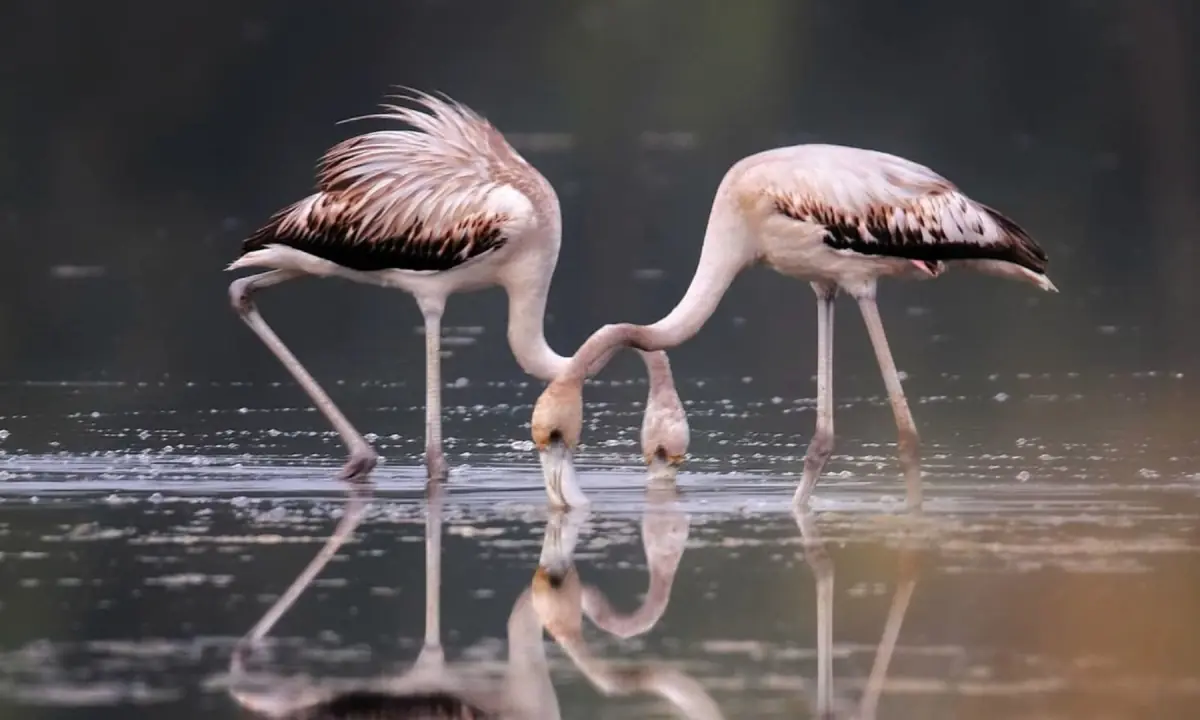
A flock of 43 greater flamingos, including many juveniles, was observed in the Rangla Wetland Complex near Muzaffargarh, South Punjab, Pakistan, a sight not seen in nearly half a century. Researchers were initially surprised by the presence of young chicks, as flamingos typically migrate from Central Asia and Siberia to Pakistan's southern wetlands in late autumn and depart in spring after maturing. The long journey, spanning approximately 4,500 km, usually requires chicks to spend three to five months developing flight feathers and strength before migrating. The discovery of young flamingos in July led to speculation among birders and wildlife enthusiasts, culminating in the consensus that these birds are likely local breeders. This suggests a resident or semi-resident population has established a breeding colony in the isolated and undisturbed wetlands of Pakistan, which offer specific conditions like remote mudflats and shallow saline waters crucial for nesting. The Muzaffargarh wetland complex is particularly rich in Artemia, a key food source for flamingos, making it an ideal foraging ground. This event highlights the ecological significance of the South Punjab region, which has historically faced degradation from hunting, egg collection, agricultural runoff, and encroachment. Conservationists emphasize the need to protect not only the flamingos but also their habitats, as the destruction of nesting sites could lead to population collapse. Ecologists are advocating for advanced conservation technologies, including capture-and-release programs with satellite transmitters, to track the birds' movements and identify their breeding grounds. These identified sites can then be designated as protected sanctuaries to prevent human disturbance and development. The unexpected return and local breeding of these flamingos may also signal shifts in climate and migratory patterns.
The reappearance of greater flamingos and their apparent local breeding in Muzaffargarh, after a 50-year absence, presents a significant ecological finding. This suggests that the Rangla Wetland Complex may have recovered sufficiently to support a sensitive species' breeding cycle, a testament to the resilience of natural systems when conditions permit. However, the discovery also underscores the fragility of such ecosystems, which remain vulnerable to anthropogenic pressures like habitat degradation and encroachment. The reliance on specialized conditions for breeding highlights the importance of maintaining undisturbed saline wetlands. Future conservation efforts must balance the need to protect these newly identified breeding grounds with the ongoing pressures of regional development and agricultural practices. The event serves as a reminder that ecological indicators, such as migratory bird patterns, can reflect broader environmental shifts, potentially influenced by climate change, and necessitate adaptive management strategies to ensure long-term species survival.
AI-generated to prompt reflection — not editorial opinion, not advice, not a statement of fact. How this works.