Flanders Revamps Highway Signs to Reduce Confusion and Enhance Safety
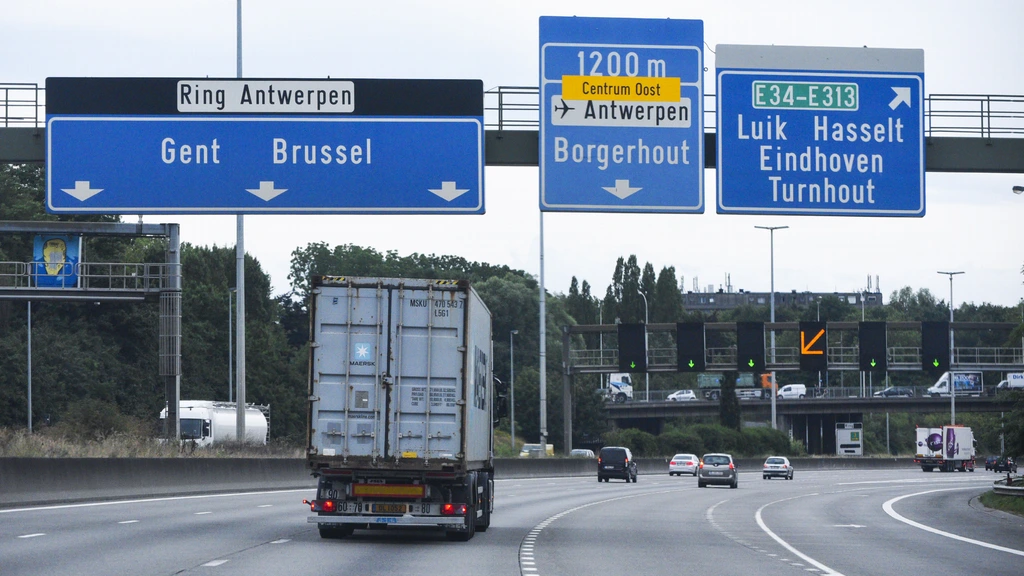
Flanders is undertaking a comprehensive overhaul of its highway signage, aiming to eliminate confusion and improve traffic safety for all road users. The Flemish road authority, Agentschap Wegen en Verkeer (AWV), is phasing out the familiar green-and-yellow exit signs and standardizing directional arrows on overhead signs to always point upwards. This initiative seeks to align Flemish signage with the systems used in neighboring countries like the Netherlands and Germany, thereby creating a more consistent and understandable navigation experience.
Currently, signage in Flanders lacks uniformity, with variations in design and placement across different provinces. The new guidelines will ensure a unified approach throughout the region. The iconic white exit signs featuring green-yellow panels will be replaced by internationally recognized black-and-white symbols. Overhead lane signs will feature a fixed arrow design, consistently pointing upwards, unlike the current system where some arrows point downwards.
AWV spokesperson Thomas Lieben highlighted that drivers will find the new signage much easier to comprehend, leading to fewer abrupt maneuvers and increased safety. The transition also includes adopting retroreflective signs as the standard, which reflect headlight beams, replacing internally illuminated signs. These new signs are equally legible, more cost-effective for maintenance, and budget-friendly. A firm implementation date for all of Flanders has not been set; the change will occur gradually, starting with major construction sites around the Antwerp and Brussels ring roads, and continuing with new infrastructure projects and the replacement of old or damaged signs over several years.
The Flemish road authority's decision to standardize highway signage reflects a strategic response to the increasing complexity of road networks and the need for greater driver comprehension in a multi-jurisdictional context. By harmonizing with international standards and simplifying visual cues, the AWV aims to mitigate cognitive load on drivers, potentially reducing accidents caused by misinterpretation or delayed reactions. This move anticipates future traffic management needs, where seamless navigation across borders and through evolving infrastructure will be paramount. The shift towards retroreflective, rather than internally illuminated, signs also signals an embrace of more sustainable and cost-efficient operational models, aligning with broader public sector trends towards resource optimization and environmental considerations in infrastructure management.
AI-generated to prompt reflection — not editorial opinion, not advice, not a statement of fact. How this works.