Flash Flood in Khyber, Pakistan Sweeps Away Vehicle; Three Bodies Recovered
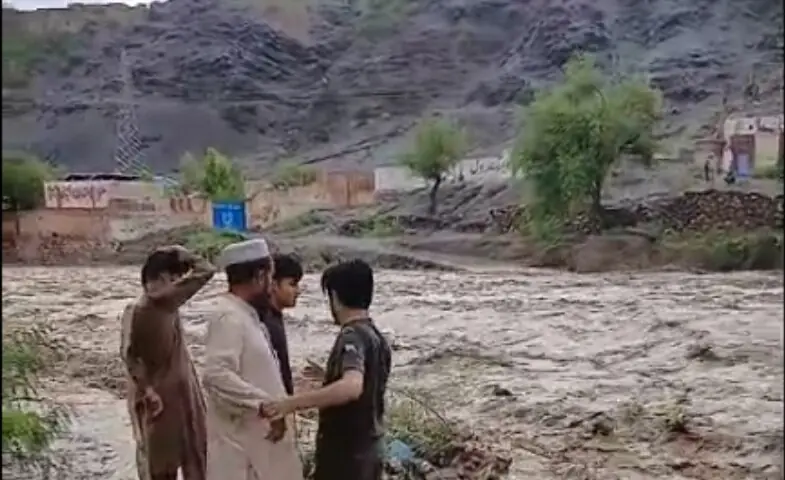
A vehicle carrying Afghan families returning to Afghanistan was swept away by a flash flood in the Landi Kotal tehsil of Khyber Pakhtunkhwa's Khyber district on Monday, according to Rescue 1122. Rescue workers have recovered the bodies of three individuals: a woman and a man found in Jamrud town, and a child discovered in the Parang Sang area. The search for other passengers continues. This incident occurred after heavy rains triggered the flood near Sultan Khel Market. In a separate tragedy in Mardan's Kalu Dheri village, the roof of a room collapsed, killing two children and injuring their mother and 14-year-old sister. The injured were taken to Mardan Medical Complex Hospital. The Pakistan Meteorological Department had predicted widespread rains for the week, with showers expected in Khyber and Mardan between July 19 and July 23. In response to the forecast, Rescue 1122 Director General Shah Fahad convened an emergency meeting, placing all district emergency officers on high alert and deploying rescue personnel, boats, and equipment across districts. Water rescue teams are actively patrolling waterways, and public advisories have been issued to avoid unnecessary travel and stay clear of rivers and streams. Awareness campaigns are also underway. The Peshawar Electric Supply Company (Pesco) has also established a control room and alerted operational teams, advising consumers on electrical safety during the rains. Meanwhile, in Azad Jammu and Kashmir's Neelum district, two houses were washed away by heavy rains on Sunday, with relief efforts underway for affected families. A link road was also damaged by debris.
The tragic loss of life and property resulting from flash floods highlights the critical need for robust disaster preparedness and infrastructure resilience in regions prone to extreme weather events. The meteorological department's forecast indicates a predictable pattern of increased rainfall, yet the severity of the impact suggests potential gaps in early warning systems, public adherence to safety advisories, and the effectiveness of deployed emergency resources. The simultaneous incidents across Khyber Pakhtunkhwa and Azad Jammu and Kashmir underscore a systemic vulnerability to monsoon-related hazards. Future planning should focus on integrating climate adaptation strategies, enhancing community-level awareness programs, and investing in infrastructure that can better withstand such environmental pressures, thereby mitigating the human and economic costs of these recurring natural disasters.
AI-generated to prompt reflection — not editorial opinion, not advice, not a statement of fact. How this works.